Could You Retire On Florida’s Space Coast And Watch Rocket Launches From Your Backyard?
Can a million-dollar nest egg buy you a front-row seat to America’s new space race? Along Florida’s Space Coast, retirees can sip coffee on the patio, hear the distant rumble of rocket engines, and occasionally watch a Falcon 9 streak…

This post may contain links from our sponsors and affiliates, and Flywheel Publishing may receive compensation for actions taken through them.
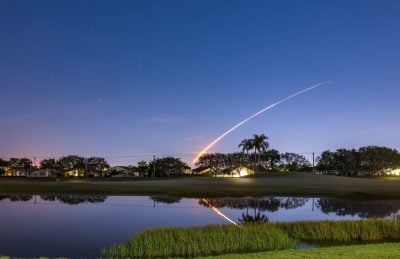
Can a million-dollar nest egg buy you a front-row seat to America’s new space race? Along Florida’s Space Coast, retirees can sip coffee on the patio, hear the distant rumble of rocket engines, and occasionally watch a Falcon 9 streak into the sky from just a few miles away. The dream is real. The question is whether a $1 million portfolio and about $4,500 a month in Social Security can support both the lifestyle and the long-term costs that come with living near the water.
For many retirees, the answer is yes. But success depends heavily on where you settle along the Space Coast and whether you budget for the expenses that catch newcomers by surprise. Property taxes, insurance premiums, hurricane risk, and rising maintenance costs can turn a seemingly affordable retirement into a much tighter financial equation.
What Life On The Space Coast Looks Like
The appeal is easy to understand. You get the Indian River Lagoon, fishing, wildlife refuges, nearby cruises from Port Canaveral, and some of the most spectacular rocket launches in the country. Even longtime residents who claim they have stopped paying attention often find themselves standing in the driveway when a night launch lights up the sky.
The trade-offs are real as well. Brevard is largely car-dependent, traffic has become noticeably heavier, and summer humidity can be relentless. Retirees looking for dense walkable neighborhoods, major arts districts, or a big-city atmosphere may find the Space Coast quieter than they expected. For many people, though, that is part of the attraction.
Is It Dangerous?
Newcomers often ask whether living near the launch site is dangerous. In practice, Space Coast residents are usually 10 to 30 miles from the launch pads, and rockets head out over the Atlantic within moments of liftoff. The bigger impact on daily life is not safety but inconvenience. Popular launches can create temporary traffic jams, while returning Falcon 9 boosters occasionally produce sonic booms that shake windows and send first-time retirees looking around the house for what just happened.
Housing Costs Along The Space Coast
The Space Coast remains one of Florida’s more affordable coastal regions. In Rockledge, Viera, and inland Melbourne, well-kept three-bedroom homes often sell in the upper $300,000s to low $400,000s. Beachside communities such as Satellite Beach, Indialantic, and Cocoa Beach command much higher prices, with water-view homes often starting around $600,000 and direct oceanfront properties frequently topping $1 million. Titusville, closest to Kennedy Space Center, generally offers lower prices but older housing stock.
For this analysis, assume our couple buys a paid-off $400,000 home in Rockledge or West Melbourne. Property taxes after Florida’s homestead exemption run roughly $3,800 per year. Florida also imposes no state income tax and does not tax Social Security, pension income, or IRA withdrawals.
The Rest Of The Retirement Budget
Healthcare is one of the largest ongoing expenses. A Medicare-aged couple can expect to spend roughly $11,000 annually on premiums, supplemental coverage, prescriptions, and routine out-of-pocket costs.
Utilities, including electricity, water, internet, and trash service, add about $5,500 per year. Groceries for two run around $11,000, while transportation costs can add another $6,500.
After accounting for home maintenance, future vehicle replacement, travel, gifts, and taxes on traditional IRA withdrawals, a comfortable inland Space Coast retirement budget comes to approximately $72,000 per year. That is the spending target our couple must support to enjoy the lifestyle and the occasional rocket launch without financial stress.
The Math On $1 Million And $54,000 In Social Security
The couple brings in $4,500 a month in combined Social Security, which is $54,000 a year. Subtract that from the $72,000 budget and the portfolio must cover an $18,000 gap. On a $1 million balance, that is a 1.8% withdrawal rate, which is safe by any standard. At a more realistic 3.5% draw, the portfolio throws off $35,000, leaving real cushion for inflation. Headline PCE was running at 3.77% year over year in April 2026, and services inflation at 3.49% is the number that actually matters for a retiree.
A portfolio for this household does not need to chase yield. A barbell of a broad-market index fund, a TIPS ladder out ten years, an investment-grade corporate bond fund, and a small slug in a diversified REIT fund for inflation hedging works. The 10-year Treasury at 4.55% means the fixed-income side is actually paying you again.
Run that withdrawal calculator and the scenario holds even with conservative return assumptions.
The Expense That Changes Everything
Many retirees focus on home prices and underestimate insurance. Along the Space Coast, that can be a costly mistake.
A coastal Brevard property may carry $8,000 to $14,000 per year in homeowners insurance, plus another $1,500 to $3,000 for flood coverage. Those costs have been rising much faster than general inflation. A couple paying $12,000 annually today could be spending more than $30,000 a year within fifteen years if premiums continue climbing.
The difference between neighborhoods can be dramatic. A newer masonry home with hurricane-rated windows and modern wind-mitigation features may cost thousands less to insure than an older house just a few streets away. That is why the same retirement budget that works comfortably in Rockledge may struggle in an oceanfront condo with rising premiums and special assessments.
The Honest Bottom Line
A middle-class couple with $1 million invested and $4,500 a month in Social Security can retire on the Space Coast and live well, provided they buy inland or in a well-mitigated newer home, keep the all-in housing cost under roughly $18,000 a year, and run a 3% to 3.5% withdrawal from a diversified portfolio. That setup carries a $70,000 to $75,000 lifestyle for thirty years with room for actual inflation.
The version that fails buys the oceanfront condo because the headline promised rocket launches from the backyard. That house will eat the portfolio through insurance, special assessments, and the slow-motion repricing of coastal risk. Pick the inland house, drive ten minutes to the causeway for the launches, and the math works, ranking among the best retirement values left in Florida.
Contact [email protected] for any questions or corrections.
Drew Wood has edited or ghostwritten nine books and published more than 1,500 articles on investing, business, politics, travel, world cultures, wildlife, and earth science. He holds a doctorate and four master's degrees and has nearly 30 years of college teaching experience. His travels have taken him to 25 countries, including three years living in Ukraine.