What It Takes to Retire on the Emerald Coast in Destin, Florida, at 63 on $950,000
Someone with just under a million dollars wants to know if it stretches far enough to retire in Destin at 63. Destin is a distinctive Florida market: a sugar-sand beach town with a tourist economy, panhandle weather exposure, and housing…

This post may contain links from our sponsors and affiliates, and Flywheel Publishing may receive compensation for actions taken through them.
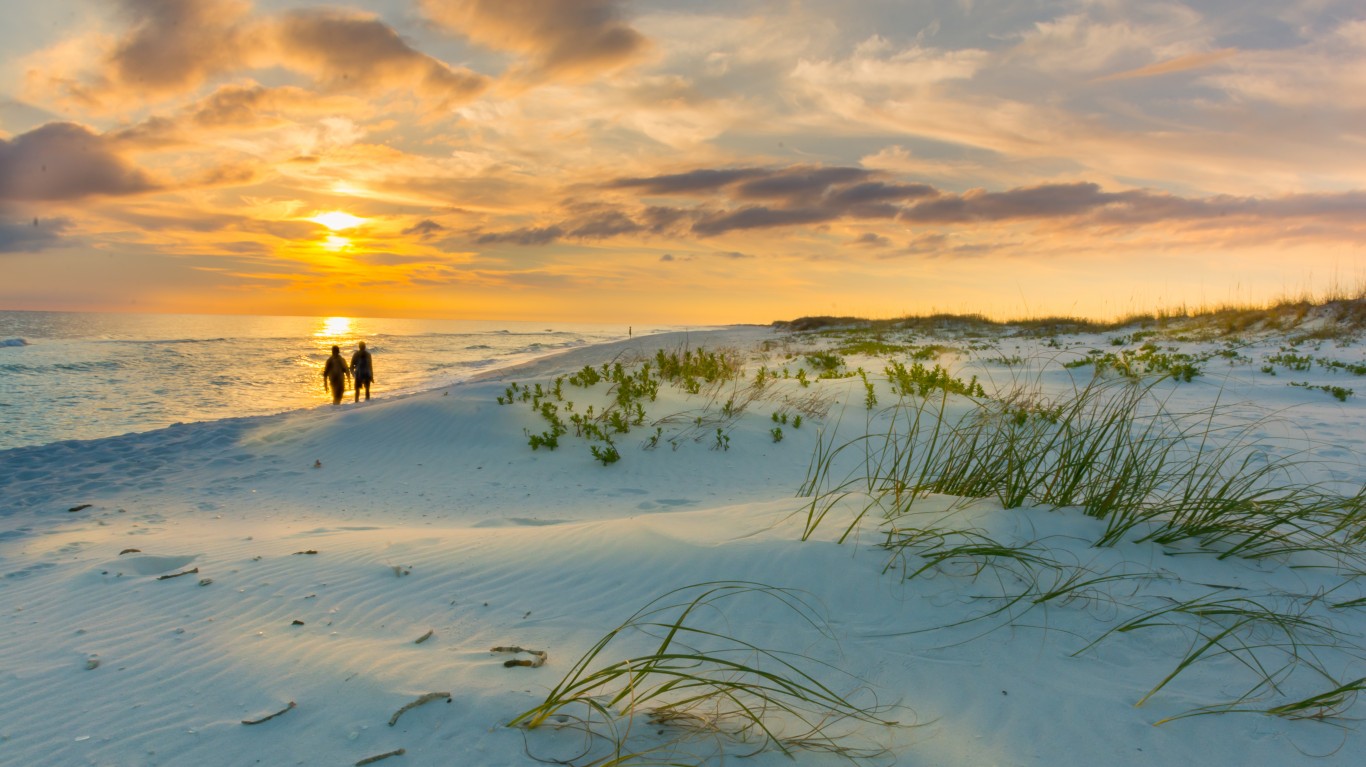
Someone with just under a million dollars wants to know if it stretches far enough to retire in Destin at 63. Destin is a distinctive Florida market: a sugar-sand beach town with a tourist economy, panhandle weather exposure, and housing costs closer to coastal South Carolina than inland Florida. The answer is not what a 4% calculator spits out. Here’s what the budget actually absorbs, what the portfolio produces, and the line item most people underprice by half.
What it actually costs to live in Destin
Florida’s statewide cost of living sits at 103.4, about 3.4 points above the national average. Destin runs meaningfully hotter. A modest two-bedroom condo within a reasonable drive of the beach trades in the mid-$400s to low $500s. A single-family home in a non-waterfront neighborhood like Kelly Plantation or Regatta Bay starts in the high $600s. If you arrive with the home paid for, you remove the largest line item but not housing as a category.
A realistic Destin annual budget for one person or a low-key couple, home owned outright, in current dollars:
- Property taxes on a $550,000 assessed home with homestead exemption: about $4,500
- Wind, hazard, and flood insurance combined: $7,000 to $9,000
- HOA or condo association dues if applicable: $5,000 to $9,000
- Utilities, internet, cell, streaming: $4,800
- Groceries on the USDA moderate plan for two: $11,500
- Dining out: $4,800
- Transportation, fuel, insurance, replacement reserve: $7,000
- Healthcare bridge before Medicare: $11,000 to $14,000
- Home maintenance reserve at 1.5% of value: $8,000
- Travel, gifts, hobbies, miscellaneous: $7,000
That lands between $70,000 and $78,000 a year before federal income tax on withdrawals. Florida does not levy a state income tax, which is why the state ranks 4th in the 2025 State Tax Competitiveness Index, but federal tax applies to traditional IRA and 401(k) distributions.
The pre-Medicare bridge from 63 to 65
Two years sit between you and Medicare. ACA marketplace coverage in Okaloosa County for a 63-year-old runs roughly $900 to $1,300 a month before subsidies on a silver plan. Keep modified adjusted gross income low and the premium tax credit cuts that meaningfully. Roth assets become priceless here: drawing from a Roth bucket during the bridge keeps MAGI suppressed, preserving the subsidy.
At 65, Medicare takes over. The 2026 Part B standard premium is $202.90 a month with a $283 annual deductible, and you layer in a Medigap or Advantage plan plus Part D. Budget $7,500 to $9,000 per person per year in Medicare-era healthcare, more if you carry chronic conditions.
Running the math on $950,000
Claim Social Security at 63 and the benefit is reduced by roughly 25% from the full retirement age amount. For a worker with a near-average earnings history, that lands around $1,900 a month, or about $22,800 a year. The 2026 COLA was 2.8%, and future adjustments track inflation, which currently has the CPI at 334.0, up 0.5% in the most recent month.
If the realistic Destin budget is $74,000 and Social Security covers $22,800, the portfolio bridges about $51,200. On $950,000, that is roughly a 5.4% initial withdrawal rate. For a 63-year-old planning to a reasonable longevity horizon, that is too hot. The math wants 3.75% to 4.25%, which means the portfolio can sustainably deliver $36,000 to $40,000.
Three levers close the gap. Delay Social Security to 67 and the benefit rises to roughly $2,500 a month, but that forces heavier portfolio draws during the bridge. Trim housing by buying a $400,000 condo rather than a $550,000 home and insurance, HOA, and maintenance lines compress. Or keep light part-time income, $15,000 to $20,000 a year, for the first several years. Most who pull this off use two of those three.
The line item that quietly breaks Destin budgets
Wind and flood insurance on the panhandle is the structural issue almost no national retirement calculator captures. Premiums in Destin have risen sharply since the post-2018 hurricane cycle. A coastal homeowner who paid $3,200 a year in 2019 often pays $7,500 to $10,000 today, and replacement-cost coverage requirements ratchet up faster than general CPI. Compound that over a 25-year retirement and insurance alone can consume $300,000 of portfolio purchasing power. The Case-Shiller index sits at 329.9, which props up replacement values and therefore premiums.
Model insurance growing at 6% to 8% annually, not at general CPI. If you cannot absorb that, buy further inland (Niceville, Bluewater Bay, Freeport) where wind risk drops a tier and premiums fall by a third. The view changes. The math works.
What it actually takes
$950,000 makes Destin at 63 work if three things are true. Housing is owned outright at a price closer to $450,000 than $650,000, ideally a step back from the immediate coast to tame insurance. Social Security claiming is delayed to at least 65, preferably 67, with Roth assets carrying the bridge. And the withdrawal rate sits at 4% or below, generating roughly $38,000 from the portfolio to pair with eventual Social Security near $30,000. That reaches a sustainable $68,000 to $70,000 budget, with the insurance escalator priced in realistically. The Emerald Coast at this number is achievable. It is not generous. The household that pulls it off treats insurance as the second mortgage it has quietly become.
Contact [email protected] for any questions or corrections.
I am a long time investor and student of business, and believe finding good companies that can become great investments is the best game on earth. After 20 years of writing and researching the public markets it is clear that individuals have never had more tools and information to take control of their financial lives. From ETFs and $0 commissions to cryptos and prediction markets there has never been a greater democratization of access to investing.
I write to help people understand the investments available to them so they can make the best choice for their portfolio, whether they're starting out or looking for income in retirement.