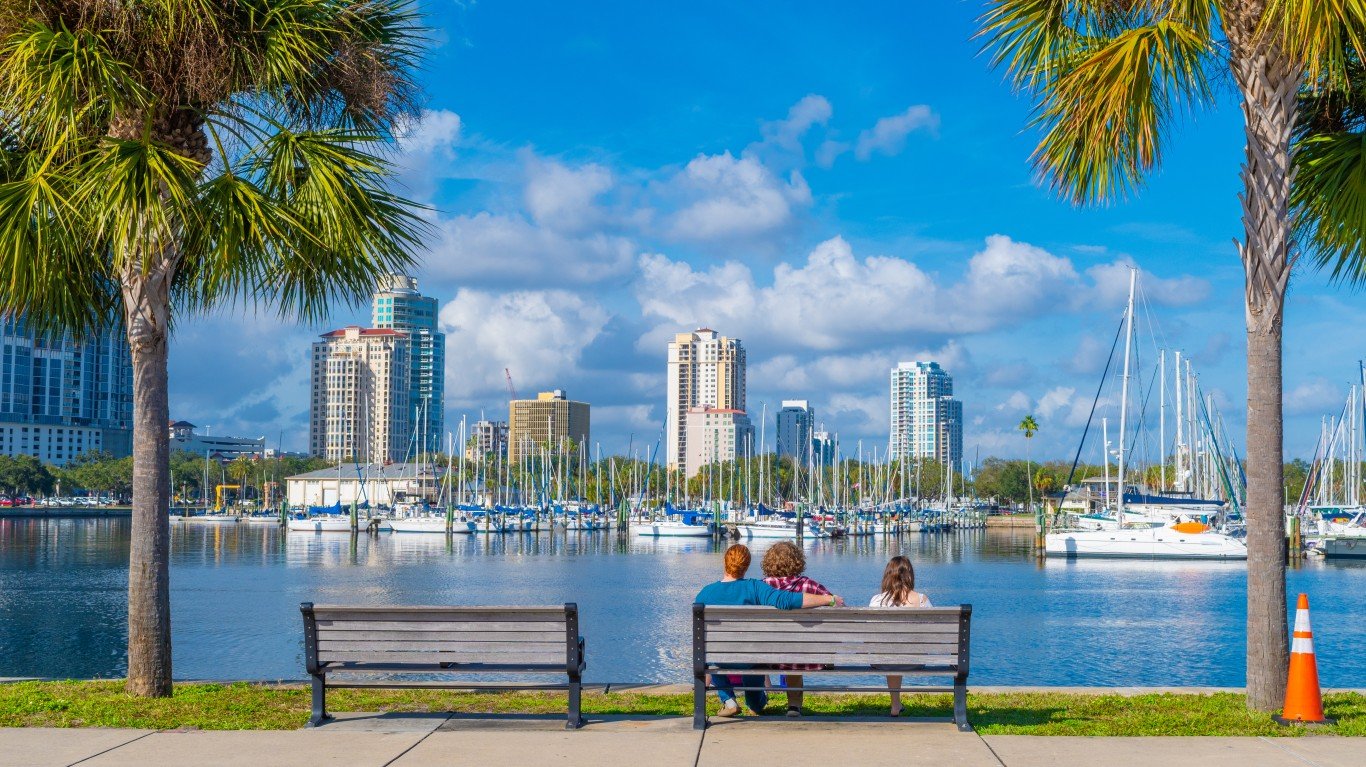
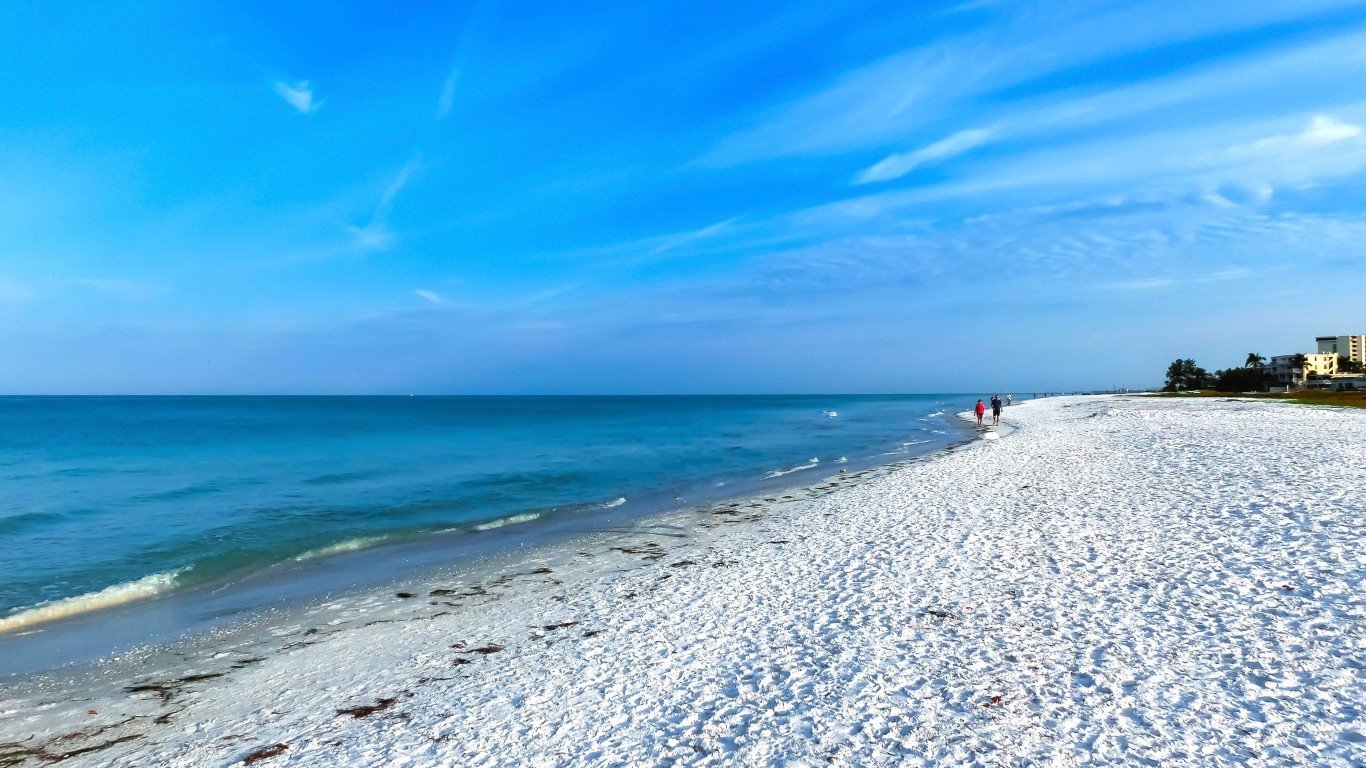
Endless Sun on Florida’s Gulf Coast: Here’s How to Retire There at 65 on $1.1 Million
Florida’s Gulf Coast remains one of America’s most popular retirement destinations. Warm winters, no state income tax, and communities such as Sarasota, Venice, and Punta Gorda continue to attract retirees from across the country. The question is whether a 65-year-old…

This post may contain links from our sponsors and affiliates, and Flywheel Publishing may receive compensation for actions taken through them.
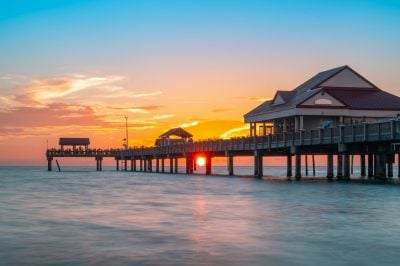
Florida’s Gulf Coast remains one of America’s most popular retirement destinations. Warm winters, no state income tax, and communities such as Sarasota, Venice, and Punta Gorda continue to attract retirees from across the country. The question is whether a 65-year-old with $1.1 million and Social Security income can comfortably afford the lifestyle. The answer depends heavily on one cost that many retirement plans underestimate.
What Gulf Coast Living Actually Costs in Current Dollars
Florida’s cost of living index sits at 103.414, modestly above the national average. That number hides the spread. Inland Pasco or Citrus counties run well below it. Sarasota, Naples, and barrier-island ZIP codes run well above. We will price the middle: a paid-off two-bedroom in a non-waterfront Gulf Coast community.
Housing punishes the unprepared. Even owning free and clear, expect property taxes in the $4,500 to $6,500 range on a home in the $375,000 to $425,000 band, HOA or CDD fees from $1,800 to $3,600, and routine maintenance of roughly $4,000 a year. Utilities run $3,000 to $3,600 annually because air conditioning runs ten months a year.
Healthcare at 65 means Medicare. Between Part B premiums, supplemental coverage, prescription drug plans, and routine dental and vision expenses, a realistic healthcare budget for a retiree runs roughly $7,200 to $8,400 per year.
Food, transportation, and reserves round it out. A USDA moderate-cost food plan runs roughly $4,800 a year. A paid-off car costs $2,800 to $3,400 in Florida insurance, fuel, and maintenance. Reserves for vehicle replacement, gifts, travel, and roof work should sit at $6,000 to $8,000 annually. Compared with national household spending averages, this represents a relatively modest retirement lifestyle.
Turning the Budget Into a Portfolio Target
A realistic single-retiree Gulf Coast budget lands around $58,000 to $62,000 per year, including housing, healthcare, transportation, food, taxes, and insurance costs. Florida has no individual income tax and ranks fourth overall on the Tax Foundation’s competitiveness index, so the primary tax burden comes from federal income taxes.
For a 65-year-old receiving roughly $22,000 to $24,000 a year in Social Security benefits, the portfolio must cover the remaining spending needs. At a 4% withdrawal rate, a $1.1 million portfolio can generate about $44,000 annually. The math works, but it leaves less margin for error than many retirees expect, particularly if major expenses grow faster than inflation.
The portfolio math is helped by today’s interest-rate environment, which allows retirees to earn meaningful income from cash and high-quality bonds while maintaining stock exposure for long-term growth.
The Insurance Line That Quietly Eats This Scenario
Florida homeowners insurance on the Gulf Coast now behaves like a second mortgage. A non-waterfront inland home outside the Special Flood Hazard Area costs $4,500 to $7,500 a year to insure. Move closer to the water and you stack a separate NFIP or private flood policy on top, often another $2,000 to $4,000. Renewal increases have run double digits in multiple recent years, well above the 0.5% monthly CPI readings that make general inflation look benign.
Compound a 7% annual insurance increase over a 25-year retirement and a $6,000 premium today becomes north of $32,000 a year by your late 80s, in a budget where Social Security only grows with CPI. That single line, ignored, is what turns a workable plan into a forced sale at 82. Built into the plan with a dedicated reserve and deliberate choices about wind mitigation, distance from the coast, and whether to self-insure flood, it is survivable.
What It Actually Takes
Retiring at 65 on Florida’s Gulf Coast with $1.1 million is achievable, but the margin is thinner than many retirees expect. A paid-off home, a realistic budget, and Social Security covering a meaningful share of expenses make the numbers work. The challenge is that insurance costs can rise far faster than inflation or Social Security benefits. Retirees who plan for that reality have a much better chance of making the Gulf Coast dream sustainable over the long term.
Contact [email protected] for any questions or corrections.
Drew Wood has edited or ghostwritten nine books and published more than 1,500 articles on investing, business, politics, travel, world cultures, wildlife, and earth science. He holds a doctorate and four master's degrees and has nearly 30 years of college teaching experience. His travels have taken him to 25 countries, including three years living in Ukraine.