Could You Build Your Own “Wonderful Life” In The Town That Inspired Bedford Falls?
Every December, millions of Americans watch It’s a Wonderful Life and imagine living in a place like Bedford Falls: a walkable town, familiar faces, a historic downtown, and a pace that feels slower than modern life. For some retirees, that…

This post may contain links from our sponsors and affiliates, and Flywheel Publishing may receive compensation for actions taken through them.
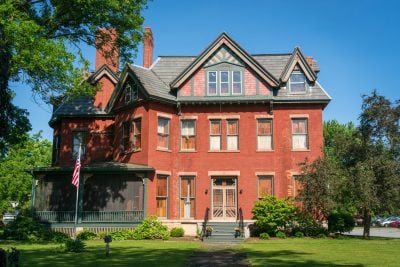
Every December, millions of Americans watch It’s a Wonderful Life and imagine living in a place like Bedford Falls: a walkable town, familiar faces, a historic downtown, and a pace that feels slower than modern life. For some retirees, that fantasy leads to a practical question. If Seneca Falls, New York, the village widely believed to have inspired Bedford Falls, is a real place, could you actually afford to retire there? For a 67-year-old with a $750,000 portfolio and $2,800 a month in Social Security, the answer depends less on movie nostalgia than on what the numbers look like after the credits roll.
Why Seneca Falls Pulls At Retirees
The attraction is not only scenery and sentiment. It is the cost structure. Seneca Falls offers many of the amenities retirees want without requiring the housing budget of a major metro area or a high-profile retirement destination. Daily life is built around a small, walkable downtown, local services, and relatively short driving distances, which keeps transportation and entertainment spending modest.
Location also helps the math. Rochester and Syracuse are each about an hour away, giving residents access to larger healthcare systems, specialist care, shopping, and commercial airports without paying Rochester or Syracuse housing costs. That matters because retirement is often a balancing act between affordability and access. Seneca Falls sits in the middle of that tradeoff rather than forcing retirees to choose one or the other.
The Finger Lakes region adds value in a different way. Many retirees spend heavily on travel, recreation, and second-home destinations. Living in an area that people already visit for weekends and vacations reduces the need to spend money chasing those experiences elsewhere. Lakes, parks, wineries, and historic sites become part of ordinary life rather than occasional trips.
Most important, Seneca Falls allows a retiree to buy into a lifestyle that has become expensive in many parts of the country. The combination of a small-town environment, proximity to healthcare and regional services, and housing costs that remain below many retirement hot spots means a portfolio can support a higher standard of living than the same assets would provide in places like coastal Florida, much of the Northeast corridor, or popular mountain retirement towns.
The Annual Budget
Housing is where Seneca Falls earns its reputation. A solid two- or three-bedroom home runs in the low to mid $200,000s. Property tax surprises transplants: a combined town, county, and school bill of roughly $6,000 to $7,500 a year on a $250,000 home is realistic. Homeowners insurance is cheap because there are no hurricanes, but a century-old housing stock means budgeting for roof, furnace, and plumbing work.
Heating catches Floridians off guard. A drafty 1920s colonial on natural gas can run $1,800 to $2,400 from November through March. Add electricity, water, sewer, and internet, and total utilities land around $4,500 a year.
Healthcare at 67 is straightforward. Medicare Part B is $202.90 a month in 2026, the Part B deductible is $283, and a Medigap Plan G plus a Part D drug plan typically push all-in healthcare to roughly $4,800 to $5,500 a year before dental or vision work. Cayuga Health and Geneva General handle routine care locally; Rochester and Syracuse handle the rest.
Groceries for one person at a moderate USDA food-plan tier run about $4,800 a year. A car (insurance, gas, maintenance, replacement reserve) runs $4,500 to $5,500. A miscellaneous and reserves bucket covering home maintenance, gifts, travel, and emergency cushion deserves $6,000 to $8,000.
A comfortable single-person budget in Seneca Falls lands around $48,000 to $54,000 a year. A more frugal version can run closer to $40,000.
Does The Portfolio Cover It
Social Security delivers $33,600 a year. At a 4% withdrawal rate, the $750,000 portfolio produces another $30,000, for gross income of about $63,600. Against a $52,000 budget, there is genuine breathing room, even after federal tax on the IRA withdrawal.
The income side is straightforward. A blend of a total US stock index fund, an international index, an intermediate Treasury ladder, TIPS for inflation protection, and a modest sleeve of investment-grade corporates and a REIT index produces the cash flow without forcing reach-for-yield products. With the 10-year Treasury at 4.55%, the fixed-income side finally pays again.
The New York Tax Wrinkle
Many retirees dismiss Seneca Falls the moment they hear the words “New York taxes.” The reality is more nuanced. New York fully exempts Social Security benefits from state income tax and allows residents age 59½ and older to exclude up to $20,000 per year of income from pensions, IRAs, and other qualified retirement accounts. A retiree in Seneca Falls withdrawing $30,000 from an IRA while collecting Social Security would owe state income tax on only about $10,000 of that withdrawal, producing a state income tax bill measured in hundreds of dollars rather than thousands.
That distinction matters because New York’s reputation is driven largely by working-age households. The state ranks last on the 2025 State Tax Competitiveness Index and carries one of the highest overall tax burdens in the country. Those statistics are real, but they do not tell you much about a retiree living primarily on Social Security and retirement-account withdrawals.
For someone considering Seneca Falls, the bigger tax issue is usually property taxes, not income taxes. The state’s retirement-income exemptions soften the income-tax hit considerably. Whether the town works financially often comes down to the specific house you buy and the annual property tax bill attached to it. In many cases, that bill matters far more than New York’s income-tax rates.
The Real Answer
The real-life version of Bedford Falls can work surprisingly well as a retirement destination. A 67-year-old with a $750,000 portfolio and $2,800 per month in Social Security can support a roughly $50,000 annual spending plan using a withdrawal rate near 4%, while still maintaining a reasonable cushion for home repairs, healthcare surprises, and the occasional larger expense.
The key variables are not the stock market or even New York’s income taxes. They are housing costs, property taxes, and whether you genuinely want to live in a small Finger Lakes town through all four seasons. Get those pieces right, and Seneca Falls offers something increasingly difficult to find: a retirement that is both financially sustainable and rooted in a real community rather than a manufactured retirement destination.
Contact [email protected] for any questions or corrections.
Drew Wood has edited or ghostwritten nine books and published more than 1,500 articles on investing, business, politics, travel, world cultures, wildlife, and earth science. He holds a doctorate and four master's degrees and has nearly 30 years of college teaching experience. His travels have taken him to 25 countries, including three years living in Ukraine.