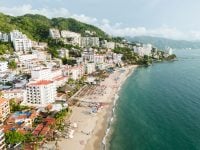
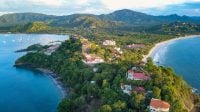
Could You Retire Better In Puerto Vallarta or Florida With $500,000?
A couple in their mid-sixties has done many things right. They built a $500,000 retirement portfolio, expect about $2,200 a month from Social Security, and thought Florida would be their retirement destination. Then home prices climbed, insurance costs surged, and…

This post may contain links from our sponsors and affiliates, and Flywheel Publishing may receive compensation for actions taken through them.
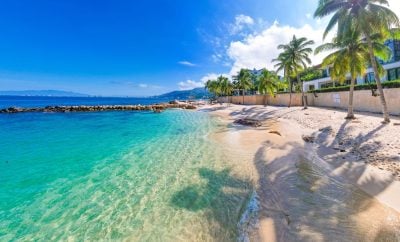
A couple in their mid-sixties has done many things right. They built a $500,000 retirement portfolio, expect about $2,200 a month from Social Security, and thought Florida would be their retirement destination. Then home prices climbed, insurance costs surged, and the numbers stopped looking as comfortable as they once did. Now they are looking south to Mexico’s Pacific coast and asking a simple question: can the same retirement dollars buy a better life there than they can in Florida?
The answer starts with the income. A $500,000 portfolio supports roughly $20,000 a year at a conservative 4% withdrawal rate. Add $26,400 from Social Security, and the household has about $46,400 in annual gross income, or roughly $3,870 per month before taxes. The question is not whether they can retire. It is where that income buys the lifestyle they actually want.
The $500,000 Retirement Test
In Puerto Vallarta, $3,870 a month is a real budget. A long-term rental in a walkable neighborhood like Versalles or Fluvial typically runs $900 to $1,400 a month furnished. Utilities, including electric with air conditioning in summer, internet, and water, generally fall between $150 and $250. Groceries for one person eating mostly local produce, fish, and chicken run $300 to $400, with another $200 to $300 for restaurants several times a week. A weekly housekeeper costs about $40 to $60 per visit.
Healthcare is where the math gets interesting. Private insurance for a 67-year-old in Mexico often costs $3,500 to $6,000 a year, and many carriers cap new enrollment at 65. Most American retirees in Vallarta keep Medicare Parts A and B active for trips home and pay out of pocket locally, where a specialist visit runs $40 to $70 and an MRI costs a few hundred dollars. Budgeting $400 to $500 a month for combined Medicare premiums, supplemental coverage, and out-of-pocket Mexican care is realistic.
Add transportation, entertainment, and a reserve bucket for travel back to the U.S., home repairs on a rental, and unexpected costs, and a comfortable single retiree lands around $2,800 to $3,200 a month. That leaves real margin on $3,870.
What The Same Money Buys In Florida
In a mid-priced Florida retirement community, the same $46,400 covers the basics and not much else. Florida’s cost of living index sits at 103.4, above the national average. A modest one-bedroom rental in an inland 55-plus community runs $1,500 to $2,000. Homeowners face property taxes, HOA fees, and property insurance that has repriced hurricane and flood risk sharply upward. Utilities with summer cooling, a car payment or replacement reserve, auto insurance, gas, and groceries that reflect a CPI that has risen from 321.4 to 334.0 over the last year consume most of the budget. Medicare premiums and a supplement plan run a similar $400 to $500 a month.
The lifestyle outcome is the gap. Florida delivers a careful retirement at this income, where dining out is a planned event and a roof repair becomes a budget crisis. Vallarta delivers room to enjoy the week.
The Hidden Advantage Of Lower Expenses
Cutting annual expenses by $20,000 is mathematically identical to having saved another $500,000 at a 4% withdrawal rate. Cut $15,000 and it is the equivalent of adding $375,000 to the portfolio. Cut $25,000 and it is worth $625,000. That is the entire case for geographic arbitrage in one sentence.
For someone staring at a retirement shortfall, those numbers matter. Accumulating another half-million dollars may require years of additional work, saving, and market luck. Relocating to a place where the same lifestyle costs substantially less can produce the same financial effect almost immediately. The portfolio stays the same. The required spending shrinks. For some retirees, moving south is not just a change of address. It is the fastest way to buy themselves a more comfortable retirement.
The Risks Nobody Mentions
The math is real, and so are the costs that do not show up on a spreadsheet. Family distance compounds with age, and the trip home gets harder after 75. The peso traded near 17.4 to the dollar recently, but a 20% currency swing in the wrong direction reshapes the budget. The Temporada residency visa requires proof of income or savings and must be maintained. Private long-term care in Mexico is limited and rarely covered by U.S. insurance, and Medicare does not pay for care delivered abroad. Returning to the U.S. after a decade away means re-entering a housing and healthcare market that has kept moving without you. Vallarta rewards retirees who are healthy, mobile, adaptable, and comfortable in basic Spanish. It punishes those who need an English-speaking medical system, family across town, or the certainty of staying put.
The Verdict
Is $500,000 enough to retire comfortably in Puerto Vallarta? For a single retiree combining a 4% withdrawal rate with Social Security, yes. The numbers work, and they work with room to spare rather than constant budget stress. More importantly, the lifestyle supported by that income is often noticeably better than what the same retiree could afford in many parts of Florida.
The tradeoffs are real. Family is farther away, currency fluctuations affect purchasing power, daily life rewards at least some Spanish, and healthcare requires more active planning than simply showing a Medicare card. But for a 67-year-old who has already reached retirement, moving may be easier than accumulating another $500,000. In that sense, Puerto Vallarta is not just a destination. It is an alternative way of solving the retirement equation.
Contact [email protected] for any questions or corrections.
Drew Wood has edited or ghostwritten nine books and published more than 1,500 articles on investing, business, politics, travel, world cultures, wildlife, and earth science. He holds a doctorate and four master's degrees and has nearly 30 years of college teaching experience. His travels have taken him to 25 countries, including three years living in Ukraine.