Could You Afford To Retire Near The Grand Canyon?
Every year millions of Americans spend thousands of dollars visiting the Grand Canyon. A much smaller number ask a different question: what if the vacation never had to end? A retiree with a $750,000 portfolio and Social Security on the…

This post may contain links from our sponsors and affiliates, and Flywheel Publishing may receive compensation for actions taken through them.

Every year millions of Americans spend thousands of dollars visiting the Grand Canyon. A much smaller number ask a different question: what if the vacation never had to end? A retiree with a $750,000 portfolio and Social Security on the horizon wants to know whether living within easy driving distance of one of the world’s most famous natural landmarks is a realistic retirement plan or an expensive fantasy.
The answer depends less on the canyon than on the town you choose around it. Northern Arizona offers everything from mountain-city living in Flagstaff to quieter gateway communities where housing costs and daily expenses look very different. The Grand Canyon may be the attraction, but the retirement math is determined by the place you buy groceries, see doctors, and pay property taxes.
Why Retire Near The Grand Canyon?
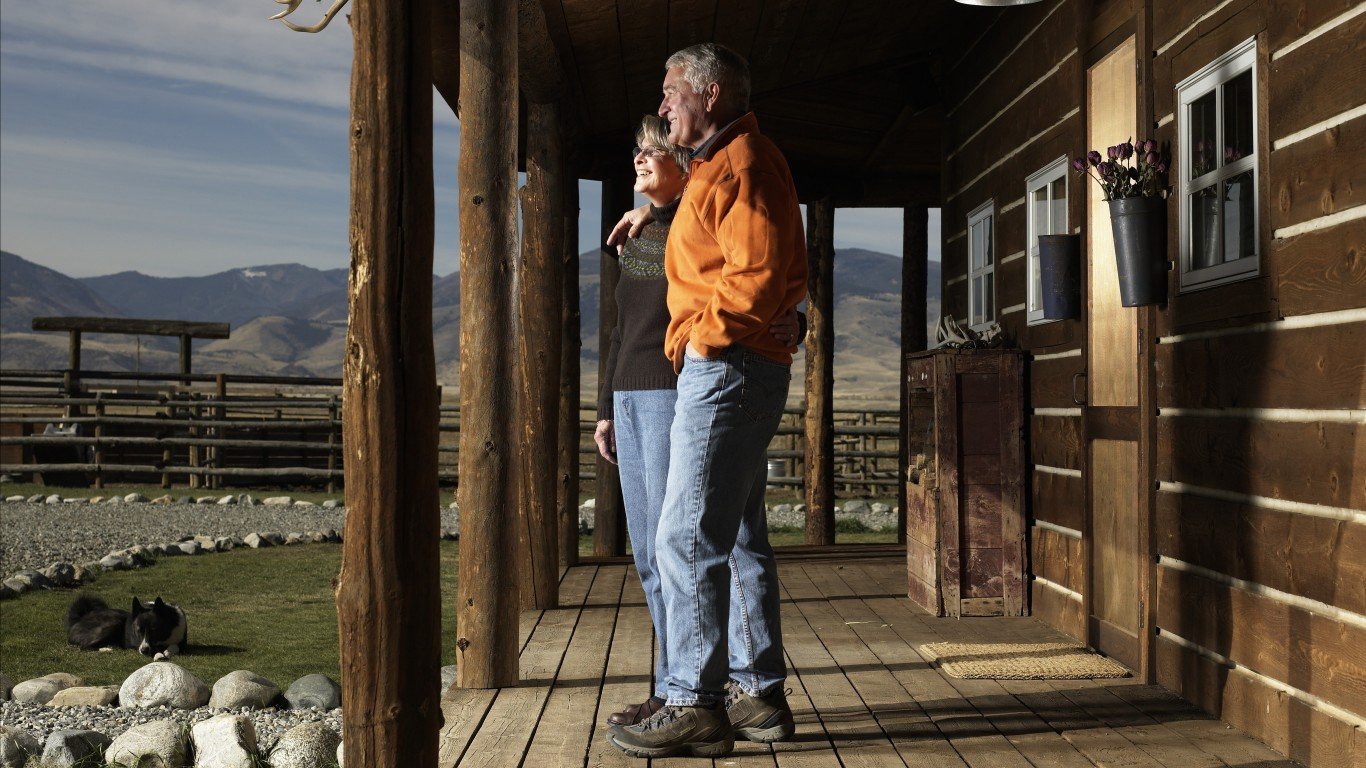
The answer is not the canyon itself. No one spends every day staring into it. The appeal is what surrounds it. Northern Arizona offers cool summers, four distinct seasons, mountain forests, dark skies, hiking trails, wildlife, and a pace of life that feels dramatically different from Phoenix or Las Vegas. Retirees who settle near the Grand Canyon are often choosing the broader landscape rather than the attraction. The canyon becomes what the ocean is to a coastal retiree: something extraordinary that remains available whenever the mood strikes. A place you can visit on a Tuesday morning, take for granted for a few months, and then rediscover when friends come to town. The real attraction is waking up every day in one of the most beautiful regions of the American West and never needing a vacation to get there.
The Two Towns That Make This Realistic
Practical access to Grand Canyon National Park comes down to two very different communities. Flagstaff, at roughly 7,000 feet, is the regional hub, with a major hospital, a university, extensive shopping, and the broadest range of services in northern Arizona. The tradeoff is cost. Housing prices routinely resemble those of much larger metropolitan areas, and the cost of living runs noticeably above both the Arizona and national averages.
Williams, about an hour west of Flagstaff and known as the gateway to the Grand Canyon Railway, offers a slower pace and a lower cost structure. Housing remains meaningfully less expensive than Flagstaff, property taxes are modest by national standards, and Arizona’s effective property tax rate remains among the lowest in the West. Retirees give up some healthcare access, shopping, and amenities, but they gain a retirement budget with considerably more breathing room.
That distinction largely determines whether a $750,000 portfolio feels comfortable or constrained. In Flagstaff, a significant share of retirement assets may be consumed by housing. In Williams, more of the portfolio remains available to fund the lifestyle that brought retirees to northern Arizona in the first place.
The Budget That Has To Add Up
Social Security at $2,800 per month delivers $33,600 a year. Arizona does not tax Social Security, which means every dollar of the benefit arrives as usable income. A disciplined 4% withdrawal from a $750,000 portfolio adds another $30,000, bringing total available income to roughly $63,600 before federal taxes.
For a single 67-year-old who owns a home outright in Williams, annual spending might look something like this:
- Property tax, homeowners insurance, utilities, and maintenance reserve: about $11,000
- Medicare premiums, supplemental coverage, prescriptions, and out-of-pocket costs: about $7,000
- Food and household spending: about $5,000
- Transportation, including a reliable SUV and the miles that come with rural Arizona: about $5,500
- Travel, recreation, gifts, and a vehicle replacement reserve: about $8,000
- Federal taxes and miscellaneous expenses: about $3,500
That produces a working budget of roughly $40,000 per year. Social Security covers most of it. The portfolio covers the rest and leaves room for unexpected expenses, healthcare surprises, and the occasional splurge. The same retiree in Flagstaff faces a different equation. Higher housing costs can add $12,000 to $20,000 a year to the budget, quickly consuming much of the portfolio’s income and leaving far less margin for the lifestyle that brought them to northern Arizona in the first place.
One Cost Many Retirees Underestimate
It’s easy to underestimate what it takes to own a home at altitude in wildfire country. Northern Arizona’s ponderosa forests are beautiful, but they come with insurance complications that have become more pronounced in recent years. Premiums for homes around Flagstaff and the surrounding rim country can run well above national averages, and future availability may matter as much as future price. Retirees should budget $2,000 to $3,500 annually for homeowners insurance and consider scenarios where that figure rises materially over time. Add higher winter heating bills, snow-capable transportation, and occasional long drives to Phoenix for specialized medical care, and the carrying costs of mountain living become part of the retirement equation.
Healthcare deserves its own margin of safety. Medical costs have consistently risen faster than general inflation, which means a retirement budget that works at 67 may feel tighter at 77 or 87. Social Security helps, but retirees should not assume annual cost-of-living adjustments will fully offset rising premiums, prescriptions, and out-of-pocket expenses. The Grand Canyon may be timeless. Healthcare inflation is not.
So, Can You Do It?
In Williams or a similar small community the arithmetic that works is a paid-off modest home, a 4% withdrawal on the $750,000 portfolio held in a mix of broad-market index funds, a Treasury ladder anchored to today’s 4.55% ten-year yield, TIPS for the inflation tail, and a small REIT or preferred sleeve for income, targeting a long-run real return of roughly 4% to 4.5%. That produces a $63,000 to $65,000 lifestyle against a $36,000 to $40,000 budget, with the difference absorbing wildfire premiums, a future vehicle, and the healthcare creep that will outrun every other line.
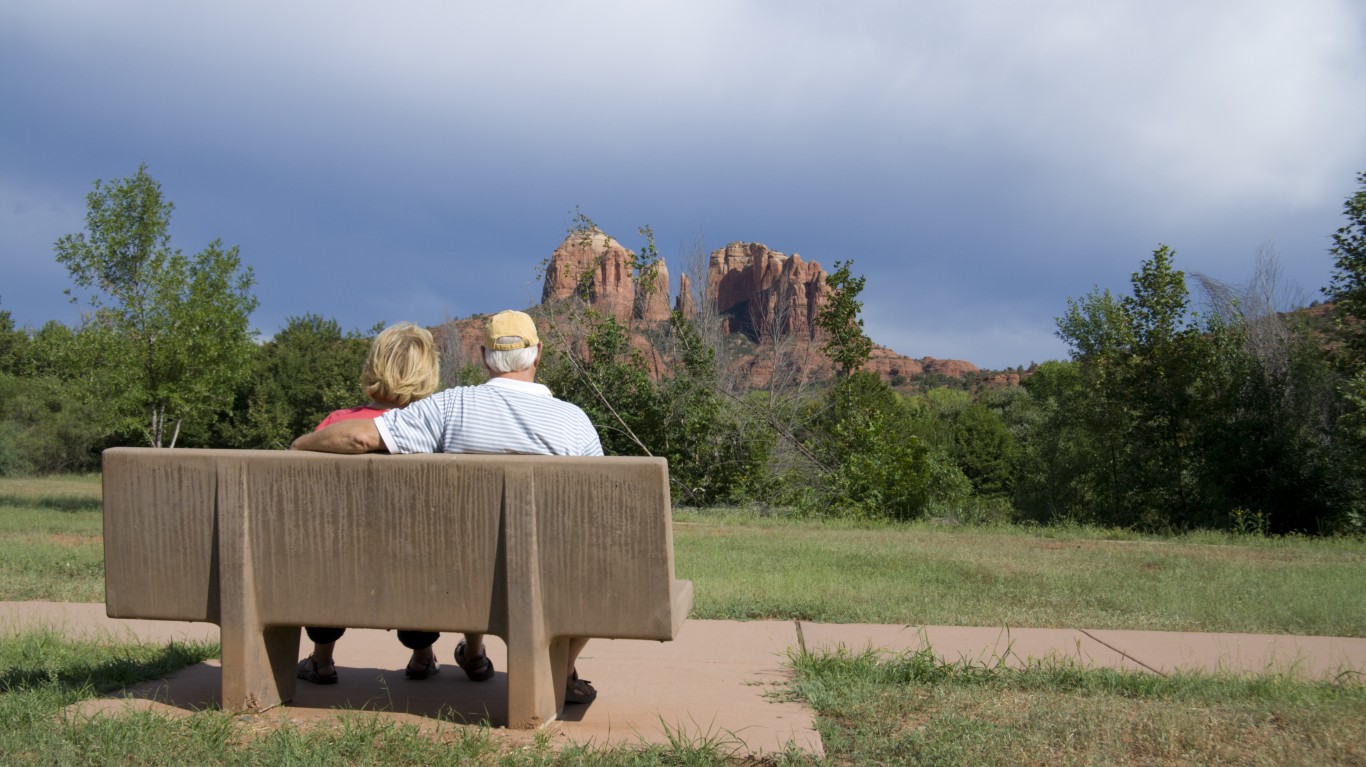
Flagstaff is the harder answer. On $750,000 it works only if you bring meaningful home equity from a prior sale, accept renting, or downsize to a townhouse and treat the portfolio as a true reserve rather than an income engine. The lifestyle is real either way: dark skies, cool summers, the South Rim as a Tuesday afternoon, Sedona and Zion and Lake Powell inside a weekend. The question is whether you let the insurance map and the elevation choose the town for you, or you choose first and find out later.
Contact [email protected] for any questions or corrections.
Drew Wood has edited or ghostwritten nine books and published more than 1,500 articles on investing, business, politics, travel, world cultures, wildlife, and earth science. He holds a doctorate and four master's degrees and has nearly 30 years of college teaching experience. His travels have taken him to 25 countries, including three years living in Ukraine.