The Real Cost of Retiring in San Diego at 62 and Never Leaving the Coast
Can you retire at 62 and stay on the San Diego coast, or does the math force you inland or out of state? The coast is where the lifestyle lives: Cardiff, Encinitas, Pacific Beach, La Jolla, Del Mar, Coronado. This…

This post may contain links from our sponsors and affiliates, and Flywheel Publishing may receive compensation for actions taken through them.
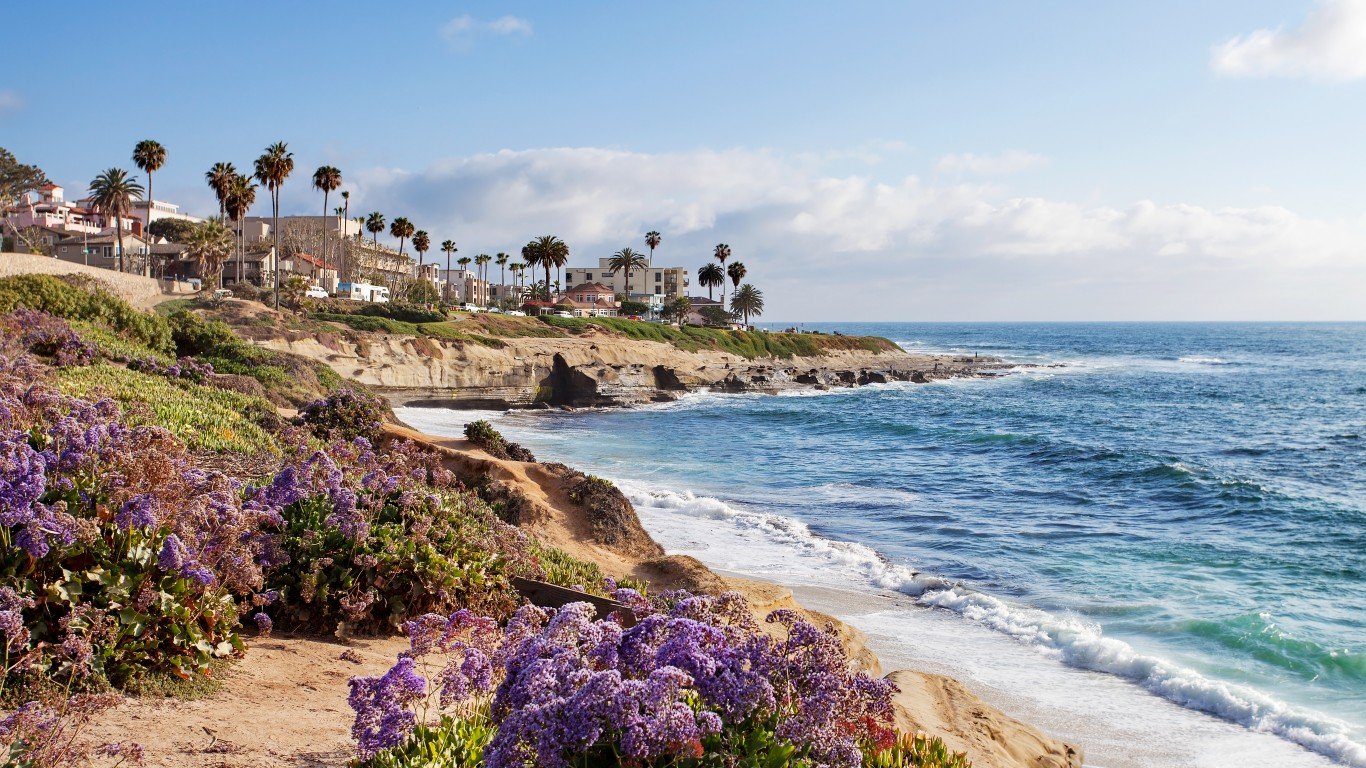
Can you retire at 62 and stay on the San Diego coast, or does the math force you inland or out of state? The coast is where the lifestyle lives: Cardiff, Encinitas, Pacific Beach, La Jolla, Del Mar, Coronado. This piece walks through what coastal retirement at 62 actually costs, what portfolio gets you there, and the structural gotcha most people underprice.
What the coast actually costs a 62 year old
California’s cost of living runs 10.72% above the national average, and coastal San Diego sits well above the state line. The Bureau of Economic Analysis pegs California’s real income at $78,015 against nominal per capita of $86,378, a purchasing-power gap that compounds every year you stay. National home prices are still elevated at a Case-Shiller reading of 329.9, and the San Diego coastal submarket trades at a steep premium to that.
For a couple owning a roughly $1.8 to $2.2 million coastal home outright, here is the realistic working budget in current dollars:
- Housing carry (property tax at the Prop 13 base plus any Mello-Roos, insurance, HOA where applicable, and maintenance reserve for stucco, roof, HVAC, and salt-air corrosion): roughly $38,000 to $46,000.
- Healthcare bridge to 65 (ACA Silver coverage for a couple at 62 in San Diego County, before any premium tax credit): roughly $22,000 to $30,000.
- Food at the USDA Moderate plan for two adults this age, plus dining culture: about $15,000.
- Utilities (SDG&E rates are among the country’s highest), water, internet, phones: about $6,500.
- Transportation with two cars, replacement reserves included: about $10,000.
- Travel, gifts, personal, recreation: $15,000 to $20,000.
- Reserves and miscellaneous (umbrella, earthquake rider, plumber): $8,000.
That lands between $115,000 and $135,000 of after-tax spending. Call it $125,000 as a working number. Federal and California taxes on the withdrawals push the gross need to roughly $150,000 to $160,000 a year. California taxes traditional IRA and 401(k) distributions as ordinary income, with no retirement-income carve-out.
The portfolio that supports it
Claiming Social Security at 62 cuts benefits by about 30% versus the full retirement age, and each year of delay to 70 adds roughly 8%. For a high-earning couple, combined benefits at 62 might run $48,000 to $55,000; delaying the higher earner to 70 with the lower earner claiming earlier can push lifetime household income meaningfully higher. The 2026 COLA of 2.8% applies whenever you claim.
Assume the couple claims at 67 and bridges with the portfolio. Gross gap to fill: about $155,000 a year for the first five years, then about $100,000 after Social Security turns on. At a 3.3% withdrawal rate appropriate to a 30-plus year horizon starting at 62, the bridge math points to roughly $3.6 to $3.9 million in invested assets, on top of the paid-off coastal home. A blended portfolio of broad index funds, a dividend-oriented sleeve, and a five-year treasury ladder for the bridge years is standard.
If the home is not paid off, add the mortgage to the budget and the target climbs above $4.5 million quickly. If you are renting on the coast, plan on $4,500 to $7,000 a month for anything livable, and the target moves toward $5 million.
The coastal gotcha almost nobody prices
Most planners miss this: the years from 62 to 65 are an ACA bridge, and ACA premium tax credits phase out based on modified adjusted gross income. Every dollar pulled from a traditional IRA counts. A couple needing $150,000 gross from a pre-tax account will sit well above the subsidy cliff, paying full unsubsidized premiums that can easily run north of $30,000 a year for two. California stacks state income tax on the same withdrawal at marginal rates that reach among the highest individual income tax rates in the country. At 65, Medicare takes over: the 2026 Part B standard premium is $202.90 per month, with the Part A inpatient deductible at $1,736, and IRMAA surcharges kick in for joint filers with modified AGI above $218,000, climbing in tiers from there.
A couple who funded Roth conversions in their late 50s, then drew from Roth and taxable accounts between 62 and 65, can sometimes hold modified AGI under the ACA cliff and capture five-figure premium credits per year. The same household drawing entirely from a traditional IRA will hand back $50,000 to $80,000 in foregone subsidies and extra state tax over the three-year bridge. Lower AGI in those years also means lower IRMAA surcharges in years 65 and 66, because IRMAA looks back two years.
Major carriers have pulled back from California coastal and wildfire-adjacent zip codes. The FAIR Plan plus a difference-in-conditions wrap can run several times what a standard homeowner policy cost a few years ago. Budget $5,000 to $9,000 of annual insurance into the housing line and revisit it every renewal.
What it really takes
To retire at 62 and never leave the San Diego coast, plan on a paid-off or near-paid-off coastal home plus roughly $3.6 to $4 million in invested assets, a withdrawal rate around 3.3% for the long horizon, and a bridge strategy that mixes Roth and taxable assets through 65 so the ACA subsidy and IRMAA windows work for you instead of against you. Delay the higher earner’s Social Security claim toward 70 if longevity is on your side. Budget realistically for insurance and maintenance on a coastal structure. Get those pieces right and the coast stays affordable for the next 30 years. Get the bridge wrong and you will pay for the same retirement twice.
Contact [email protected] for any questions or corrections.
I am a long time investor and student of business, and believe finding good companies that can become great investments is the best game on earth. After 20 years of writing and researching the public markets it is clear that individuals have never had more tools and information to take control of their financial lives. From ETFs and $0 commissions to cryptos and prediction markets there has never been a greater democratization of access to investing.
I write to help people understand the investments available to them so they can make the best choice for their portfolio, whether they're starting out or looking for income in retirement.