$3,000 a Month in Margaritaville: Here’s How to Retire There at 62 Without Touching Your Savings
Retiring at 62 in a Florida 55-plus community on $3,000 a month sounds like the cleanest early retirement in America, until you run the actual numbers against what Florida really charges to live there.

This post may contain links from our sponsors and affiliates, and Flywheel Publishing may receive compensation for actions taken through them.

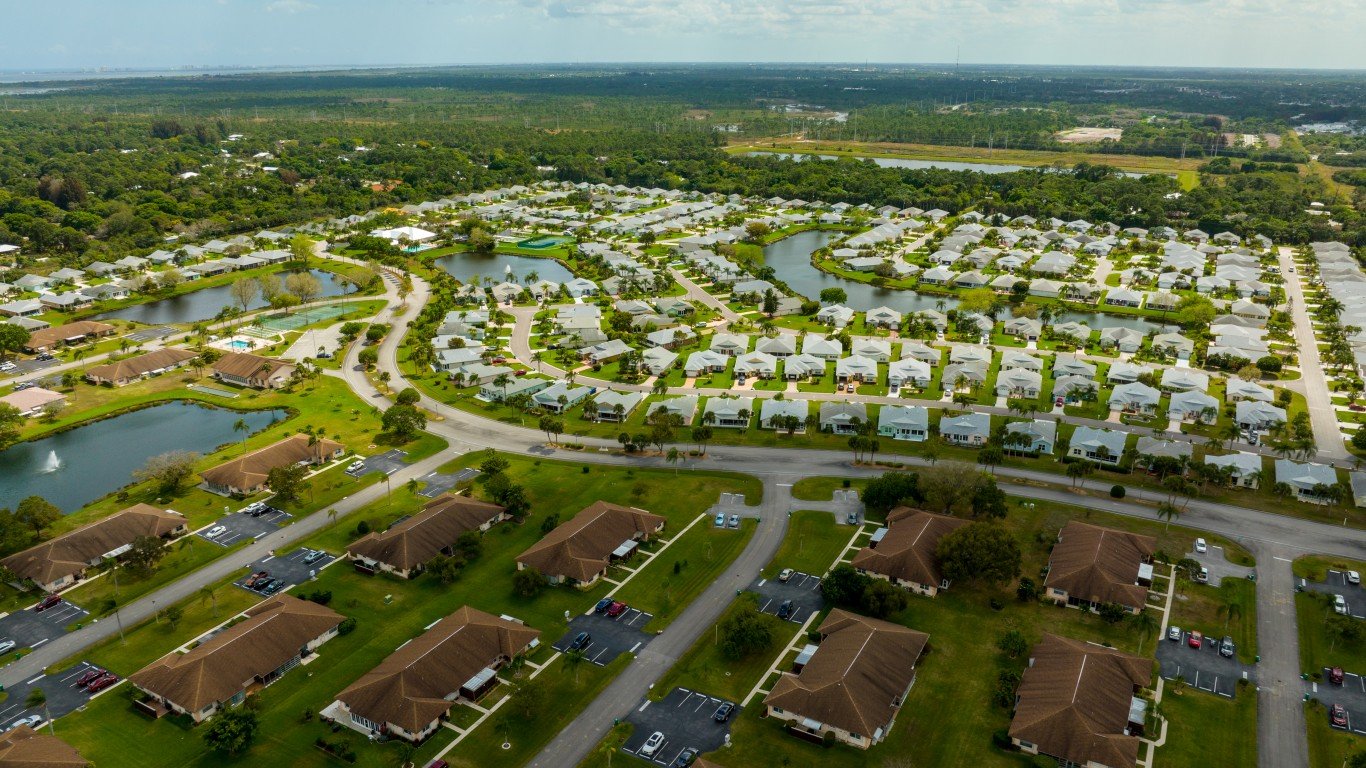
The pitch sells itself: 62 years old, flip-flops, a Jimmy Buffett-themed community with a bandshell and saltwater pool, and a $3,000 monthly budget that leaves your nest egg untouched. It is one of the most common scenarios readers ask us to stress-test, because on paper it sounds like the cleanest early retirement in America. The problem is that Margaritaville is a real place with real Florida carrying costs, and $3,000 a month at 62 has to clear a very specific set of hurdles before it earns that reputation.
What $3,000 a Month Really Buys in a Florida 55+ Community
Start with the location premium. Florida’s overall cost of living sits between 0.7% and 3% above the U.S. average depending on the index consulted, and branded 55-plus communities such as Latitude Margaritaville Daytona Beach and Latitude Margaritaville Watersound run above the state median because of amenities and HOA structures. That $36,000 annual budget only works if you own the home outright. A mortgage payment alone would swallow the entire spending plan.
Worth noting for anyone still shopping: Latitude Margaritaville Daytona Beach sold out all 3,763 homes in May 2025, nearly five years ahead of Minto’s original projections. The sales center is closed and the community is now a 100% resale market, which means no builder incentives, no new-construction warranties, and a resale inventory that has grown considerably. As of April 2026, the community carried approximately 103 active resale listings, with a median list price around $469,900 and an average sold price near $492,000. Buyers entering today are purchasing at market prices that have reset their assessed value for tax purposes, and they should plan accordingly.
A workable line-item picture for a paid-off two-bedroom villa:
- HOA and amenity fees: $343 to $393 a month depending on home collection, rising faster than headline inflation
- Property taxes with Homestead exemption: about $250 a month on a $350,000 assessed value
- Homeowners insurance: $350 to $500 a month
- Utilities and internet: roughly $275 a month with summer AC loads
- Food at home and dining: $550 a month using the USDA Low-Cost plan
- Healthcare (pre-Medicare ACA bridge): $300 to $500 a month after subsidies
- Transportation, gas, one older paid-off vehicle: $325 a month
- Miscellaneous, home maintenance reserve, gifts, taxes owed: $400 a month
That budget lands right at the $3,000 ceiling, assuming zero mortgage, zero car payment, and a spouse sharing fixed costs. Solo, the same lifestyle needs closer to $3,600.
The Income Math, No Principal Touched
“Without touching your savings” means every dollar comes from Social Security, interest, or dividends. Principal stays put.
Claiming at 62 costs you. Benefits are reduced by up to 30% versus your full retirement age amount for anyone born in 1960 or later, and each year of delay to 70 adds about 8%. A median career earner claiming at 62 in 2026 can expect somewhere around $1,500 to $1,650 a month. A couple with one higher earner and one modest earner can realistically pull in $2,600 combined at 62. The Social Security Administration confirmed a 2.8% COLA for 2026, giving beneficiaries a partially inflation-protected income base that compounds with each passing year. The Senior Citizens League’s most recent forecast puts the 2027 COLA at 3.5%, with the SSA set to make the official announcement on October 14, 2026. That adjustment would further strengthen the income base for anyone already claiming.
That leaves a gap of roughly $400 to $1,350 a month to fill from portfolio income. With the 10-year Treasury yield now trading above 5.2%, a $125,000 laddered Treasury or investment-grade bond position generates approximately $540 a month in interest income. A dividend ETF yielding 3.5% needs closer to $170,000 to do the same work. To fully close the solo gap without dividend cuts biting, you want $300,000 to $350,000 in income-producing assets, held separately from the house and from any emergency reserve.
The Florida Carrying Cost Nobody Prices Correctly
Most Margaritaville math misses the Florida insurance and HOA escalator, stacked on top of a three-year pre-Medicare gap. Florida homeowners insurance averaged $8,292 a year statewide in 2025, per Insurify’s analysis, with projections pointing to roughly $8,458 by year-end 2026. The encouraging shift is that the market is genuinely softening: insurance rates decreased in 51 of Florida’s 67 counties in 2026, as 44 insurers filed rate decreases and Citizens Property Insurance cut rates 8.7% statewide at its spring renewals. State Farm, USAA, and several private carriers filed reductions in the 7% to 10% range as well. For a home in Daytona Beach’s LPGA Boulevard corridor, which sits in FEMA Zone X (minimal flood risk), premiums are generally lower than the coastal South Florida average. The long-term escalator is still real, though. A $400 monthly insurance line today can quietly reach $700 by the time you hit 70, even if broader inflation stays near the Fed’s 2% target. HOA dues in amenity-heavy 55-plus communities face the same upward pressure, funding pool refurbishments, roof reserves, and hurricane repairs year after year.
Layer on the ACA bridge from 62 to 65. Living on Social Security plus taxable interest keeps your Modified Adjusted Gross Income low enough to qualify for meaningful premium tax credits, which is why the $300 to $500 healthcare line is achievable. The catch: any principal you touch, any Roth conversion, any capital gain harvest spikes your MAGI and can erase the subsidy for the entire year. That no-principal-touched discipline is the mechanism that keeps the healthcare number affordable. Florida helps by imposing no individual income tax at the state level, so Social Security, dividends, and interest all arrive without a state haircut.
What It Actually Takes
The realistic recipe requires several pieces to be in place simultaneously. First is a fully paid-off home in a Margaritaville-style community. Budget $400,000 to $550,000 in today’s resale market for a standard two-bedroom home, with entry-tier cottages and townhomes starting near $350,000 and larger villas running considerably higher. Second is a $300,000 to $350,000 income portfolio split between a treasury ladder and a dividend ETF sleeve targeting a blended yield near 4%. Third is a combined Social Security claim of $2,200 to $2,600 a month at 62 for a couple, or roughly $1,500 to $1,650 for a single higher earner. Fourth is a separate $40,000 cash reserve for hurricane deductibles and HOA special assessments. Total liquid assets outside the house: roughly $340,000 to $400,000.
Get all four pieces right, and $3,000 a month in Margaritaville at 62 works without a single share sold. Skip the paid-off house, or underestimate the insurance escalator, and the same headline quietly turns into a 5% withdrawal rate on a portfolio you promised yourself you would not touch.
Editor’s note: The Florida cost-of-living premium was revised to 0.7% to 3% above the national average, reflecting Q1 2026 MERIC index data showing Florida at 100.7; the 10-year Treasury yield was updated to above 5.2%, reflecting early October 2026 levels near a 24-year high; the 2027 COLA projection from the Senior Citizens League was confirmed at 3.5% per their September 2026 forecast, and the October 14, 2026 official SSA announcement date was added.
Contact [email protected] for any questions or corrections.
I am a long time investor and student of business, and believe finding good companies that can become great investments is the best game on earth. After 20 years of writing and researching the public markets it is clear that individuals have never had more tools and information to take control of their financial lives. From ETFs and $0 commissions to cryptos and prediction markets there has never been a greater democratization of access to investing.
I write to help people understand the investments available to them so they can make the best choice for their portfolio, whether they're starting out or looking for income in retirement.