What It Takes to Retire in Scottsdale at 60 and Never Worry About Money Again
Someone in their late 50s, looking at a paid-off house or healthy 401(k), often wonders if Scottsdale at 60 works. The answer depends on which Scottsdale you mean. The version with a casita, club membership, and zero anxiety about maintenance…

This post may contain links from our sponsors and affiliates, and Flywheel Publishing may receive compensation for actions taken through them.

Someone in their late 50s, looking at a paid-off house or healthy 401(k), often wonders if Scottsdale at 60 works. The answer depends on which Scottsdale you mean. The version with a casita, club membership, and zero anxiety about maintenance differs sharply from a quiet condo near Old Town. Let’s price the comfortable version.
What Scottsdale Actually Costs a 60-Year-Old Couple
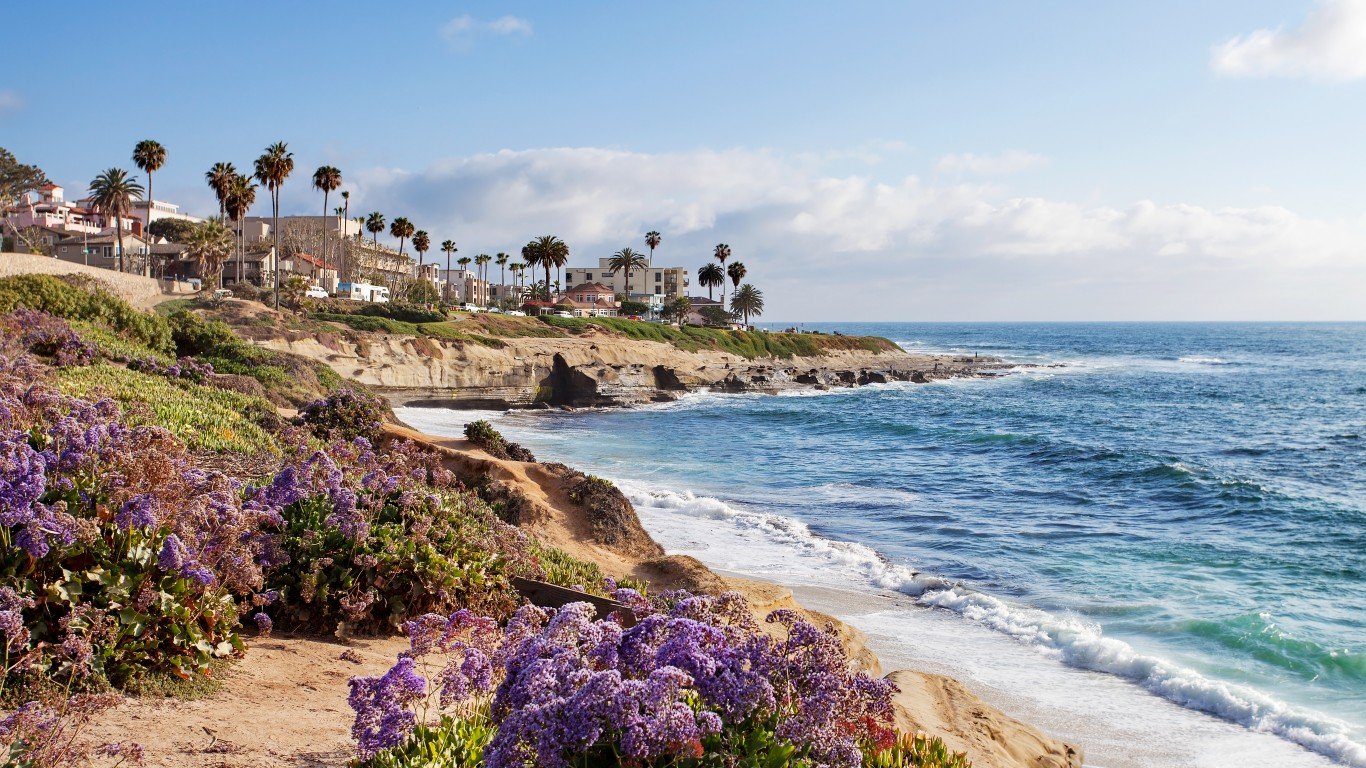
Arizona’s overall cost of living sits at 100.677 on the national index, which is misleading for Scottsdale specifically. The state average gets pulled down by Yuma and Kingman. Scottsdale itself trades in the same neighborhood as coastal California for housing, with median single-family prices comfortably north of $800,000 and desirable North Scottsdale and DC Ranch zip codes running well above that. The Case-Shiller national home price index sat at 329.9 in March 2026, near the high end of its 12-month range.
Assume the house is paid off. Here is what a comfortable Scottsdale year looks like in current dollars for a couple:
- Property tax, insurance, HOA, and maintenance on a roughly $900,000 home: about $22,000. Desert homes need HVAC systems, pool equipment, and exterior paint replaced faster than expected.
- Utilities, with summer cooling May through October: about $5,500.
- Healthcare, pre-Medicare, for two on an ACA silver plan: $14,000 to $24,000 depending on subsidy capture.
- Food, including dining-out culture: about $18,000, well above the $78,535 average annual household expenditure baseline for groceries alone.
- Two vehicles, fuel, insurance, replacement reserve: about $11,000.
- Travel, golf or club dues, gifts, entertainment: $20,000 to $30,000.
- Federal tax on portfolio withdrawals and 2.5% Arizona income tax: roughly $15,000 to $20,000.
- Miscellaneous and emergency reserve: $8,000.
That totals roughly $135,000 to $155,000 a year. Call it $145,000 as the realistic middle.
The Portfolio Number That Backs It Up
At 60, you are planning for a 30 to 35 year horizon, which argues for a withdrawal rate closer to 3.5% than the conventional 4%. Social Security helps later but not yet. The 2026 COLA came in at 2.8%, which roughly tracks the CPI level of 333.979 in May 2026, so future benefits should hold purchasing power.
If you claim at full retirement age, a dual-earner couple with solid lifetime earnings typically lands around $55,000 combined annually in today’s dollars. That leaves a portfolio gap of roughly $90,000 a year once Social Security starts. Divide by 3.5% and you need about $2.57 million producing income from 67 onward.
But the bridge years matter more than people realize. From 60 to 67, you fund the entire $145,000 yourself. That is seven years of full draw before Social Security arrives. Target $3.8 to $4.2 million in invested assets at 60, on top of the paid-off house. With 10-year Treasuries yielding 4.47% and short CDs averaging only 1.65%, a treasury ladder for the first seven years paired with an index fund and dividend ETF core for the long horizon is the structurally sound build.
The Detail Most Scottsdale Retirees Miss
Between 60 and 65, healthcare cost is governed by ACA subsidies, which depend on modified adjusted gross income. Keep MAGI under roughly $80,000 for a couple and subsidies are generous. Push above it and the cliff is real, sometimes $15,000 a year in lost subsidy. Then at 65, Medicare arrives, and a new cliff appears: IRMAA. A couple with joint MAGI above $218,000 starts paying Part B and Part D surcharges, and the brackets escalate quickly.
Scottsdale’s lifestyle naturally pushes withdrawals into the zone where both penalties bite. The fix is structural. You need a Roth bucket built years before retirement so that the years bridging ACA and the years just after Medicare onset can pull tax-free dollars without lighting up either MAGI calculation. Couples who do this right effectively buy themselves $20,000 to $40,000 a year in subsidies and avoided surcharges across the decade from 60 to 70. That is the difference between a $3.8 million plan working and a $4.5 million plan barely keeping up.
The Number, Plainly
To retire in Scottsdale at 60 and genuinely stop worrying: a paid-off home worth around $900,000, roughly $4 million in invested assets split across a treasury ladder for the bridge years and a global equity core for the long run, a 3.5% withdrawal rate, Social Security claimed at 67 or later, and a Roth bucket large enough to manage MAGI through the ACA-to-IRMAA corridor. The lifestyle is real at that number. Below $3 million, Scottsdale becomes a place you live carefully.
Contact [email protected] for any questions or corrections.
I am a long time investor and student of business, and believe finding good companies that can become great investments is the best game on earth. After 20 years of writing and researching the public markets it is clear that individuals have never had more tools and information to take control of their financial lives. From ETFs and $0 commissions to cryptos and prediction markets there has never been a greater democratization of access to investing.
I write to help people understand the investments available to them so they can make the best choice for their portfolio, whether they're starting out or looking for income in retirement.