The Real Cost of Retiring in Naples, Florida, at 68 on $1.2 Million Where No One Bothers You
We get this scenario in our inbox almost every week. Someone has crossed the line into their late sixties, has roughly seven figures saved, and wants to know if they can spend the next chapter of life in a quiet…

This post may contain links from our sponsors and affiliates, and Flywheel Publishing may receive compensation for actions taken through them.
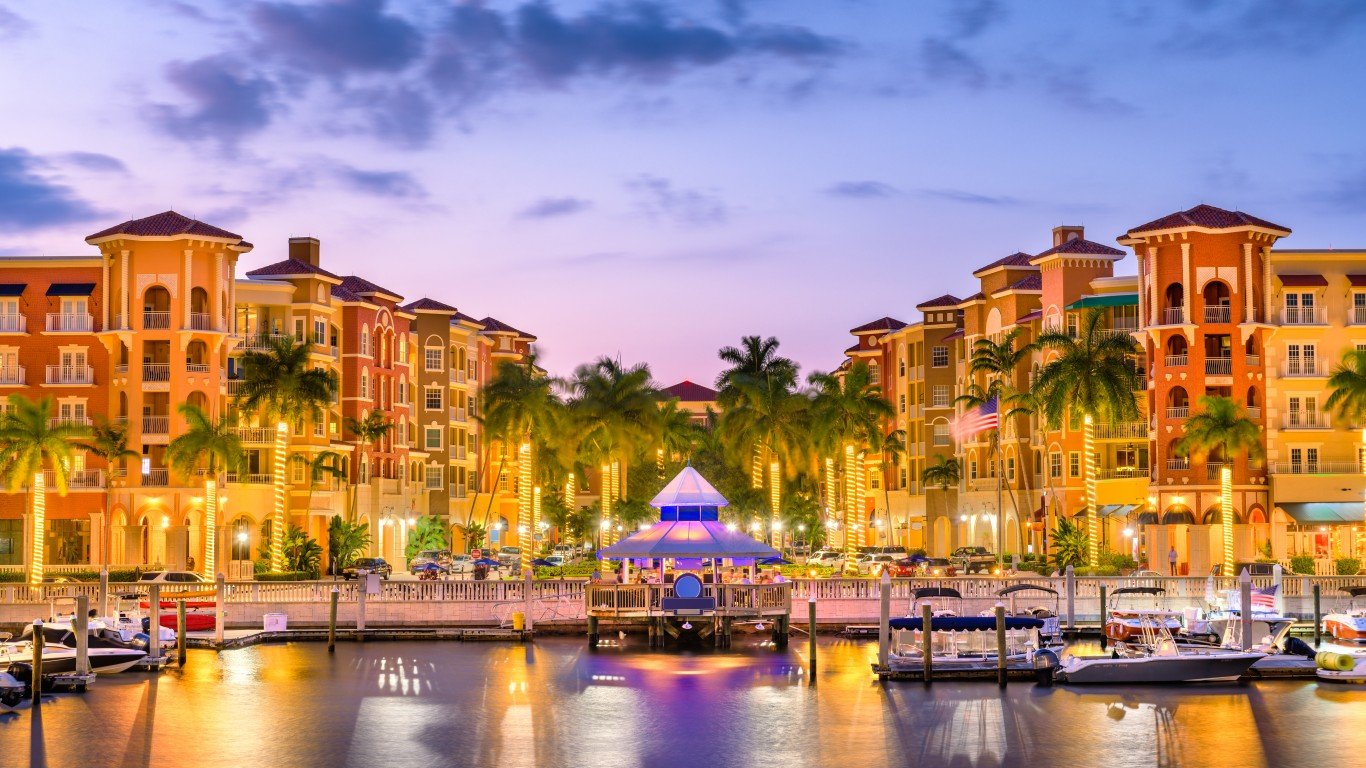
We get this scenario in our inbox almost every week. Someone has crossed the line into their late sixties, has roughly seven figures saved, and wants to know if they can spend the next chapter of life in a quiet stretch of Southwest Florida where the mail comes, the lawn gets cut, and the neighbors are far enough away that nobody knocks. Naples is the daydream. $1.2 million is the number. Sixty-eight is the age. Below is what the math actually says.
What “no one bothers you” costs in Naples
Naples sits well above the state average for Florida retirement markets, and Florida itself runs 3.414 points above the national cost-of-living baseline. Inside Collier County, the privacy premium is real. A genuinely secluded property, meaning the Golden Gate Estates style 2.5 acre lot or a low-density gated community east of the city, lands in the high six figures for an older, livable house. Call it $700,000 to buy in, paid in cash from the $1.2 million, which leaves $500,000 of investable assets. That is the version of this scenario that actually delivers the quiet. The condo-on-the-canal version saves cash but reintroduces the neighbors the headline promised to escape.
With the house owned outright, the working annual budget for one person looks roughly like this:
- Property tax after homestead exemption: about $5,500
- Homeowner’s insurance, wind and flood included: about $10,000
- Maintenance, lawn, pest, pool, septic on an acreage property: about $8,000
- Utilities and internet: about $4,800
- Food at the USDA liberal plan for one: about $6,000
- Healthcare, including the 2026 Part B premium of $202.90 a month, a Medigap policy, Part D, dental, and out-of-pocket: about $7,000
- Transportation and vehicle replacement reserve: about $6,000
- Personal, gifts, travel: about $8,000
- Miscellaneous and emergency reserve: about $5,000
That totals roughly $60,000 a year in current dollars. Florida helps on the tax side: the state ranks 4th overall on tax competitiveness and ties for 1st on individual income tax, meaning no state tax on Social Security, IRA withdrawals, or capital gains. Federal tax on this withdrawal pattern is modest.
The math, with Social Security doing the heavy lifting
At 68, you are a year past full retirement age, so delayed retirement credits have nudged your benefit up by roughly 8%. For a career earner who would have collected around $2,800 at FRA, that pushes monthly benefits to roughly $3,000, or about $36,000 a year, and the 2026 COLA of 2.8% is already baked in.
Subtract that from the $60,000 budget and the portfolio has to cover roughly $24,000 a year. On $500,000 of investable assets, that is a 4.8% withdrawal rate. Tighter than the textbook 4%, but workable over a roughly 25-year horizon at 68, especially with the 10-year Treasury at 4.46% anchoring a bond ladder and a balanced equity sleeve doing the growth work. Keep the portfolio at roughly 50/50 stocks and high-quality fixed income, and the arithmetic holds.
It holds, that is, until the insurance bill arrives.
The Florida insurance reality nobody prices in
Here is the consideration most $1.2 million Naples plans skate past. Florida’s homeowner’s insurance market has been the most stressed in the country for several years running. On a secluded inland property with mature trees, a metal or tile roof, and the wind and flood coverage Naples actually requires, $10,000 a year is the floor, not the ceiling. A bad hurricane season, an aging roof, or a carrier exit can move that line by thousands overnight. And CPI has climbed from 321.4 to 334.0 over the trailing year, with insurance and rebuild costs running well ahead of headline inflation.
The structural fix is to treat insurance as its own line that grows faster than the rest of the budget, and to hold a dedicated cash reserve (call it $40,000 to $50,000) earmarked for deductibles and a new roof in year ten or twelve. Top online savings and CDs pay multiples of the 1.65% national average 12-month CD rate, so this reserve can earn its keep without market risk.
What it actually takes
To land this scenario as written, you need: roughly $700,000 going into a paid-off house in a quiet pocket of the Naples area, $500,000 invested in a 50/50 portfolio drawing about 4.8% a year, a Social Security benefit in the $36,000 range thanks to delaying past FRA, a hardened reserve for the insurance and weather risk that comes with the territory, and a budget that holds at roughly $60,000 in today’s dollars. Push the house price up, or skip the reserve, and the math stops working. Respect both, and the quiet is yours.
Contact [email protected] for any questions or corrections.
I am a long time investor and student of business, and believe finding good companies that can become great investments is the best game on earth. After 20 years of writing and researching the public markets it is clear that individuals have never had more tools and information to take control of their financial lives. From ETFs and $0 commissions to cryptos and prediction markets there has never been a greater democratization of access to investing.
I write to help people understand the investments available to them so they can make the best choice for their portfolio, whether they're starting out or looking for income in retirement.