The Real Cost of Retiring in Margaritaville, America’s Most Laid-Back Retirement Community
The sales office at a Jimmy Buffett-themed 55-plus community will hand you glossy brochures and pickleball schedules, but nobody sits you down with a twenty-year spreadsheet showing what that stucco house actually costs to own in coastal Florida.

This post may contain links from our sponsors and affiliates, and Flywheel Publishing may receive compensation for actions taken through them.
Someone in their late fifties or early sixties tours a Latitude Margaritaville community, comes home with glossy brochures, and wants to know whether the Jimmy Buffett-themed lifestyle pencils out on their savings. Fair question. The sales office does not walk you through the twenty-year carrying cost of a stucco house in coastal Florida. Let us do the real math.
What the Sticker Actually Buys You
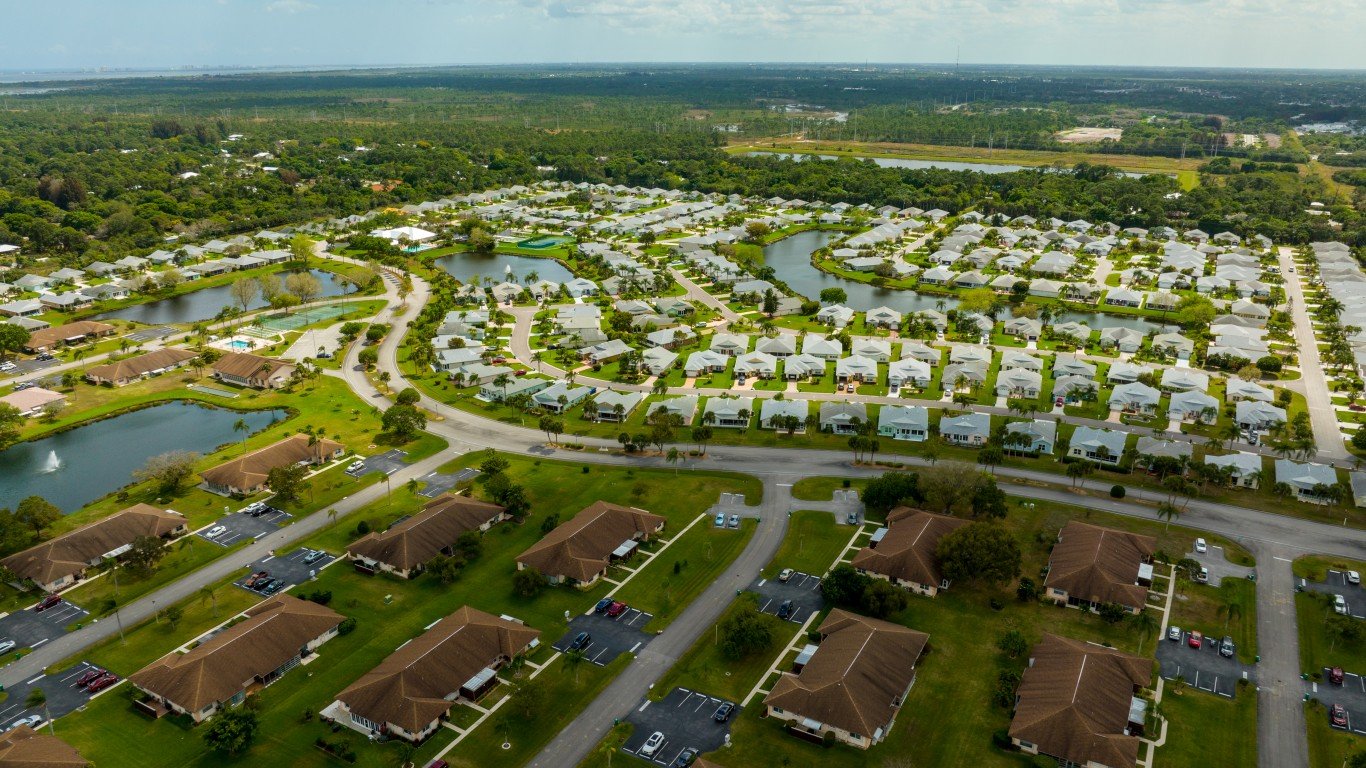
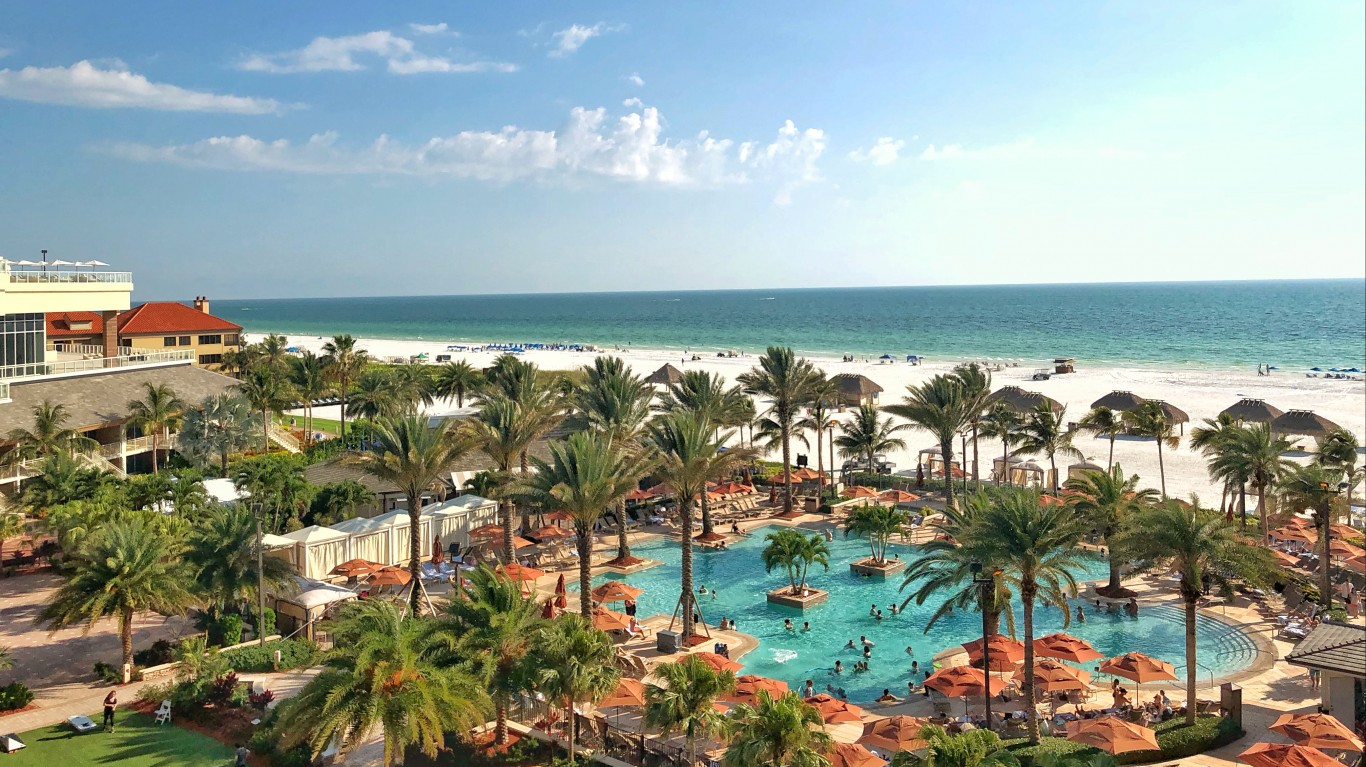
Latitude Margaritaville communities sit in Daytona Beach, Hilton Head, and the Florida Panhandle, all 55+ and built around single-family homes, a private beach club shuttle, a Bar & Chill restaurant, pickleball, pools, and tribute concerts. Base homes start in the mid $300s and climb past $600,000 with lot premiums, lanais, and upgraded kitchens. For a realistic budget, assume a couple buys a paid-off $475,000 home, the middle of the community.
Even paid off, that house carries costs. Volusia County property taxes with homestead exemption run roughly $4,500 annually. HOA and amenity fees cluster around $325 a month, about $4,000 yearly, and drift up faster than headline CPI, which is running at 332.6 on the index. Florida homeowners insurance is the line that stuns newcomers: $4,500 to $6,500 a year is normal for a newer inland build. Add windstorm and flood riders where required. Maintenance on a Florida stucco home in salt air averages another $4,000 yearly for roof, HVAC, and exterior.
The Full Working Budget for a Couple at 65
Here is what it takes to live the advertised lifestyle in current dollars for a couple who just aged into Medicare:
| Category | Annual |
|---|---|
| Property tax, HOA, insurance, maintenance | $17,000 |
| Utilities | $4,500 |
| Medicare Part B, Medigap Plan G, Part D, out of pocket (couple) | $11,000 |
| Groceries, USDA moderate plan for two | $11,500 |
| Dining, Bar & Chill, concerts, community events | $8,500 |
| Two vehicles plus a golf cart (fuel, insurance, replacement reserve) | $8,500 |
| Travel, gifts, personal, hobbies | $9,000 |
| Miscellaneous reserves and federal income tax on withdrawals | $10,000 |
| Total | $80,000 |
That $80,000 delivers what the brochure promises. It exceeds the $78,535 average annual household expenditure the BLS reported for 2024, which makes sense, because you are buying an amenity-heavy lifestyle in a warm-weather state where Florida’s cost of living index sits at 103.4, above the national average.
Turning the Budget into a Portfolio Number
The Social Security line in national personal income data ran $1,630.3 billion in the first quarter of 2026, and the average retired worker benefit is close to $1,980 a month. A couple where both claim at full retirement age can reasonably expect about $52,000 combined. With the 2026 COLA finalized at 2.8%, that base holds pace with inflation.
Budget of $80,000 minus $52,000 of Social Security leaves a $28,000 annual gap to fund from the portfolio. At a 4% withdrawal rate, that requires $700,000 invested. At a more conservative 3.5%, which suits a 30-year horizon and Florida insurance uncertainty, you need $800,000. Call it $800,000 in a balanced mix of index funds, dividend ETFs, and a short treasury ladder covering the first five years of withdrawals to blunt sequence risk.
That $800,000 assumes the house is paid for. If you finance $300,000 at current mortgage rates, add roughly $22,000 yearly in principal and interest and your portfolio target moves toward $1.4 million. The paid-off house is the pivot point.
The Line Item Nobody Prices Correctly
Most analyses miss this: the insurance and HOA line compounds year after year. Latitude Margaritaville sits directly in the path of the two forces driving it. Florida homeowners premiums have roughly doubled over five years in many zip codes. HOA fees at amenity-heavy communities rise when the master association reprices its insurance, labor, and reserves for pool decks and clubhouses. If you underwrite that $17,000 housing line at 6% annual escalation instead of 2% to 3% for groceries, the picture changes. A decade in, that line is closer to $30,000, displacing the travel or dining budget. That is where couples quietly downshift from the marketing version to a more modest lifestyle.
Build the insurance and HOA escalator into your withdrawal plan explicitly, hold a larger cash reserve than you would in a lower-risk climate, and understand that if you need to sell, you are selling into a soft resale market currently running around 4.09 million annualized sales. If that reality fits, this scenario works on roughly $800,000 in invested assets, a paid-off mid-tier home, full Social Security at full retirement age, and 3.5% withdrawal discipline. That is the real cost of Margaritaville.
Contact [email protected] for any questions or corrections.
I am a long time investor and student of business, and believe finding good companies that can become great investments is the best game on earth. After 20 years of writing and researching the public markets it is clear that individuals have never had more tools and information to take control of their financial lives. From ETFs and $0 commissions to cryptos and prediction markets there has never been a greater democratization of access to investing.
I write to help people understand the investments available to them so they can make the best choice for their portfolio, whether they're starting out or looking for income in retirement.