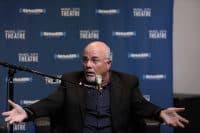
“He’s a Wolf in the Middle of the Sheep Pen”: Dave Ramsey to a Church Elder Watching a Fellow Member Sell Whole Life Insurance to Congregants
On a recent episode of The Ramsey Show, a financial advisor and church elder named John from Raleigh, North Carolina called in with a problem most congregants never see coming. A fellow church member who works for an insurance-based firm…

This post may contain links from our sponsors and affiliates, and Flywheel Publishing may receive compensation for actions taken through them.

On a recent episode of The Ramsey Show, a financial advisor and church elder named John from Raleigh, North Carolina called in with a problem most congregants never see coming. A fellow church member who works for an insurance-based firm had been quietly building a book of business inside the pews. “I’ve noticed that he started working with more and more couples at our church,” John said. The pattern clicked when a close friend confirmed he had bought a whole life policy from the man.
Dave Ramsey‘s response carved the situation into two separate problems that often get lumped together, and the distinction is one anyone pitched a financial product by a trusted friend or acquaintance should understand before reacting.
Two problems, not one
Ramsey declined to treat the product itself as the scandal. “There’s going to be a banker in there, and people go to open a Visa card at that bank, or worse yet, there’s a payday lender that goes to church there, or a car dealer who leases people cars that goes to church there,” he said. His standing rule on products: “I don’t do anything. It’s just my job to educate, and my job to help the ones I’m supposed to help, but it’s not my job to be the police officer of what I deem to be a good product for the entire church.”
The prospecting pattern was another matter entirely. “He’s a wolf in the middle of the sheep pen, and I don’t care what he’s selling. I don’t care if he’s freaking selling aluminum siding. That stops. That’s church discipline,” Ramsey said. He sharpened the image: “If you have a sense that this guy is in there, he’s just got his hair clippers out and he’s shearing the sheep, then yeah, we’re gonna put his clippers up.”
The takeaway is clean: the argument over whole life insurance is a professional debate. Treating a congregation as a client prospecting pool is an ethics problem. Those are different conversations, and collapsing them obscures the one that actually hurts people.
Why Ramsey doesn’t budge on whole life
Ramsey’s opposition to permanent life insurance has been consistent for decades, and it has grown sharper recently. On the episode he called it “that whole life crap posing as an investment opportunity” and directed John toward “level term life insurance” instead. His co-hosts reinforced the same point: term coverage is far cheaper for the same death benefit, “and that frees up a lot of money that you could do your own investing with as opposed to a whole life situation.”
In a separate episode from late July 2026, Ramsey escalated the language further, calling agents who pitch whole life as an economic-collapse hedge “crooks.” He noted that whole life agents earn roughly 20 times more in commissions than term life agents, which he said drives fear-based sales tactics. He also told a caller that the average whole life policy earns a 1.2% return, and that policyholders who want to access that growth must pay the insurance company interest to borrow against their own cash value.
The mechanics behind Ramsey’s argument come down to bundling. A whole life policy combines a death benefit with a savings or cash-value component, and the premium funds both. Term life is pure insurance for a defined period, typically 15, 20, or 30 years. For a healthy 35-year-old, a $500,000 whole life policy costs roughly 9 to 10 times more per month than a comparable 20-year term policy. That spread is money the buyer could redirect into a 401(k) match, a Roth IRA, or a low-cost index fund rather than handing it to an insurer to grow at a modest internal rate of return.
The commission structure explains why newly licensed agents so often target their personal networks first. First-year commissions on standard whole life policies typically run 60% to 110% of the annual premium, creating a powerful financial incentive to sell to people who already trust the agent. Because whole life premiums are so much larger than term premiums in dollar terms, the absolute commission check is substantial even at the lower end of that range. The church setting amplifies that dynamic considerably.
Consider a young couple shopping for $500,000 in coverage. A 20-year term policy for a healthy 35-year-old runs roughly $25 to $35 a month. A whole life policy for the same death benefit can run $400 to $600 a month. The spread, invested monthly inside a tax-advantaged account for two or three decades, builds the nest egg that cash-value illustrations promise but rarely deliver after fees. Surrender penalties add another complication for anyone who has second thoughts: charges on permanent policies often start at 8% to 10% of the cash value in year one and decline gradually over 10 to 15 years, so a policyholder who exits early may recover far less than they paid in.
The variable that flips the decision
Whether a buyer is being helped or sheared depends largely on where they stand financially before someone hands them a policy to sign. A couple who has not yet captured an employer 401(k) match, has no Roth IRA, and is carrying credit card balances is paying the most expensive possible price for a savings plan when they fund whole life premiums. The math changes for someone who has already maximized every tax-advantaged account, carries no debt, and wants estate-planning flexibility. For that person, permanent insurance is a legitimate conversation rather than an automatic no.
The problem is that most people pitched whole life inside a church community belong to the first group, not the second. That gap between who should buy the product and who is actually buying it is what makes the prospecting predatory, even when the salesman genuinely believes in what he is selling.
What to do this week
- Price a term policy yourself. Get two or three quotes for 20-year level term at the coverage amount you actually need. Ramsey’s standard guideline is 10 to 12 times your annual income. Compare that monthly premium to any whole life quote you have received.
- Calculate the spread. Subtract the term premium from the whole life premium. That dollar figure is what you could invest monthly if you bought term instead. Run it through a compound-interest calculator at a conservative return and watch the gap widen over 20 or 30 years.
- Audit who is selling to you. If a financial product is being pitched by someone you know through a faith community, a gym, or a kids’ sports league, ask directly how they are compensated on the sale. A commission-only structure on permanent life insurance creates incentives that a fee-only planner does not share.
- Get any verbal promise in writing. Illustrations are not contracts. Ask for the actual policy document and read the surrender-charge schedule before signing anything.
Ramsey closed the segment by turning the mirror on John as well: “If you as a valid financial planner with ideas that I agree with are in there, your reason for being there is you’re just looking across the pew every week trying to figure out who you can prospect, I’m gonna call you out on that.” The product debate stays fair game. The trust pen is off limits, regardless of what anyone is selling.
Editor’s note: This update corrected first-year whole life commission figures to the better-sourced range of 60% to 110% of the annual premium for standard whole life policies, updated the monthly term premium estimate to $25 to $35 for a healthy 35-year-old based on 2026 rate data, added Ramsey’s recent characterization of whole life agents as “crooks” from a late July 2026 episode, and incorporated his on-air figure of a 1.2% average return on whole life policies.
Contact [email protected] for any questions or corrections.
I am a long time investor and student of business, and believe finding good companies that can become great investments is the best game on earth. After 20 years of writing and researching the public markets it is clear that individuals have never had more tools and information to take control of their financial lives. From ETFs and $0 commissions to cryptos and prediction markets there has never been a greater democratization of access to investing.
I write to help people understand the investments available to them so they can make the best choice for their portfolio, whether they're starting out or looking for income in retirement.