“This Was Her Wicked Weird Way of Grieving”: Dave Ramsey on Widow Who Spent $1.1 Million on Cruise Ship Art
A caller named Jack told Dave Ramsey and George Kamel on The Ramsey Show that his widowed mother spent $1.1 million on cruise ship art across 6 to 7 voyages after his father died. “You can’t get into her house.…

This post may contain links from our sponsors and affiliates, and Flywheel Publishing may receive compensation for actions taken through them.
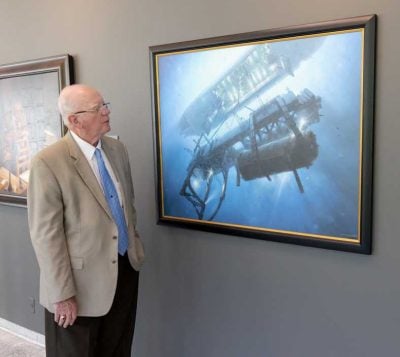
A caller named Jack told Dave Ramsey and George Kamel on The Ramsey Show that his widowed mother spent $1.1 million on cruise ship art across 6 to 7 voyages after his father died. “You can’t get into her house. There’s so much cruise ship art in the bedrooms and everything,” Jack said. Attempts to liquidate the collection at auction recovered only “10 cents or 20 cents on the dollar.”
Ramsey’s verdict was blunt: “This was her wicked weird way of grieving.” That sentence carries a financial lesson far larger than any one radio segment.
Why Cruise Ship Art Is Usually a Terrible Investment
Shipboard art auctions rank among the most reliable ways to convert savings into something worth a fraction of what you paid. The 10% to 20% recovery rate Jack described is not a worst-case outcome. It is the expected result.
The math on a single $10,000 purchase illustrates the damage clearly. Buyer’s premiums, framing, and shipping routinely push the all-in cost past $11,000. Resold through a legitimate auction house, that same piece commonly clears $1,000 to $2,000 before the auctioneer takes another 20% to 25% in seller’s commission. The net proceeds to the owner land somewhere around $800 to $1,500 on an $11,000 outlay. That works out to a wealth-destruction rate of roughly 85% to 90% from the moment the gavel falls.
The structural cause of that destruction is the market itself. Onboard art auctions operate in a closed environment: the bidder pool is captive, the appraisals come from the seller, and no liquid secondary market exists once the painting leaves the ship. Park West Gallery, the dominant operator running auctions on Royal Caribbean, Carnival, Norwegian, Celebrity, Holland America, Princess Cruises, and other major lines, has faced sustained scrutiny over its valuation practices. Park West appraisals use what the company itself calls “current Park West Gallery retail replacement price,” meaning the art is valued against what Park West charges at its own auctions rather than what an independent buyer on the open market would pay. That circular appraisal method makes it nearly impossible for a buyer to know whether they overpaid until they attempt to sell.
According to a Bloomberg Businessweek investigation, at least 21 lawsuits have been filed against Park West since 2008, including a federal multi-district class action alleging a fraudulent scheme at shipboard auctions. The gallery has more recently been embroiled in a legal dispute with the estate of Peter Max, one of its bestselling artists, over allegations of unauthorized transactions involving thousands of his works. On the operational side, Park West says it has since built an internal compliance department that reviews auction footage and that it no longer makes promises to buyers about art as an investment.
Scale the math to $1.1 million and the damage becomes concrete. A lifetime saver, described by Jack as “a use-the-same-tea-bag-twice type of person,” converted the better part of $1 million in liquid net worth into wall decor across a handful of voyages. Jack noted his mother is now “living comfortably as opposed to super comfortably” and that “the little extras, that’s where she’s struggling.”
What Ramsey Advised Jack to Do
Rather than directing the family toward lawyers, Ramsey pointed to a different approach. He suggested contacting the cruise line’s customer service or public relations department directly and framing the request as a goodwill appeal: a grieving widow spent more than $1 million on artwork that turned out to be worth a fraction of that, and the company has every incentive to resolve the situation quietly before it gets wider attention on social media. The leverage is reputational, not legal. Ramsey called the cruise ship art auction scenario a first in his more than three decades on radio.
Kamel focused on the practical longer-term fix. He suggested Jack and his siblings offer to take over managing their mother’s finances going forward. That conversation is considerably more complicated than it would have been years earlier, because the mother has since remarried. A new spouse may have rights to accounts, may be a co-signer on cards, and may resist adult children stepping into a financial oversight role. Any discussion about transferring bill-pay duties or adding view-only account access now spans two households instead of one.
Why the First Two Years After a Spouse Dies Matter Most
The difference between a $5,000 grief purchase and a $1.1 million one often comes down to a single question: did anyone in the family have eyes on the spending during the 18 to 36 months following a death? Ramsey noted that the buying started roughly a year and a half to two years after Jack’s father died, which is precisely the window when adult children assume the worst has passed and stop checking in.
The financial vulnerability that opens in that period is well documented. A 2024 Thrivent survey of 422 widowed women found that 51% were either living paycheck to paycheck or struggling to manage their bills after a spouse’s death, and 41% said they had no financial conversations or plans in place beforehand. A separate UBS “Own Your Worth” study found that only 20% of couples make long-term financial decisions equally during marriage, leaving many surviving spouses without the baseline financial familiarity needed to spot unusual spending before it compounds.
Consider two paths from the same starting point. A widow with $2 million in investable assets drawing 4% annually generates roughly $80,000 a year in supplemental income. If a family member reviews the brokerage statement quarterly and flags a $40,000 art charge after voyage one, the conversation happens at a $40,000 loss. If no one looks for five years, that same pattern compounds into the seven-figure shortfall Jack is now navigating. The only variable separating those two outcomes is whether anyone was paying attention.
The Broader Takeaway
Ramsey’s framing of this as a “wicked weird way of grieving” cuts to the heart of the story. The real tragedy is how a lifetime of careful saving came undone during one of the most emotionally vulnerable periods a person can experience. Families cannot prevent grief. They can, however, put straightforward guardrails in place: periodic account reviews, a waiting period before large purchases clear, and an early conversation about who helps manage day-to-day finances. Those steps cost nothing and could have spared Jack’s family close to a million dollars.
Editor’s note: This pass updated the list of Park West Gallery’s cruise line partners to include Princess Cruises, which opened a new 3,800-square-foot gallery aboard the Star Princess in October 2025. The article also notes Park West’s more recent legal dispute with the Peter Max estate and the company’s stated compliance changes, and corrects the Ramsey show tenure from “35 years” to “more than three decades.”
Contact [email protected] for any questions or corrections.
Thomas Richmond is a financial writer and content strategist with 5+ years of experience covering stocks and financial markets. He has published over 500 articles focused on individual stock analysis, helping investors better understand business fundamentals, stock valuations, and long-term opportunities.
Thomas previously served as a Content Lead at TIKR, a stock research platform, where he helped scale the company’s blog to hundreds of articles per month and contributed to a weekly newsletter reaching more than 100,000 investors.
Outside of work, Thomas enjoys weight lifting and soccer.