Slow Mornings on the French Riviera: Retire to the South of France at 62 on $1.1 Million
A seven-figure portfolio can make Mediterranean retirement feel surprisingly close, especially for someone in their early 60s who is tired of pricing every decision around U.S. housing, health care, and taxes. The South of France at 62 on $1.1 million…

This post may contain links from our sponsors and affiliates, and Flywheel Publishing may receive compensation for actions taken through them.
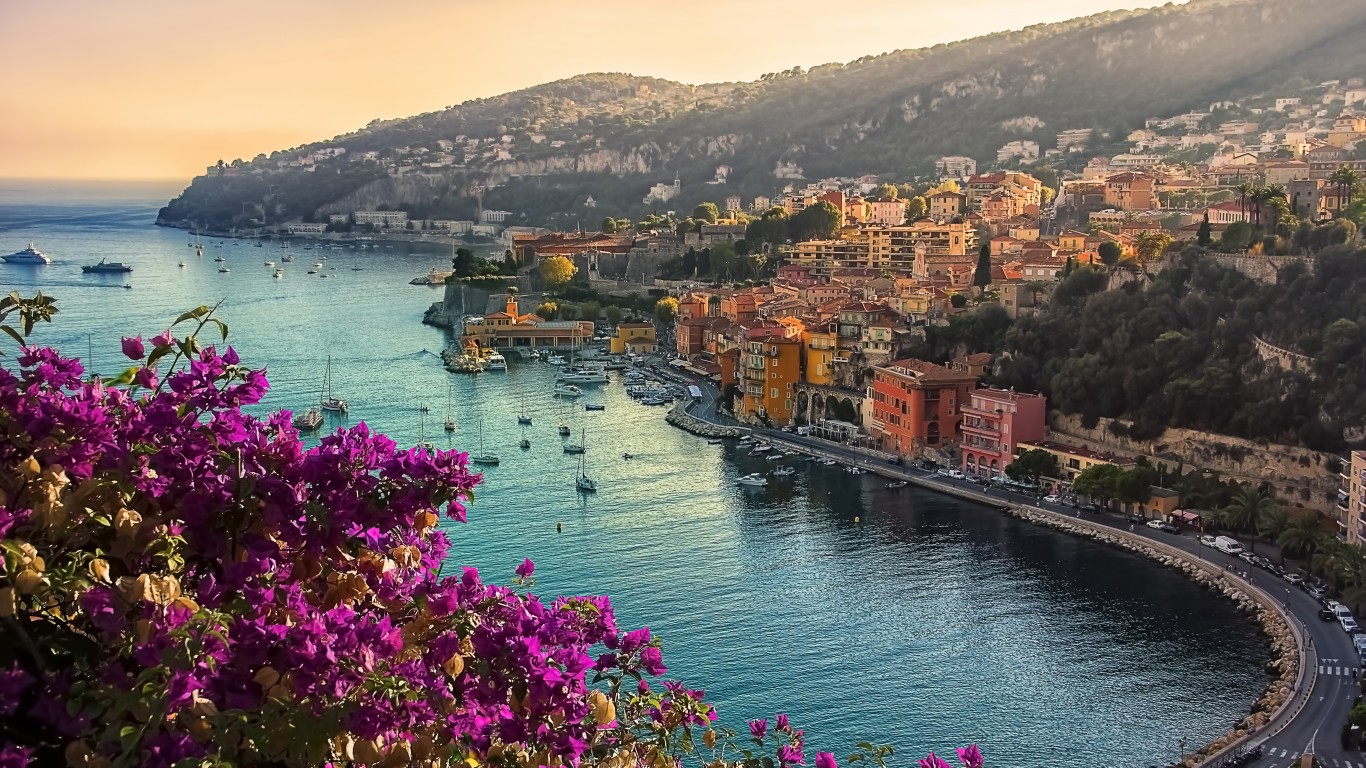
A seven-figure portfolio can make Mediterranean retirement feel surprisingly close, especially for someone in their early 60s who is tired of pricing every decision around U.S. housing, health care, and taxes. The South of France at 62 on $1.1 million sits right on the edge. It is doable, but not the way most people picture it, and the parts that trip people up are rarely the parts they worry about going in.
What slow mornings on the Côte d’Azur actually cost
Start with where you actually live, because the Riviera is not one market. Using the European Central Bank’s June 25, 2026 rate of 1 euro = $1.1342, a one-bedroom in central Nice or Cannes can easily run about $1,100 to $2,050 a month, with Antibes often somewhat cheaper. Move inland, and a modest two-bedroom may fall closer to $1,150 to $1,500. Buying is usually harder to justify unless you are committed for years, because transaction costs and local property taxes add up.
A realistic annual budget for one person living inland, eating at the market, driving a small used car, and traveling modestly might look like this in current dollars: housing around $16,000, food and household costs around $7,500, utilities and internet around $2,400, transport around $3,500, healthcare around $4,500, and miscellaneous reserves of $12,000 for travel, gifts, home repairs, car replacement, and U.S. federal tax on withdrawals. That lands near $46,000 per year. Couples may add $10,000 to $12,000, mostly for food and healthcare.
The math from 62 to Social Security and beyond
The bridge years are where the plan gets tight. Claiming Social Security at 62 can reduce the full retirement age benefit by as much as 30%. For someone whose full retirement age benefit would be $2,400 a month, that means roughly $1,680 at 62. Waiting until 70 could lift the benefit to about $2,976 before any future cost-of-living adjustments, assuming delayed retirement credits of 8% per year after full retirement age.
On $1.1 million, a 4% withdrawal generates $44,000. Add an early Social Security claim of about $20,160 a year, and gross income is near $64,000, which clears the $46,000 budget with room for taxes and weak markets. Waiting until 70 changes the risk: years 62 to 70 may require $46,000 to $50,000 a year from the portfolio, or about 4.2% to 4.5% of the starting balance.
The piece almost nobody prices in
France’s healthcare system, PUMa, generally becomes available to legal residents after three months, but some early retirees pay into it through the cotisation subsidiaire maladie. For 2026, the formula is generally 6.5% of capital income above 50% of the French annual Social Security ceiling, or about $27,300, when earned income is below the required threshold. A retiree with $50,000 of capital income could owe roughly $1,500 before any adjustment, plus a private mutuelle.
The offset is the U.S.-France tax treaty. U.S. Social Security and certain U.S. government pensions are generally taxable only in the United States, not France, but treaty treatment still has to be reported correctly. Private retirement accounts require more care: IRA and 401(k) distributions are often handled differently from Roth withdrawals, and the timing of Roth conversions can matter. Converting before becoming a French tax resident may be valuable, but it should be modeled before the move.
What it actually takes
The bottom line: $1.1 million can work for one person in the South of France at 62 if you live inland rather than on the seafront, hold withdrawals near 3.5% to 4% once Social Security begins, keep enough safe assets for the bridge years, and settle the Roth and treaty questions before becoming a French tax resident. For a couple, the same plan likely needs closer to $1.3 million to $1.4 million, or a willingness to claim Social Security earlier.
The postcard version needs a spreadsheet
The Riviera is reachable on this number, but only if the plan is built around the village, not the postcard. The make-or-break details are not café prices or beach-club splurges. They are the bridge years before Social Security, the healthcare contribution, the treaty paperwork, the exchange rate, and the decision to rent long enough to know which version of the South of France you can afford.
Contact [email protected] for any questions or corrections.
Drew Wood has edited or ghostwritten nine books and published more than 1,500 articles on investing, business, politics, travel, world cultures, wildlife, and earth science. He holds a doctorate and four master's degrees and has nearly 30 years of college teaching experience. His travels have taken him to 25 countries, including three years living in Ukraine.