Inside the $500,000 Retirement Luring Americans to Spain’s Costa Blanca
A $500,000 nest egg can support a Costa Blanca retirement, but only in the right version of Spain. The math works best for a couple with Social Security already started, modest housing costs, and careful tax planning before becoming Spanish…

This post may contain links from our sponsors and affiliates, and Flywheel Publishing may receive compensation for actions taken through them.
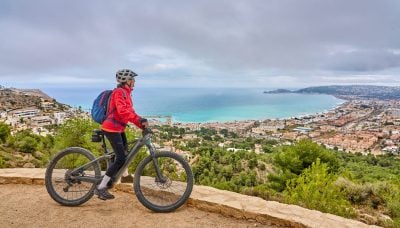
A $500,000 nest egg can support a Costa Blanca retirement, but only in the right version of Spain. The math works best for a couple with Social Security already started, modest housing costs, and careful tax planning before becoming Spanish residents. It works much less well for renters in the priciest coastal towns, single retirees relying on one benefit check, or anyone assuming a Roth IRA keeps its U.S. tax treatment after the move.
What $500,000 Actually Buys on the Costa Blanca
Use a recent exchange rate of about $1.14 to €1 for Spain costs in this article. The Costa Blanca stretches from Dénia through Alicante to Torrevieja, with many of the better retirement numbers found outside the highest-demand coastal pockets. A furnished two-bedroom apartment in Torrevieja or Guardamar might rent for about $685 to $1,030 a month, while smaller inland towns can be lower. Buying is more variable: older or less central apartments may be cheaper, but livable coastal properties often require a budget well into the low-to-mid six figures.
Monthly costs for a couple owning outright:
- Housing (community fees, property tax, insurance, maintenance): $340
- Utilities: $170
- Groceries: $455
- Private health insurance (required for non-EU retirees): $340
- Transport: $230
- Reserves (travel, gifts, car fund, Spanish income tax): $800
That totals roughly $2,335 a month, or about $28,000 a year. Renters should add about $800 to $1,030 a month, pushing the annual budget closer to $37,600 to $40,400 before any larger tax, medical, or travel surprises.
Private health insurance may run about $55 to $170 per person per month in your 60s, climbing to roughly $230 to $340 past 70 depending on coverage, underwriting, and exclusions. Utilities with summer air conditioning can cost about $115 to $205 a month, groceries may run $285 to $455, and a menú del día lunch often falls around $11 to $17.
Portfolio Math
Annual spending is closer to $28,000 to $30,000 for owners and roughly $38,000 to $42,000 for renters. Two average retired-worker Social Security checks at the 2026 estimate of $2,071 a month would produce about $49,700 a year before tax. For owners, Social Security can cover the working budget, leaving the $500,000 portfolio as a reserve for healthcare, currency swings, taxes, and longevity. For renters, the portfolio may still need to cover several thousand dollars a year, depending on rent and tax treatment.
Spain’s non-lucrative visa requires the main applicant to document sufficient passive income. For 2026, Spain’s Washington consulate lists the requirement at $32,000 a year for one applicant, plus $8,000 for each dependent family member. A couple therefore needs about $40,000 a year of qualifying resources. Social Security can help, but consulates may scrutinize whether portfolio withdrawals are stable enough, so the paperwork can be part of the hard part.
The Roth IRA Trap
Spend more than 183 days a year in Spain and you can become a Spanish tax resident, taxed on worldwide income. Spain generally does not treat Roth IRAs the same way the United States does, so a withdrawal that is tax-free in the U.S. may not be tax-free in Spain. The taxable character can depend on account history, contributions, growth, and reporting. Roth balances may also matter for Spanish wealth-tax reporting if total worldwide assets cross the applicable thresholds.
Traditional IRA and 401(k) withdrawals generally need to be modeled as Spanish-taxable pension income once the retiree becomes a Spanish tax resident. Spain’s tax agency says private-sector U.S. pensions are generally taxable only in Spain, while U.S. Social Security may also be taxed by the United States, with treaty relief handled through the return. That makes pre-move Roth planning valuable, but the safer point is sequencing: reduce future taxable withdrawals before Spanish residency instead of assuming U.S. retirement-account labels carry over.
The Number That Works
For a couple arriving with a modest Costa Blanca apartment owned free and clear, both Social Security streams active, and pre-move Roth planning complete, $500,000 can be sufficient. In that version, the portfolio functions more as a healthcare, tax, and longevity reserve than as the primary income source. For renters, single retirees, or anyone bridging the years before Social Security, the realistic number moves closer to $650,000 to $750,000, especially if withdrawals need to stay near 3.5%.
The Costa Blanca does not require exceptional wealth, but the $500,000 version requires discipline. The strongest setup is paid-off housing before arrival, Social Security already active, private health coverage budgeted conservatively, and Roth planning completed before Spanish residency begins. Do those things, and the $500,000 headline can become a workable plan. Skip them, and Spain’s tax rules or rent can turn a low-cost retirement into a tight one.
Contact [email protected] for any questions or corrections.
Drew Wood has edited or ghostwritten nine books and published more than 1,500 articles on investing, business, politics, travel, world cultures, wildlife, and earth science. He holds a doctorate and four master's degrees and has nearly 30 years of college teaching experience. His travels have taken him to 25 countries, including three years living in Ukraine.