Personal Finance Expert Dave Ramsey Is Absolutely Right About These 3 Wealth-Building Facts
Dave Ramsey's personal story, from a $4 million real estate portfolio at 26 to a Chapter 7 bankruptcy filing in September 1988, gives his debt-free philosophy a credibility that few personal finance voices can match. Here are three wealth-building facts…

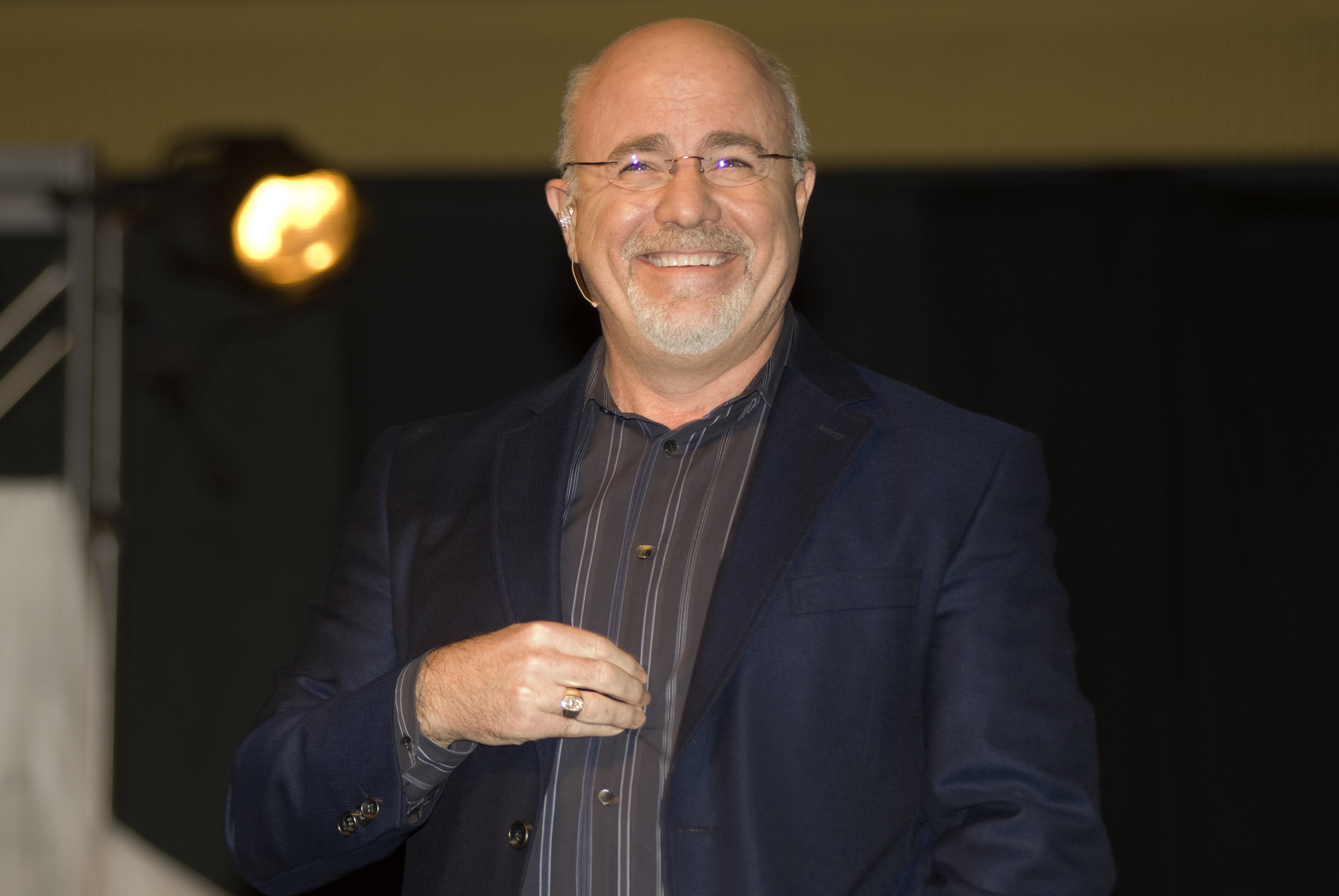
Dave Ramsey’s enthusiasm for personal finance is genuinely contagious. Say what you want about the man, but he has strong opinions about what individuals should and should not do in a wide range of financial situations, and he is not shy about sharing them.
His claim to fame centers on helping everyday Americans dig themselves out of what many would consider insurmountable debt. Ramsey’s personal story gives his message real credibility. By age 26, he had built a $4 million real estate portfolio. Then, in September 1988 at age 28, he filed for Chapter 7 bankruptcy after lenders called in $1.2 million in short-term commercial notes when his primary bank was sold. Those loans were structured as 90-day commercial notes rather than traditional mortgages, meaning lenders could demand full repayment with just three months’ notice. A second lender soon followed, demanding $800,000 more. Ramsey paid down most of it but could not cover the remaining $378,000. The collapse taught him hard lessons about leverage and debt that now inform every piece of advice he gives.
Today, Ramsey lives what he preaches. He carries zero debt of any kind, no credit cards, no lines of credit, no mortgages, and owns all his assets outright, paying cash for any new purchases. His net worth was long cited at around $200 million, though recent 2026 estimates put the figure considerably higher, with some sources placing it between $850 million and potentially billionaire territory, with real estate making up the largest share. All of it has been built without borrowing.
That lifestyle sounds aspirational to most Americans, and frankly out of reach for the vast majority of households. Even getting close to debt-free, though, would represent a major win for millions of families. Here are three of his most practical pieces of advice for regular folks.
Step 1: Get Out of Debt

Ramsey pulls no punches when it comes to debt. In his view, debt is a fundamental obstacle to wealth building, and Americans would fare better living within their means rather than borrowing from tomorrow to fund today’s purchases. His filing for Chapter 7 on September 23, 1988 was the pivotal moment that crystallized this philosophy. As a young investor, he had over-extended himself on leveraged real estate. When lenders demanded immediate repayment, he couldn’t liquidate properties fast enough to cover the notes. The bankruptcy didn’t just sink his finances. It created crushing stress and forced him to rebuild from zero.
To help others avoid, or escape, similar predicaments, Ramsey began writing books and hosting a radio program. He co-hosted “The Money Game” starting in 1992, then launched his own show, which eventually evolved into the multimedia platform known today as The Ramsey Show. His core mission is straightforward: push people toward debt freedom. Once someone eliminates debt payments, wealth building becomes exponentially easier, because every dollar formerly earmarked for interest and principal can be redirected toward savings and investments.
Ramsey’s “debt snowball” method is his signature strategy for getting there. The approach is simple: list all debts from smallest balance to largest, ignoring interest rates for now. Pay minimums on everything except the smallest debt, then attack that one with every extra dollar available. Once the first debt disappears, roll the full payment amount into the next-smallest balance. The psychological wins from closing accounts one by one build momentum that keeps people engaged long enough to finish the journey.
Critics point out that targeting high-interest debt first, known as the “avalanche” method, saves more money mathematically. Ramsey’s counter is simple: personal finance is 80% behavior and 20% math. Quick wins matter more than optimal calculations if those wins keep you motivated through a multi-year payoff process.
Whichever debt-elimination method you choose, starting from a zero-debt position provides the foundation that makes the next two wealth-building steps possible.
Invest Consistently

Once you have eliminated consumer debt (everything except a mortgage), Ramsey’s next step is consistent investing. He recommends saving 15% of gross income and directing it into retirement accounts, ideally a Roth 401(k) if your employer offers one.
The Roth structure makes sense for many workers. Contributions go in after-tax, but qualified withdrawals in retirement come out completely tax free, covering both contributions and growth. For 2026, you can contribute up to $24,500 to your 401(k). Workers age 50 or older can add an $8,000 catch-up contribution on top of that, and those between ages 60 and 63 qualify for a larger “super” catch-up of $11,250 in lieu of the standard amount. Ramsey consistently emphasizes capturing any employer match first, since that represents free money that immediately boosts your effective savings rate.
One important wrinkle for 2026: high earners now face a new requirement. If your FICA wages exceeded $150,000 in the prior year, catch-up contributions must go into the Roth bucket rather than a traditional pre-tax account. This rule, enacted under SECURE 2.0, forces tax diversification for some savers who might have preferred the upfront deduction. If your plan does not offer a Roth 401(k) option and your income exceeded the threshold, you will not be able to make catch-up contributions until the plan is amended to include Roth.
Ramsey strongly favors Roth accounts across the board, describing them as vastly superior to traditional retirement accounts. His reasoning centers on tax-free growth over decades and tax-free withdrawals later, a compelling advantage if your tax rate in retirement is similar to or higher than your current rate.
There is real nuance here that Ramsey’s one-size-fits-all approach sometimes glosses over. High earners in the 32% or 37% brackets today might see meaningfully lower effective rates in retirement when drawing down savings slowly. For those individuals, the immediate tax deduction from a traditional 401(k) contribution, combined with the ability to invest those tax savings, could deliver more long-term value than tax-free withdrawals decades later at a 24% rate. Running the numbers with a financial advisor makes sense for anyone in those upper brackets.
Still, for the majority of Americans, Ramsey’s core advice holds: start saving 15% of income, use tax-advantaged accounts, capture the match, and let compound growth do the heavy lifting over time.
Diversification Matters

For investors who have paid down debt and started funneling 15% into retirement accounts, the next question is where to put that capital. Ramsey has long championed growth-oriented mutual funds, specifically recommending a four-way split across growth (mid-cap), growth and income (large-cap), aggressive growth (small-cap), and international funds. He argues this structure delivers diversification across market capitalizations and geographies while keeping the focus on long-term appreciation.
His preference for actively managed mutual funds over index funds rests on the belief that skilled managers can outperform the broader market. The evidence, however, is sobering. According to the year-end 2025 SPIVA U.S. Scorecard from S&P Dow Jones Indices, 79% of active large-cap fund managers underperformed the S&P 500 in 2025, making it one of the four worst years for active large-cap stock pickers in the scorecard’s 25-year history. Over longer time horizons, the underperformance rates only climb higher.
The real tension in Ramsey’s framework centers on expense ratios. Actively managed mutual funds often carry annual fees 10 to 20 times higher than broad-market index funds. For context, the S&P 500 has delivered an average annual return of around 10% since its 1957 inception, with the 10-year annualized return through December 2025 coming in at approximately 14.8%. Ultra-low-cost index funds and ETFs tracking the S&P 500 capture nearly all of that return while charging expense ratios as low as 0.03% to 0.09%.
To his credit, Ramsey acknowledges that accepting market returns is a perfectly reasonable path. In a recent episode, he conceded: “If you don’t want to do that and you just want to put it in the S&P, you’re gonna end up with a lot of money. And we’ll be happy for you.” His broader point focuses on behavior over perfection: consistent investing in any reasonable vehicle beats analysis paralysis or jumping in and out of the market chasing headlines.
For investors drawn to simplicity, a diversified portfolio of low-cost index funds or ETFs offers broad exposure without requiring the hunt for outperforming managers. For those who prefer Ramsey’s four-category framework, choosing funds with strong 10-year track records and reasonable expense ratios strikes a workable middle ground.
The key takeaway on diversification is this: spreading risk across asset classes and geographies reduces single-stock exposure, and starting early with consistent contributions matters far more than landing on the perfect fund mix. Whether you follow Ramsey’s mutual fund strategy or opt for passive index investing, the most important decision is simply to begin and to stay the course.
Editor’s note: This revision updates Ramsey’s net worth to reflect 2026 estimates now ranging from $850 million to potentially billionaire status, replaces the previous SPIVA citation with the year-end 2025 scorecard showing 79% of active large-cap managers underperformed the S&P 500 in 2025, and adds context on the 90-day commercial note structure behind his 1988 bankruptcy and the 1992 launch of his radio career.
Contact [email protected] for any questions or corrections.
Chris MacDonald is a 24/7 Wall St. contributor and long-time contributor to other notable finance publications, including The Motley Fool and InvestorPlace. With an MBA in Finance, and more than a decade of experience in venture capital and the corporate finance world, Chris brings a long-term perspective to his analysis of equities and alternative assets.
His love of investing and focus on finding quality undervalued stocks is complemented by recent research into alternative assets as well. He takes a long-term approach to analyzing companies and cryptos, with a focus on directing the reader to the most sustainable and important catalysts for each respective potential investment.