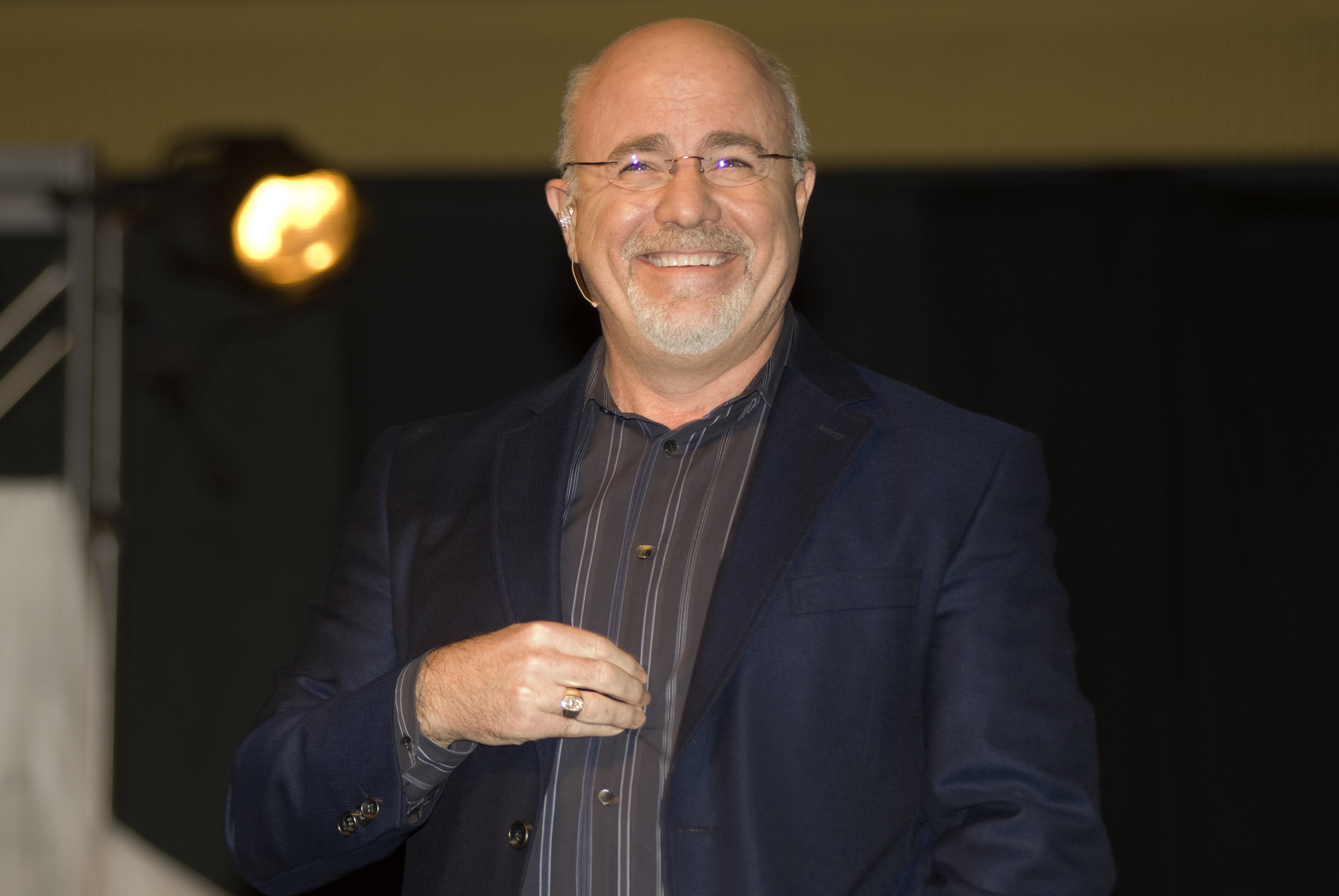
“That’s a Million-Dollar Mistake Minimum for Someone Your Age”: Dave Ramsey to a 25-Year-Old Choosing a Brokerage Account Over a Roth
On a recent episode of The Ramsey Show, a 25-year-old caller named Connor said he was loading money into a taxable brokerage account instead of a Roth. Dave Ramsey's reaction was blunt: "Don't avoid the tax-free growth. That's a million-dollar…

This post may contain links from our sponsors and affiliates, and Flywheel Publishing may receive compensation for actions taken through them.

On a recent episode of The Ramsey Show, a 25-year-old caller named Connor said he was loading money into a taxable brokerage account instead of a Roth. Dave Ramsey’s reaction was blunt: “Don’t avoid the tax-free growth. That’s a million-dollar mistake minimum for someone your age.”
Connor’s setup is genuinely enviable. He told Ramsey, “I’m 25 years old. I’m living at home. I make around $56,000 a year and I’m cash-flowing college.” Debt-free, with a three-to-six month emergency fund and a business degree wrapping up that fall, Connor asked a question that sounds simple but carries enormous long-term consequences: “I should put money into the retirement accounts, of course, but I was kind of wondering, is it wrong to put more money into the brokerage account versus retirement accounts for the purpose of saving for a down payment on a house or being able to use that money before the age of 59?”
The verdict: Ramsey is right, and the math is brutal
For a 25-year-old with a runway of 40-plus years, choosing a taxable brokerage as the primary long-term vehicle is costly. The reason lies entirely in how each account treats growth.
In a Roth IRA or Roth 401(k), contributions go in after taxes, the money grows tax-free, and qualified withdrawals in retirement arrive tax-free as well. In a taxable brokerage account, every dollar of realized gain faces tax as short-term ordinary income, long-term capital gains, or dividend income, depending on how long the position was held.
Ramsey walked Connor through the example directly: “Let’s say you had $2 million in there. Somewhere around $1.8 million of the $2 million is growth. That means it’s all taxable. You’re gonna pay taxes on $1.8 million if you’ve got it in a brokerage account. If you’ve got it in a Roth 401, zero taxes on that $1.8 million.” His estimate of the tab: “Taxes on $1.8 million sounds an awful lot like $600,000 or $700,000.”
Same contributions, same investments, same returns. The only variable is the account wrapper. One wrapper produces a six-figure check payable to the IRS at retirement. The other produces nothing of the sort.
The macro environment adds urgency. The Federal Reserve raised the federal funds rate to a target range of 3.75% to 4.00% in September 2026, citing elevated inflation, after a brief easing cycle in late 2025. Higher rates and persistent inflation make the Roth’s tax-free compounding even more valuable over a 40-year horizon, since the after-tax drag on a brokerage account compounds right alongside the returns.
The variable that actually matters: when you need the money
Connor’s real question was about timing. He wants a house. Roth IRAs protect earnings from tax but impose penalties on growth withdrawn before age 59½, while a brokerage account has no age gate. That distinction is where Ramsey conceded ground, and it is the only situation where parking money in a brokerage account makes sense over a Roth.
Ramsey explained the carve-out he calls Baby Step 3B: “Before they start putting 15% away for retirement, they sometimes take a gap period of time and pile up money for a down payment, and you could use a brokerage account to do that. Sometimes they put zero in retirement. Sometimes they put a little in retirement. Sometimes they put the whole 15% of Baby Step 4 in retirement while they’re working on their down payment.”
The key variable is the time horizon. Money you will spend in 18 to 24 months on a down payment does not belong in a Roth IRA, and it does not belong in stocks at all. Money you will not touch for four decades belongs in the Roth. Connor’s error was asking a single account to do both jobs at once.
For Connor specifically, Ramsey laid out the plan: “If I’m you, I’m landing that big job and I’m gonna stack cash for at least 18 months, maybe 2 years, and get me a nice house. And then you can start loading 15% in and get the house paid off.” Co-host Rachel Cruze added the order of operations: “I would front-load your retirement, take care of the Roth IRA, take care of the 401, and then anything beyond that that you want to be able to save in a brokerage account, you know, get some index funds, whatever that is for you, that’s great. But I would do that second to all the retirement.”
What to actually do this week
- Separate your savings by purpose. Down payment cash needed within two years belongs in a high-yield savings account or short-term Treasuries, not in stocks and not in a Roth.
- Open a Roth IRA if you do not have one, and fund it before making any taxable brokerage deposits. In 2026, the annual contribution limit is $7,500 for those under 50. Every dollar of growth in that account sidesteps the $600,000 or $700,000 tax bill Ramsey described.
- If your employer offers a Roth 401(k) with a match, capture the full match first. The 2026 employee contribution limit for a 401(k) is $24,500. An employer match is a return no brokerage account can replicate.
- Only after the Roth IRA is maxed and the 401(k) match is captured should additional dollars flow into a taxable brokerage. With the U.S. personal saving rate running at 4.0% of disposable income in the first quarter of 2026, most households never reach this step, which is exactly why the order of operations matters.
The tax wrapper drives the outcome. Over 40 years, it is the difference between keeping your gains and writing the IRS a check the size of a house down payment.
Editor’s note: This article was updated to correct the federal funds rate narrative (the Fed raised rates to 3.75%–4.00% in September 2026, reversing a prior easing cycle rather than continuing to cut), to correct the U.S. personal saving rate for Q1 2026 to 4.0%, and to add the 2026 Roth IRA contribution limit of $7,500 and 401(k) limit of $24,500.
Contact [email protected] for any questions or corrections.
I am a long time investor and student of business, and believe finding good companies that can become great investments is the best game on earth. After 20 years of writing and researching the public markets it is clear that individuals have never had more tools and information to take control of their financial lives. From ETFs and $0 commissions to cryptos and prediction markets there has never been a greater democratization of access to investing.
I write to help people understand the investments available to them so they can make the best choice for their portfolio, whether they're starting out or looking for income in retirement.