‘Horrible, Horrible, Horrible’: Dave Ramsey Shreds a Debt-Free Retiree’s Plan to Lease a New Car Every 3 Years
A debt-free 70-year-old retiree called Dave Ramsey with a car plan that seemed perfectly sensible, and Ramsey tore it apart in about ten seconds flat. The math behind his reaction reveals a cost most drivers never stop to calculate.

This post may contain links from our sponsors and affiliates, and Flywheel Publishing may receive compensation for actions taken through them.

Max, a 70-year-old retiree from Ohio, called The Ramsey Show with what sounded like a perfectly sensible plan. He and his wife were debt-free, carried no mortgage, and kept enough savings to comfortably afford a new car outright. His idea: lease a fresh vehicle every three years, return it at term’s end, and start over. His reasoning, in his own words: “If I get a new car every 3 years, I’m not gonna have as much to worry about.”
Dave Ramsey’s response was blunt: “Don’t lease it. No, no. Horrible, horrible, horrible, horrible. Did I mention it’s horrible?”
The Verdict: Leasing Costs More, and the Math Proves It
Leasing is, by Ramsey’s measure, the single most expensive way to operate a car. It also does not solve the problem Max thought it would. Two separate flaws in Max’s reasoning explain why.
The maintenance argument collapses first. A lease does not include maintenance. Oil changes, tires, brakes, and wiper blades all come out of the lessee’s pocket, exactly as they would with an owned car. The reason a new vehicle feels low-hassle in its first three years is the factory warranty, and that warranty applies whether you buy or lease. Max would have been paying a lease premium for a benefit he was already entitled to by default.
The pricing structure is where the real financial damage accumulates. As Ramsey put it: “100% of the loss in value is built into the lease. So whatever you would lose by buying a new car and trading it every 3 years, you’re paying for in the lease.” The leasing company calculates what the car will be worth at turn-in, charges the lessee the full drop in value, then adds dealer profit, cost of capital, and interest on top. Ramsey calls these arrangements “fleeces” rather than leases. He argues that back-calculating the implied cost of capital from a typical lease payment structure yields an effective rate averaging around 14.2%, a figure the Federal Trade Commission does not require dealers to disclose because a lease is not legally classified as a loan.
Depreciation: The Cost You Cannot Escape
Cars are depreciating assets, and they lose value fastest in the early years. Ramsey’s rule of thumb: a new car loses roughly 60% of its value in the first five years, a figure aligned with Edmunds’ long-standing estimate that new vehicles shed about 60% of their MSRP over five years. In practice, rates vary considerably by segment. Pickup trucks and hybrids historically hold value better than the average, while luxury sedans can depreciate even faster. Apply Ramsey’s benchmark to a $100,000 vehicle and the car is worth roughly $40,000 by year five. He calls it “burning cash.”
For someone committed to driving a new car every three years, two paths exist.
- Cash purchase, resell at year three. You write a check for the sticker price, absorb the depreciation, then sell or trade the car before writing another check. You take the loss in value directly. That is the ceiling on your cost.
- Three-year lease. You pay the same depreciation built into your monthly payment, plus the dealer’s profit, plus the financing cost baked into the money factor. That is depreciation plus a premium, paid every month.
Same car. Same three years. The lease costs more every single time. The one thing you avoid is the hassle of selling the used vehicle yourself, and a simple dealer trade-in solves that problem for a far smaller fee than what a lease charges.
To illustrate the gap in concrete terms: Experian data for Q2 2026 puts the average new-car loan payment at $765 per month, while the average lease payment sits at $617 per month. That $148 monthly difference looks like savings, but it obscures the fact that every lease dollar is paying someone else’s return on a depreciating asset you will never own.
Ramsey’s research into millionaire habits reinforces the broader point. His National Study of Millionaires, conducted in 2017 and 2018 and covering more than 10,000 respondents, found that 82% had never taken out a car loan or lease, paying cash for their vehicles instead. Of the remaining 18% who did finance a car, most described it as one of their biggest financial mistakes. The study used both a third-party panel and Ramsey’s own research panel, so the sample is not fully independent, but the directional finding is consistent with the company’s broader wealth-building framework.
The Variable That Changes the Answer
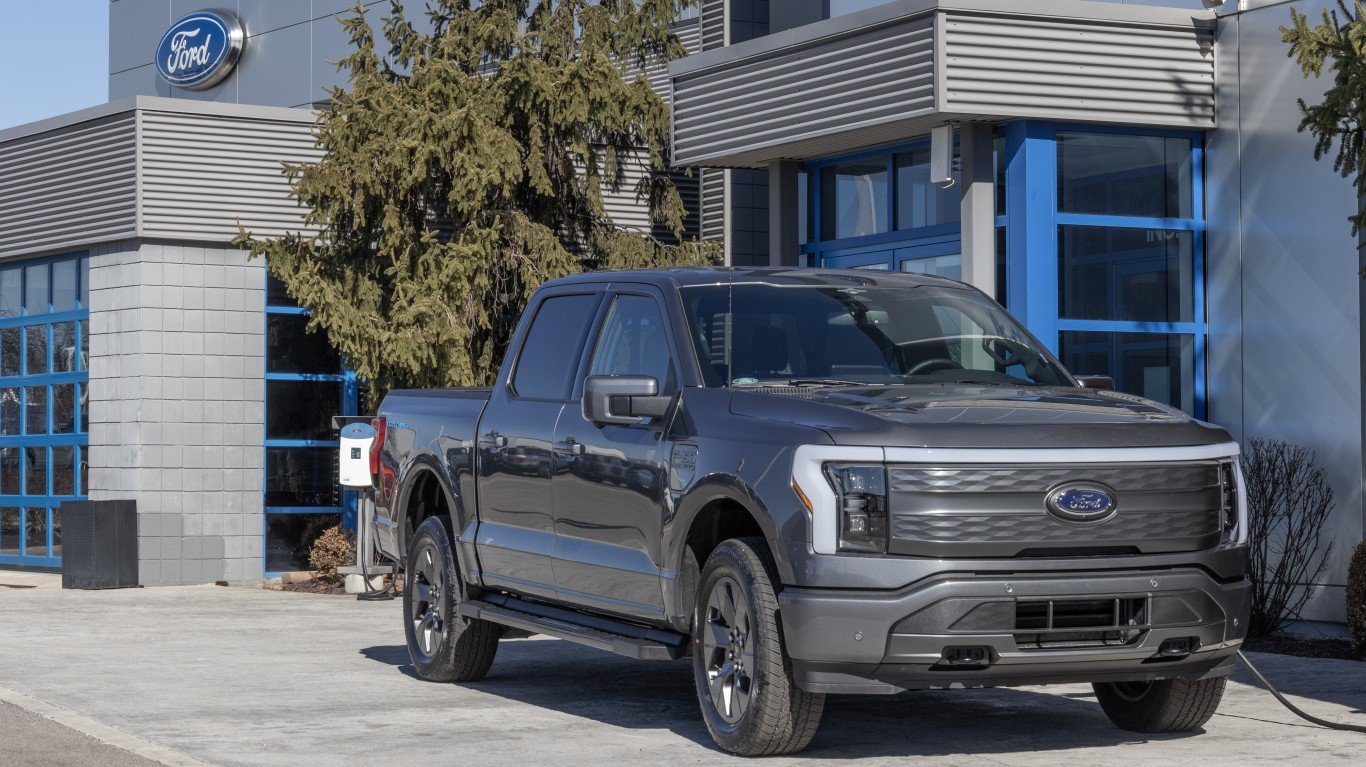
The factor that matters most is whether you can write a check for the full purchase price. If you can, Ramsey’s alternative is straightforward: “If you’re a multimillionaire and you want to go buy a $100,000 car, go buy a car. Just write a check. And then 3 years later, if you feel like that car is getting old, then write another check.” He acknowledged doing a version of this himself, buying a new Ford Bronco with the Raptor package and accepting the depreciation hit without regret.
For everyone else, a broader question looms: does a new car fit your budget at all? By September 2026, the average transaction price for a new vehicle had climbed to $50,562, just $52 below the all-time record of $50,614 set in December 2025, according to Kelley Blue Book. That September reading marked the fourth consecutive monthly increase and reflected sustained upward pressure from a sales mix heavy with midsize SUVs and full-size pickup trucks. Financing that purchase compounds the loss from depreciation with interest charges: the average new-car loan APR was 6.35% in Q2 2026, per Experian, and the average monthly payment on a new-car loan was $765. Adding interest to depreciation is how a $40,000 sedan quietly becomes a $55,000 sedan by the time the loan is paid off.
The affordability squeeze is visible across the market. Nearly 36% of new-car loans in Q1 2026 ran longer than six years, according to Experian, as buyers stretched repayment timelines to hold monthly payments down. Longer terms reduce the monthly bite but increase total interest paid and raise the risk of going underwater on the loan before the vehicle is paid off. Separately, payments of $1,000 or more per month hit a record 19% share of all new-car loans in Q1 2026, up from 17.4% a year earlier, driven largely by high-end pickup trucks and full-size SUVs. Notably, almost 74% of those four-figure payments were on non-luxury models, a sign that mainstream truck buyers are absorbing the heaviest payment burden in the market.
What to Do Before You Sign
Run three numbers before committing to anything at a dealership.
First, estimate the three-year depreciation. Look up the car’s projected residual value at year three on Kelley Blue Book or Edmunds. That figure is your true cost of ownership for the period, before any financing charges are added.
Second, compare the lease’s total payments to that depreciation number. When lease payments exceed what you would have lost through straight depreciation, the gap is what you are paying for dealer profit and financing charges. That is the price of convenience, and it is not small.
Third, decide whether you can pay cash. If yes, buy and trade at year three. If not, the smarter move is typically a two-to-three-year-old used vehicle, where the first owner has already absorbed the steepest portion of the depreciation curve.
Leasing bundles depreciation with profit and interest, hands you the bill every month, and repackages the whole arrangement as a tidy payment. Ramsey’s word for that fits.
Editor’s note: The average new-vehicle transaction price has been updated to $50,562, reflecting Kelley Blue Book’s September 2026 report, which placed the figure just $52 below the all-time record of $50,614 set in December 2025. Context has also been added noting that nearly 74% of new-car loans carrying payments of $1,000 or more are on non-luxury models, and that actual five-year depreciation rates vary considerably by vehicle segment relative to Ramsey’s 60% benchmark.
Contact [email protected] for any questions or corrections.
I am a long time investor and student of business, and believe finding good companies that can become great investments is the best game on earth. After 20 years of writing and researching the public markets it is clear that individuals have never had more tools and information to take control of their financial lives. From ETFs and $0 commissions to cryptos and prediction markets there has never been a greater democratization of access to investing.
I write to help people understand the investments available to them so they can make the best choice for their portfolio, whether they're starting out or looking for income in retirement.