Everyone’s Chasing Texas. Smart Retirees Are Actually Buying Here Instead
Texas keeps topping the retirement relocation lists, but a growing number of early retirees running the actual numbers are quietly choosing a state most people overlook entirely, and the financial gap between the two is wider than almost anyone expects.

This post may contain links from our sponsors and affiliates, and Flywheel Publishing may receive compensation for actions taken through them.
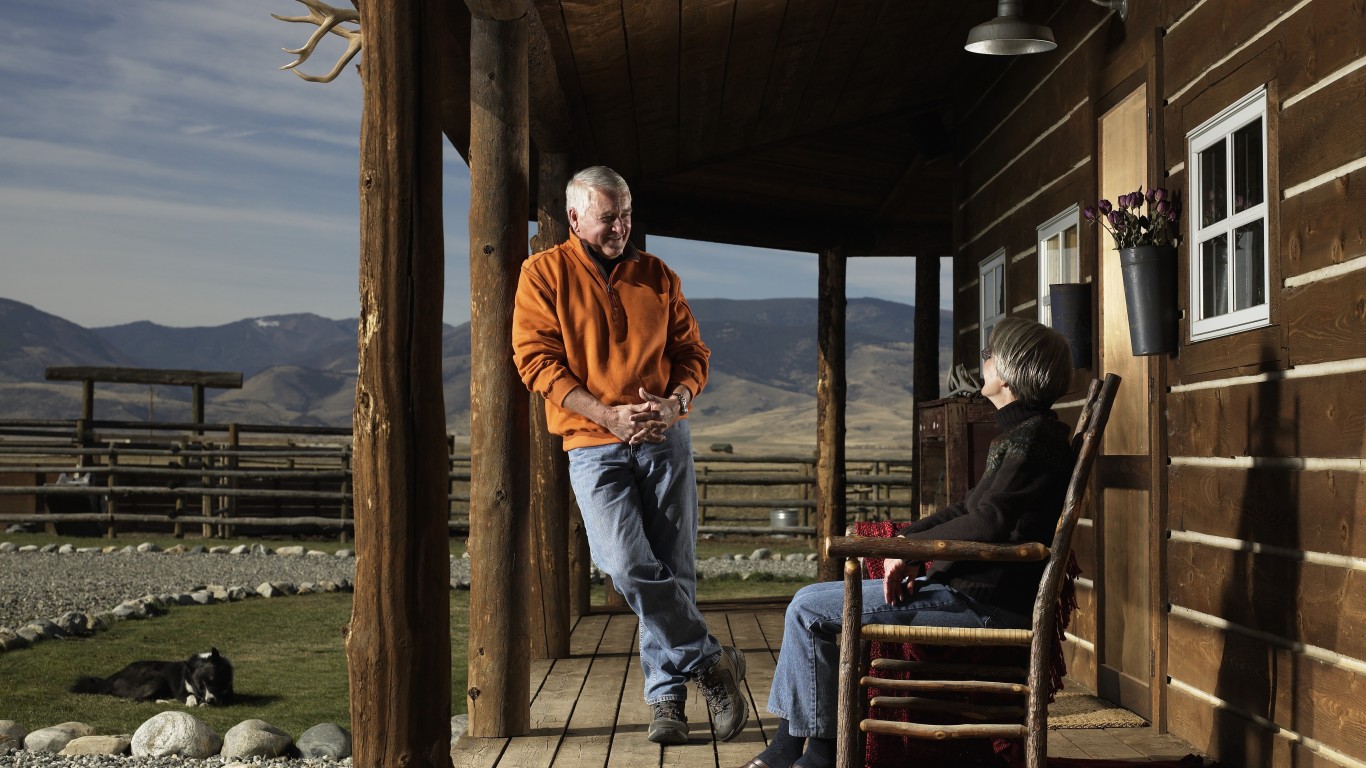
Every few months, a financial planner receives the same question: should a couple in their early sixties follow the crowd to Texas? No state income tax, warm winters, everyone’s cousin already lives there. Texas has real appeal. Still, the math has quietly gotten better somewhere else, and retirees who run the numbers keep landing in the same place: Wyoming.
This piece examines what a Wyoming retirement actually costs, what portfolio it requires, and what most coverage misses about the trade you’re making.
Why the Wyoming Math Beats the Texas Math
The headline numbers do most of the work. Texas carries a cost-of-living index of 97.057 and a purchasing-power-adjusted real income of $71,877. Wyoming comes in at a cost index of 92.691 with real income of $93,438, the second-highest in the country behind only Washington, D.C. On the tax side, Wyoming ranks first overall in the 2025 State Tax Competitiveness Index, while Texas ranks seventh, dragged down by property tax burdens that hit retirees on fixed incomes harder than working households. Adjusted for income, Wyoming’s per-capita state and local tax burden is $5,335 versus Texas at $5,897.
Neither state taxes Social Security, pensions, or 401(k) withdrawals. The difference compounds over a thirty-year retirement horizon through property taxes and sales taxes.
A Real Budget for Sheridan or Cheyenne
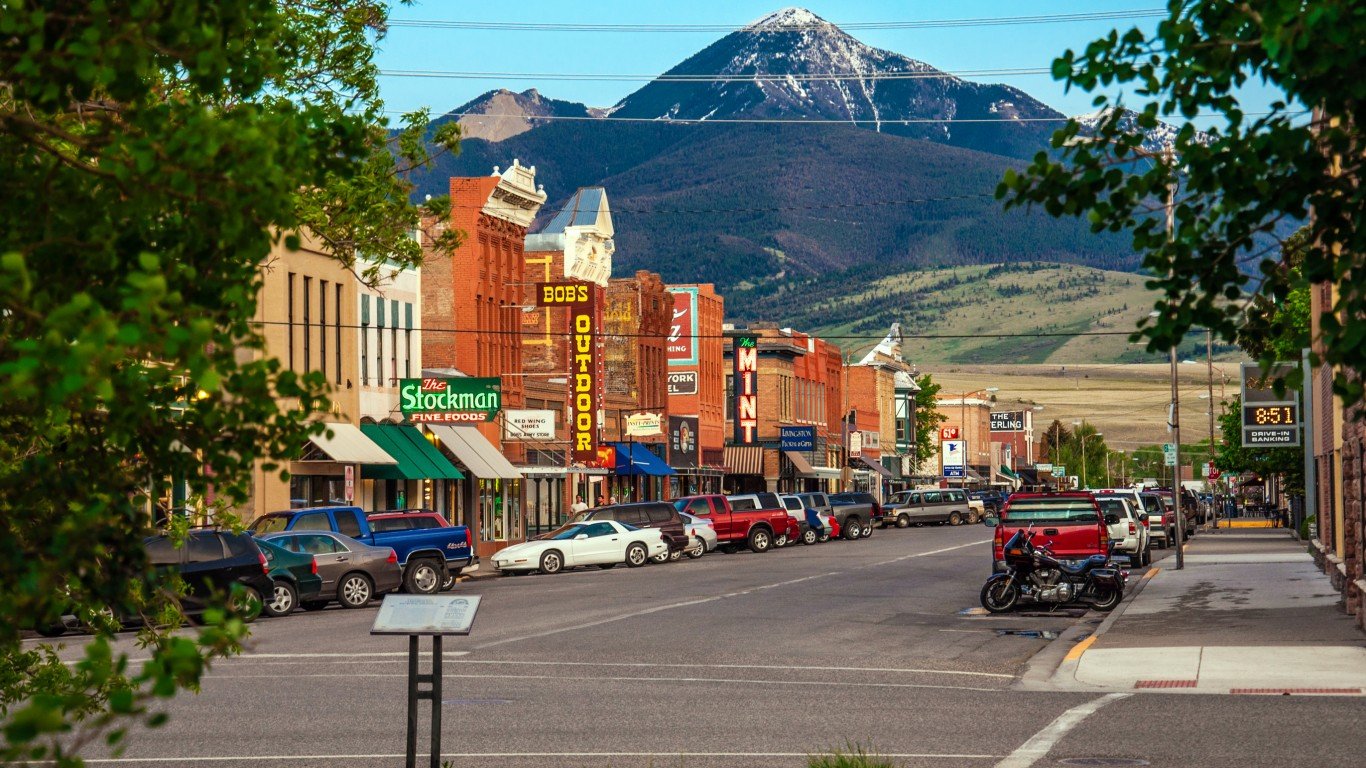
Take a couple, both 62, planning to retire near Sheridan or Cheyenne with a paid-off or modestly financed home. National home prices sit at record levels, with the Case-Shiller index at 335.1 in May 2026. Sheridan runs roughly $450,000 to $525,000 for a comfortable single-family home. Cheyenne runs a bit less.
A working annual budget in current dollars:
- Housing (property tax, insurance, utilities, maintenance reserve): $14,000
- Healthcare, pre-Medicare ACA bridge for two, with income managed for subsidies: $13,000
- Food, USDA Moderate-Cost plan for a couple 60+: $12,500
- Transportation, including replacement vehicle reserve: $7,500
- Federal income tax on withdrawals: $5,000
- Travel, gifts, discretionary: $10,000
- Emergency and large-repair reserve: $6,000
That lands near $68,000 a year, which sits below the national average annual expenditure of $78,535 and reflects Wyoming’s cost advantage.
The Portfolio That Actually Supports It
At Full Retirement Age of 67, the SSA’s average benefit currently produces roughly $24,000 per year per higher earner and $18,000 for the spouse, with the 2.8% COLA effective in 2026 already baked into current payments. Combined household Social Security lands near $42,000 annually once both partners claim.
Subtract that from $68,000 and the portfolio must cover about $26,000 a year in perpetuity. At a 3.75% withdrawal rate appropriate for a 30-plus year horizon, that requires roughly $695,000 invested. Call it $700,000 in a mix of index funds, dividend ETFs, and a short treasury ladder to blunt sequence risk in the early years.
The five-year gap from 62 to 67 is where most plans break. Bridging on ACA coverage requires managing Modified Adjusted Gross Income carefully, which usually means leaning on taxable brokerage assets and Roth balances rather than pulling from a traditional IRA. Budget another $150,000 to $180,000 in taxable or Roth assets earmarked for that bridge. All-in target: roughly $850,000 to $900,000 in investable assets at age 62, plus the paid-down house. For context, the average Baby Boomer 401(k) balance is $267,900 and the average IRA is $257,002, so this scenario assumes a household well ahead of the median.
The Consideration Nobody Prices In
Wyoming’s genuine cost is healthcare geography. Large swaths of the state sit two hours or more from a full-service hospital, and specialist care often means driving to Billings, Denver, or Salt Lake City. Medigap Plan G premiums run higher in Wyoming than in Texas metros because the underlying provider network is thinner. A second vehicle rated for winter driving is not optional. Any serious chronic condition eventually forces a decision between staying put and moving closer to care, which is why smart Wyoming retirees buy in Sheridan, Cheyenne, or Casper rather than scenic small towns two hours from an ER.
Housing supply reinforces the point. Existing home sales sit at 4.09 million annualized as of June 2026, squarely in soft-market territory, which means transaction velocity is slow and inventory in desirable Wyoming submarkets is thin. Buy near the hospital, price the winter, and Wyoming outperforms the Texas plan on almost every line. Get either of those wrong, and the cost advantage evaporates in a single hospital bill.
Contact [email protected] for any questions or corrections.
I am a long time investor and student of business, and believe finding good companies that can become great investments is the best game on earth. After 20 years of writing and researching the public markets it is clear that individuals have never had more tools and information to take control of their financial lives. From ETFs and $0 commissions to cryptos and prediction markets there has never been a greater democratization of access to investing.
I write to help people understand the investments available to them so they can make the best choice for their portfolio, whether they're starting out or looking for income in retirement.