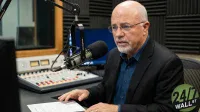
Dave Ramsey’s First Move for a 19-Year-Old With $58,000 in Debt: Build a $1,000 Emergency Fund
A 19-year-old running a six-figure business called Dave Ramsey carrying $58,000 in debt, and Ramsey's first instruction had nothing to do with paying it off.

This post may contain links from our sponsors and affiliates, and Flywheel Publishing may receive compensation for actions taken through them.

A 19-year-old named Skyler called into The Ramsey Show with a scenario most callers would trade for: a pressure washing business pulling in $10,000 to $11,000 a month. The catch: $58,000 in debt sitting on top of that income. Dave Ramsey‘s first instruction was to park $1,000 in a starter emergency fund and stop everything else until that cash was in the bank.
That answer is the right size for the problem. The reason Ramsey leads with a tiny emergency fund, before any debt payment above the minimums, is the mechanic that turns motivated borrowers into repeat borrowers: one flat tire, one busted pressure washer pump, one ER copay, and the payoff plan collapses back onto a credit card. If you carry that new charge at nearly 21%, the average U.S. credit card APR right now, the setback compounds fast.
The Verdict: Ramsey’s First Step Is Right, and the Math Is Brutal Without It
Start with the cost of Skyler’s debt if it sits at credit card rates. At roughly 21% APR, a $58,000 balance accrues interest of roughly $1,012 in the first month alone before any principal payment. Even if Skyler throws $6,000 a month at it, the first check sees more than a sixth of it eaten by interest. That is the trap Ramsey’s baby emergency fund is designed to protect: any month where an unexpected $800 repair forces him to skip a payment, that $1,012 doesn’t just persist, it grows.
Now flip it. With $1,000 already set aside, a blown transmission on the work truck becomes a cash transaction, not a new credit line. The debt keeps shrinking. On a $10,000 monthly income with disciplined expenses, a focused payer can clear $58,000 in roughly a year. Clark Howard, on his own show, frames the sustainable version as “a five year plan to pay off debt” designed to reduce anxiety and build a cushion. Skyler’s income compresses that timeline dramatically, but only if the plan survives contact with real life.
The contrast with what savers earn makes the urgency sharper. A 12-month CD nationally pays under 2% APY right now. Paying down a 20.94% debt is a guaranteed return of nearly 21% on every dollar. No public market offers that.
The One Variable That Changes the Order of Attack
The variable is the interest rate mix inside that $58,000. Ramsey’s debt snowball says pay the smallest balance first, regardless of rate. The math-optimal alternative, the avalanche, says pay the highest rate first. The gap between the two matters most when rates diverge sharply.
Scenario A: If Skyler’s $58,000 is mostly a truck loan and equipment financing at 8% to 10%, the snowball wins on psychology and loses almost nothing on math. Interest saved by avalanche over snowball might amount to a few hundred dollars across a 12-month payoff.
Scenario B: If $20,000 of that balance is a credit card at about 21% and the rest is a 7% auto loan, the avalanche saves real money. Hitting the card first prevents roughly $349 in monthly interest from accruing on that piece. Over a year of payoff, that ordering choice could preserve a couple thousand dollars.
Ramsey would still push the snowball because behavior beats spreadsheets for most people. The behavior argument holds in general, but a 19-year-old already running a business that clears $10,000 a month has demonstrated the discipline problem is not his problem. In Scenario B, avalanche is the better call.
What Skyler, or Anyone in His Spot, Should Actually Do This Week
- Move $1,000 into a separate savings account today. Label it. Don’t touch it unless something breaks that stops the business from operating.
- List every debt with balance, minimum payment, and APR. Rank once by balance (snowball) and once by rate (avalanche). If the top APR is above 15%, run avalanche.
- Set a fixed monthly payoff number: on $10,000 gross, target $5,000 to $6,000 toward debt after taxes and business costs. With personal consumption running at roughly 93% of disposable income nationally, keeping personal spending under 40% of take-home is the edge the average American cannot access.
- Automate minimums on all debts. Route the surplus to the target debt every payday, not at month-end.
- Once the $58,000 is gone, rebuild the emergency fund to three to six months of expenses before any investing. With the fed funds rate near 4%, high-yield savings pays a real return again while the fund grows.
Ramsey’s first-step answer is small on purpose. Its job is to keep the plan alive long enough for the income to do the work.
Contact [email protected] for any questions or corrections.
I am a long time investor and student of business, and believe finding good companies that can become great investments is the best game on earth. After 20 years of writing and researching the public markets it is clear that individuals have never had more tools and information to take control of their financial lives. From ETFs and $0 commissions to cryptos and prediction markets there has never been a greater democratization of access to investing.
I write to help people understand the investments available to them so they can make the best choice for their portfolio, whether they're starting out or looking for income in retirement.