Housing Starts Plunge 10% as Mortgage Rates Climb to 6.75%, Builders Brace for Demand Collapse
Mortgage rates pushing toward 7% sent builders scrambling to cut production before buyers vanish entirely, but the real question is whether that panic creates an opening for households willing to act while others freeze.


CNBC real estate correspondent Diana Olick opened a recent segment with a number that has rearranged household budgets all summer. “The average rate on the 30 year fixed mortgage inched up again this morning to 6.75%.” That reading, from Mortgage News Daily at the time of her report, is where the 30-year fixed sat when the segment aired.
Olick added that “Rates have been hovering around the higher end highest levels in over a year, in fact. And that’s hitting affordability once more.”
The stakes are direct. At 6.75%, the loan a given monthly payment supports is smaller, while sticker prices have barely moved. Case-Shiller sits at 335.1, in the 90th historical percentile.
Builders are reading that shrinking budget and pulling production before demand disappears. That reaction is the real story, and it changes what a buyer should do with the number.
What 6.75% Does to a Buyer’s Budget
A household shopping for a home thinks in monthly payments because the payment has to fit alongside groceries, childcare, and a car loan.
When the mortgage rate rises, the payment on a given loan balance rises with it. The buyer’s budget has not changed, so the loan they can carry has shrunk while the house price remains where it was.
Olick summarized how that pressure has shown up in demand. “We got the numbers on pending home sales this morning and they were well below expectations. The realtors noted higher mortgage rates specifically in their report.”
Existing home sales in July ran at 4.06 million annualized, in the soft range historically tied to elevated rates. Consumer sentiment at 49.5 sits closer to recessionary levels than to neutral, which usually leads spending by a month or two.
Builders Are Cutting Before Demand Disappears
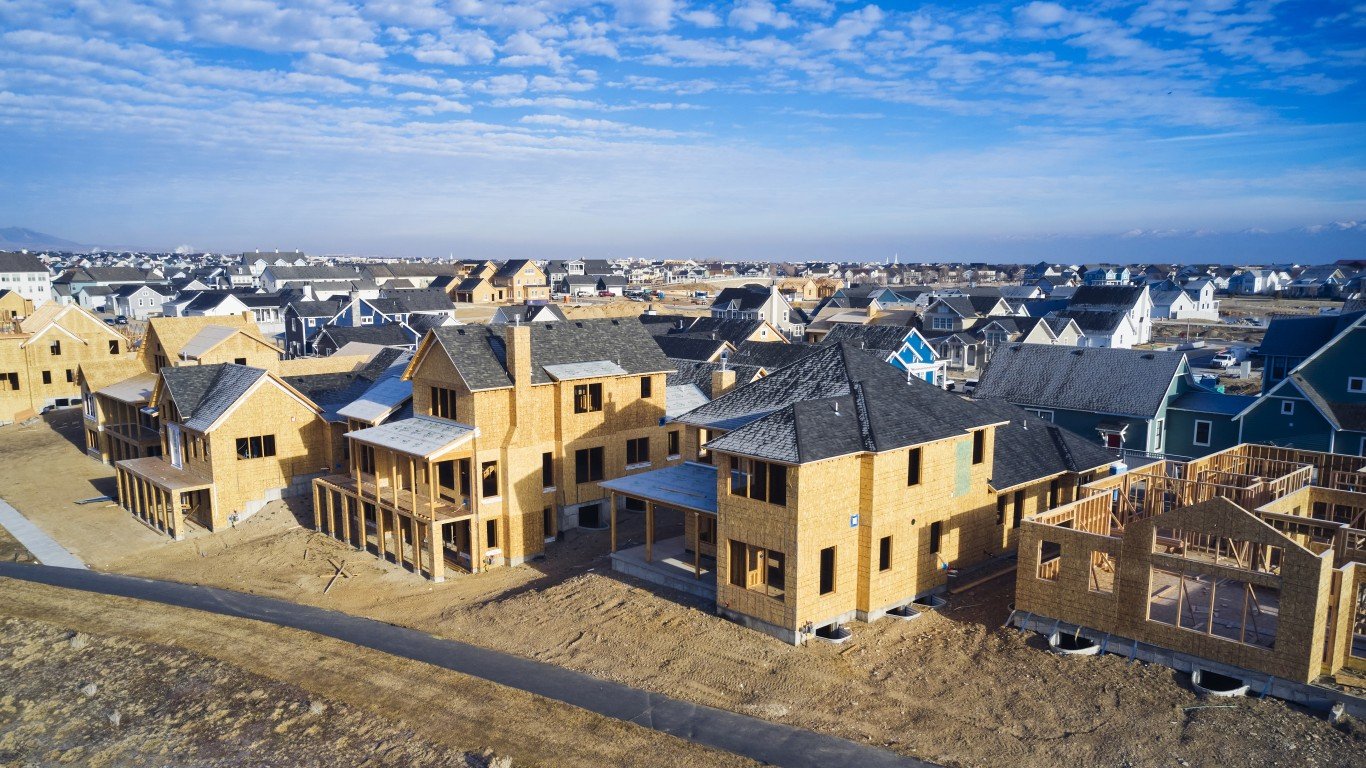
Homebuilders track the rate more closely than buyers do, because their production pipeline is where a demand shock lands first. When affordability breaks, builders stop pouring foundations.
Olick delivered the July figure. “We also just got single family housing starts in july, and that was an even bigger drop than expected, down 10% from june, down 16% year over year.”
Total housing starts came in at 1.24 million in July, down from 1.415 million in June. The 12-month percentile rank on the series is 8.3, meaning nearly every recent month printed stronger.
The market noticed. Olick observed that “Stocks of the builders are not loving that the homebuilder ETF itb is in the red. So far today.” The iShares U.S. Home Construction ETF (BATS: ITB) has fallen 4% over the past week and 11% over the past year.
Why Luxury Builders Are Holding Up Better
The factor that determines whether a rate move hurts a builder is the extent to which the customer base depends on financing. That is why Toll Brothers (NYSE:TOL | TOL Price Prediction) is telling a different story than the sector ETF.
Roughly 23% of Toll’s buyers paid all cash last quarter, and the loan-to-value on mortgage buyers averaged 69%. A rate move does not swing that customer the way it swings a first-time buyer stretching to 95% financing.
Executive Chairman Doug Yearley put it directly on the May call. “Overall, our buyers are less sensitive to affordability pressures as they have benefited from years of income growth, stock market gains, and home equity appreciation.”
The crack has still reached the luxury end. Toll’s most recent quarter showed deliveries of 2,662 homes, down from 2,959 a year earlier; gross margin compressed to 23.9% from 25.6%; and CEO Karl Mistry described it as a “challenging market” in the August filing.
What a Household Should Actually Do
The first thing to say is that nobody reliably times mortgage rates. Waiting for a specific number sometimes works and sometimes means sitting out while prices grind higher.
Builders sitting on unsold inventory are the counterweight. When starts fall 10% from June and 16% year over year, homes already framed still have to sell, and the rate buydowns and closing credits builders offer are real money a resale seller usually cannot match.
A smaller pool of competing buyers matters too. The 4.06 million annualized pace of existing sales means less bidding pressure, more inspection contingencies honored, and room to negotiate repairs.
The buy now and refinance later argument works only if the payment at 6.75% is one the household can carry indefinitely. If a refinance never arrives, the loan has to stand on its own, and that is the test worth running before signing anything.
Contact [email protected] for any questions or corrections.
Omor Ibne Ehsan is a writer at 24/7 Wall St. He is a self-taught investor with a focus on growth, cyclical, and dividend equities that have strong fundamentals, value, and long-term potential. He also has an interest in high-risk, high-reward investments such as penny stocks.