“I Pay No Taxes Because I Borrow Money”: Rich Dad Poor Dad Author Explains How He’s Accumulated $1.2 Billion in Debt
Robert Kiyosaki openly brags about carrying more than a billion dollars in debt and paying zero taxes, and his explanation for why that makes him wealthy rather than broke will either change how you think about money or terrify you.

This post may contain links from our sponsors and affiliates, and Flywheel Publishing may receive compensation for actions taken through them.
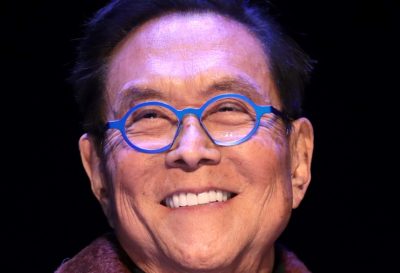
In a June 2026 interview on the “Get Rich Education” podcast, Robert Kiyosaki said plainly: “So, I’m a billion two in debt.” The author of “Rich Dad Poor Dad” (1997), reported to have sold more than 44 million copies, has repeated this figure publicly since at least 2024, and it surfaced again in a New York Post report on September 1, 2026 alongside a new Vanity Fair profile. The headline comes from an earlier, widely circulated line: “If you understand history, the reason I pay no taxes is because I borrow money. I’m a debtor.”
The $1.2 billion needs an immediate asterisk. According to Kim Kiyosaki, his ex-wife and longtime business partner, speaking to Vanity Fair, the figure is debt held collectively by a group of real estate investors and partners tied to roughly 1,500 apartment units. His personal exposure is reportedly much smaller, estimated in the $30 million to $60 million range.
How “Buy, Borrow, Die” Works
The strategy Kiyosaki describes is legal and relies on provisions in the tax code:
- Buy income-producing real estate. Rental properties, apartment buildings, or similar cash-flowing assets.
- Let the property appreciate, then refinance. As the property gains value, the owner refinances and pulls the increased equity out as a new loan.
- Loan proceeds are not income. Borrowing against an asset, rather than selling it, does not trigger capital gains tax under current law.
- Rent covers the note. Rental income pays the mortgage and interest. The investor can claim depreciation deductions and mortgage interest deductions, reducing taxable income.
- Repeat. As long as properties keep appreciating, the cycle continues.
Kiyosaki has studied this approach for decades. “I studied it since 1974… If you’re going to learn to use debt, you’d better take some education,” he told the Get Rich Education podcast. He describes the ownership structure bluntly: “Firewalls, that’s the way the rich play the game,” a reference to separating investments into distinct LLCs so trouble in one entity does not cascade into others.
Skeptic’s Case Against $1.2 Billion in Debt
John Poole, founder of consulting firm JPTD Partners, told the New York Post: “There’s good debt and there’s bad debt, and then there’s $1.2 billion of debt, which you better know exactly what in the world you’re doing… Leverage works beautifully on the way up, and if it’s not continuing on that way up, then it’s like a chainsaw financially coming down.” He added: “[Kiyosaki] may call this the ‘Rich Dad debt,’ but for the average investor, it could turn out to be ‘Poor Dad bankruptcy’ really quickly.”
A cautionary precedent exists. Rich Global LLC, a company connected to Kiyosaki’s financial education business, filed for Chapter 7 bankruptcy in 2012 following a judgment of more than $23 million in litigation with Learning Annex. Federal bankruptcy records identify Rich Global LLC as the debtor, not Kiyosaki personally.
Ramsey’s Opposing Philosophy
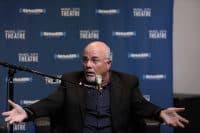
Kiyosaki’s philosophy sits opposite Dave Ramsey’s. Ramsey’s guidance is unqualified: “If the only way I can do X or Y or Z is if I have to borrow money, I can’t do it. I don’t have enough money.” He frequently invokes Proverbs 22:7: “The borrower is slave to the lender.”
Kiyosaki has publicly criticized that approach, at one point calling Ramsey “an idiot” over their differing views. Ramsey wants every dollar of debt gone. Kiyosaki argues that debt used against income-producing assets is a wealth-building tool. Readers can find our earlier take at “I Don’t Agree with Robert Kiyosaki on Everything, But He Nails These 6 Points About Wealth.”
What to Take From It
The mechanics Kiyosaki describes are real, legal, and used across the real estate industry. They depend on continued appreciation, reliable rental income, and disciplined entity structuring. When those inputs fail, the same leverage that compounded gains on the way up compounds losses on the way down. Kiyosaki, at age 79 as of current reporting, is comfortable with it. Whether any individual reader should be is a separate question the math of their own portfolio must answer.
Contact [email protected] for any questions or corrections.
AJ spent 10 years writing about financial markets at The Motley Fool. His coverage centers on technology stocks and the broader macroeconomic trends, from interest rates to geopolitics, that shape where markets are headed next. AJ is drawn to the stories where big-picture economics and individual companies collide.