Widowed at 66, She’ll Move In With Him Instead of Marrying Him. Eight Years From Now, Her Late Husband’s Pension, Her House, and Her Kids’ Inheritance Will All Still Be Exactly Where She Left Them
Choosing to move in together rather than remarry sounds simple, but that one decision quietly reshuffles pension checks, Medicaid calculations, and inheritance rights in ways most couples never see coming until it is too late to undo them.

This post may contain links from our sponsors and affiliates, and Flywheel Publishing may receive compensation for actions taken through them.
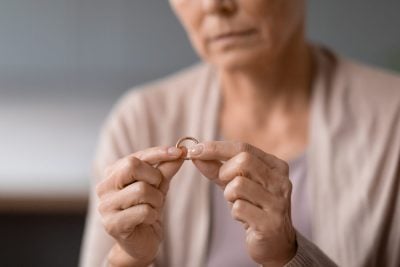
A 66-year-old widow who moves in with a new partner instead of marrying him keeps legal protections that marriage would change. Her late husband’s pension survivor benefit, house, and children’s inheritance stay outside his legal claim as long as they remain unmarried. State inheritance law, Medicaid rules, and each pension plan’s terms matter most when planning for this kind of scenario.
Marriage Rewrites Rights That Moving In Leaves Untouched
Marriage creates automatic rights, and in most states, a surviving spouse can claim an elective share of the deceased spouse’s estate even when the will leaves everything to the children. An unmarried partner has no elective share or intestate claim. Medicaid works the same way: when a married person needs long-term care, the program looks at both spouses’ assets. With no Medicaid spousal deeming, his nursing home bill cannot pull her savings into his eligibility calculation.
Statutes That Decide Where the Money Goes
For Social Security, federal law pays widow’s benefits only to someone who is not married, under 42 U.S.C. § 402(e)(3) and 20 C.F.R. § 404.335(e). The exception covers later remarriages: if you remarry after age 60 (age 50 if disabled), you will continue to qualify for benefits based on your deceased spouse’s Social Security record. At 66, marrying again would leave the Social Security check unchanged.
Elective share rules come from state law, and states following the Uniform Probate Code set an elective-share percentage based on how long the spouse and the decedent were married. For Medicaid, the 2026 federal standards let the at-home spouse keep between $32,532 and $162,660 in countable assets. Those limits exist only because the program counts a married couple’s assets together. Unmarried partners are each treated as single when applying for Medicaid.
Pension rules vary by plan, as Federal civil service survivor annuities under 5 U.S.C. § 8341 end if a spouse remarries before age 55. The military Survivor Benefit Plan pauses if the survivor remarries before age 55. Some pension survivor annuities end on remarriage.
Who Gains From Staying Unmarried and Who Loses
The arrangement helps most when a widow has adult children, separate assets, and a house to pass down, and it also protects anyone whose pension plan ends survivor payments on remarriage. For federal civil service and military survivors, the age-55 cutoff is 66, so marrying would leave those benefits unchanged. Couples who want the partner to inherit, make medical decisions, or collect benefits on the other’s work record gain nothing from staying single.
The survivor benefit rules alone can swing six figures over a retirement, which is why we condensed the claiming and survivor math into a free one-page framework you can download here.
Steps That Hold the Arrangement Together for Years
- Get the pension plan’s summary plan description and read the remarriage clause.
- Confirm the Social Security survivor benefit amount. The 2027 cost-of-living adjustment is tracking toward 3.3% with 2 of 3 third-quarter months counted.
- Update the will and beneficiary designations. Many families transfer the house into a revocable trust and name children as beneficiaries.
- Sign a cohabitation agreement. It should spell out who owns the house, how expenses are split, and what happens if one partner dies or the relationship ends.
- Each partner signs a durable power of attorney, health-care proxy, and HIPAA release.
- Keep accounts separate and document who pays for what.
His Missing Rights Are the Biggest Risk
Staying unmarried limits his rights equally, as he has no survivor rights. Should she pass away first, he inherits nothing unless a document says so, and her children could ask him to leave the house. If she is hospitalized, he has no default authority to speak for her. A cohabitation agreement plus a POA and health proxy would be required for this situation to be different.
Moving money between them also carries some big risks. Married couples can transfer assets freely, but the rules differ for an unmarried couple. The transfer may be treated as an asset transfer and penalized with a period of Medicaid ineligibility. If finances stay separate and paperwork is signed now, the pension, house, and inheritance plan remain where she set them up eight years from now.
Contact [email protected] for any questions or corrections.
David Beren has been a Flywheel Publishing contributor since 2022. Writing for 24/7 Wall St. since 2023, David loves to write about topics of all shapes and sizes. As a technology expert, David focuses heavily on consumer electronics brands, automobiles, and general technology. He has previously written for LifeWire, formerly About.com. As a part-time freelance writer, David’s “day job” has been working on and leading social media for multiple Fortune 100 brands. David loves the flexibility of this field and its ability to reach customers exactly where they like to spend their time. Additionally, David previously published his own blog, TmoNews.com, which reached 3 million readers in its first year. In addition to freelance and social media work, David loves to spend time with his family and children and relive the glory days of video game consoles by playing any retro game console he can get his hands on.