A Woman Who Retires at 62 With $470,000 in a 401(k) and Lives on the Sale of Her House for 11 Years Will Have About $800,000 at 73, and a $30,000 RMD, Her First Taxable Income in a Decade
Selling a paid-off house to fund a decade of retirement while leaving a 401(k) completely untouched sounds like a loophole, but the IRS eventually collects, and the bill arrives at the worst possible moment.

This post may contain links from our sponsors and affiliates, and Flywheel Publishing may receive compensation for actions taken through them.

Consider a retirement plan in which a woman stops working at 62 with $470,000 in her 401(k). She sells her house, lives on the proceeds, and leaves the retirement account alone for 11 years. If the account averages about 5% a year, it reaches roughly $800,000 by age 73. At that point, the IRS requires her to start taking withdrawals.
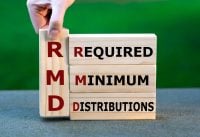
Her first required minimum distribution (RMD) is about $30,189, and it is the first meaningful taxable income she has reported in a decade. This article runs the numbers on what that delay buys her, what it costs, and how she could use the quiet years.
How $470,000 Grows to $800,000 With No New Contributions
A return of roughly 5% a year is a moderate assumption for a balanced mix of stocks and bonds. All of the growth comes from leaving the money invested. She never sells shares to pay rent, buy groceries, or replace a roof, because the house sale covers those bills. In a down market, she never has to sell, so a bad stretch has time to recover before any money comes out.
House Sale Size Determines Whether the Plan Works
In reality, everything depends on the sale size and how much money you have available to spend now. The Bureau of Labor Statistics reports that the average household spent $78,535 in 2024. At that pace, 11 years costs about $863,885 before inflation. A single retiree usually spends less than the average household, which includes working families with children. Even so, the figure shows the plan works only with a lot of paid-off equity.
Home prices make that more realistic than it used to be. The Case-Shiller national index stood at 337.3 in July 2026. January 2000 is set at 100, and the July reading was the highest in the past year. National numbers don’t guarantee any one home’s sale price, though.
There’s also a catch in the “no taxable income” part. Money parked in CDs earns interest, and interest is taxable. The national average 12-month CD paid 1.73% in September 2026. That rate means interest on a modest CD balance would stay below the $16,100 standard deduction for single filers. She has some income, but she owes no federal tax.
What a $30,000 RMD Actually Costs
The IRS Uniform Lifetime Table divisor at age 73 is 26.5. Dividing $800,000 by that divisor gets the first RMD. She claims the standard deduction plus the $2,050 extra deduction for filers 65 and older, which leaves about $12,039 of taxable income.
IRS brackets tax the first $11,925 at 10% and the rest at 12%, for a federal bill of about $1,206, and while that bill is small, it grows. The divisor shrinks every year, so each year’s RMD takes a larger share of the account. Social Security is the bigger issue. If she claims benefits at 70, the RMD adds on top of them, and at higher combined income up to 85% of benefits can become taxable (we walked through how a large pre-tax balance turns into a first-year tax bill, and how to reduce it years ahead, in a free guide here).
The extra $6,000 senior deduction only runs from 2025 through 2028 and will have expired by the time she reaches 73.
Age 73 Applies to Fewer New Retirees Than It Seems
SECURE 2.0 requires RMDs to begin at 73 for people born between 1951 and 1959. For anyone born in 1960 or later, they begin at 75, and a woman turning 62 today falls in that group. Two more years of growth at the same rate would bring the balance to about $881,160. The divisor at 75 is 24.6, so her first RMD would be roughly $35,820.
Using the Years With No Income
The years with no income are the cheapest years she will ever have to move money out of the 401(k). Single filers pay 12% on taxable income up to $48,475.
Add the flat deduction, and about $64,575 a year in withdrawals or Roth conversions would be taxed at no more than 12%. Roth 401(k) balances have had no required withdrawals since 2024.
- Convert part of the balance each year. Filling the 10% or 12% bracket shrinks the balance that future RMDs are calculated on.
- Plan Social Security and RMDs together. The claiming age decides how much of the benefit gets taxed once withdrawals start.
- Confirm the birth year. It determines whether the first RMD comes at 73 or 75, and how large it will be.
The plan works on paper. Leaving the 401(k) alone for 11 years turns a mid-sized balance into a large one. The cost shows up later, when a decade of tax brackets that could have been used at low rates are gone and the RMD arrives on top of Social Security.
Contact [email protected] for any questions or corrections.
David Beren has been a Flywheel Publishing contributor since 2022. Writing for 24/7 Wall St. since 2023, David loves to write about topics of all shapes and sizes. As a technology expert, David focuses heavily on consumer electronics brands, automobiles, and general technology. He has previously written for LifeWire, formerly About.com. As a part-time freelance writer, David’s “day job” has been working on and leading social media for multiple Fortune 100 brands. David loves the flexibility of this field and its ability to reach customers exactly where they like to spend their time. Additionally, David previously published his own blog, TmoNews.com, which reached 3 million readers in its first year. In addition to freelance and social media work, David loves to spend time with his family and children and relive the glory days of video game consoles by playing any retro game console he can get his hands on.