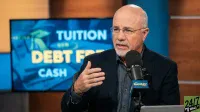
‘You’re Making a Worse Situation Worse’: Cruze to Mom Eyeing Chapter 13 on $62K in Cards and $150K in Student Loans
Sarah has $62,000 in credit cards, $150,000 in student loans, and a plan to file Chapter 13 that her hosts say will leave her worse off than before she started. Here is why her cheapest monthly bill may be the…

This post may contain links from our sponsors and affiliates, and Flywheel Publishing may receive compensation for actions taken through them.

A Cleveland mother named Sarah called The Ramsey Show with one question: is Chapter 13 bankruptcy her way out? Hosts Rachel Cruze and Jade Warshaw first had her lay out the household’s debt. It came to $62,000 in credit cards, $28,000 in personal loans and about $150,000 in federal student loans.
On top of that sits a $210,000 mortgage costing about $1,800 a month. Car leases run about $11,000 a year.
The family of four nets $120,000, or roughly $10,000 a month.
Minimums on the cards and personal loans alone eat $2,800 to $2,900 of that take-home. The student loans, on an income-driven plan, cost about $200 a month.
Bankruptcy Can’t Reach Her Largest Debt
Cruze delivered the problem in one line. Sarah’s $150,000 in student loans are federal and not dischargeable, so she would still owe every dollar after filing. The hosts are right, and filing here would compound the hole.
Chapter 13 is a court-supervised repayment plan, typically lasting three to five years, with payments set by your disposable income. Federal student loans ride through that process intact unless a borrower wins a separate undue-hardship case. Sarah would spend years under a trustee’s budget, damage her credit, and walk out still carrying her biggest balance.
Sarah also suggested filing alone on “my half” of the debt. A bankruptcy discharge only protects the person who files, so any account in both spouses’ names stays fully collectible from her husband.
Where $1,080 a Month Disappears
The debt bankruptcy could touch is the debt doing the most damage. The average credit card APR at commercial banks was 21% in May 2026, the latest quarterly reading. Fed data places anything above 20% in record territory.
By our calculation, a $62,000 balance at that rate generates about $12,980 of interest a year, roughly $1,080 a month. More than a third of Sarah’s monthly minimums buys nothing. That money disappears before principal moves.
Relief from rates looks unlikely. The Fed raised its target ceiling to 4% in September from 3.75%, and card APRs track the prime rate with a lag.
Why Her Cheapest Bill Is Her Biggest Balance
The variable that decides whether bankruptcy makes sense is how much of your debt it can actually eliminate, and when most of the stack is dischargeable and income can’t cover it, Chapter 13 can be a rational reset. When the largest piece remains, you bear the cost of bankruptcy for partial relief.
Sarah falls clearly in the second case. Her student loans dominate the balance sheet and cost just $200 a month. The cards and personal loans are smaller balances with heavy payments, and those payments come out of cash flow she controls.
She also still has room to act. Nationally, 3% of card balances were at least 30 days past due in April 2026. Sarah is making her minimums, which means the money exists to redirect.
Pull These Jenga Blocks Before Calling a Lawyer
Warshaw framed the fix as Jenga: test which blocks move, and the hosts also pushed for a outlook shift toward “I don’t care what it takes. I’m going to fix this.”
- Let the lease die. The car lease expires in December. Warshaw said not to re-lease and to save for a cash car instead, leaving most of that $11,000 a year for the cards.
- Price out selling the house. Sarah has about $65,000 in equity, roughly the size of her card balance. Get a realistic sale estimate after commissions and compare it against local rents before deciding.
- Rank debts by interest cost. List every card and personal loan with its rate and monthly interest charge. That shows exactly how much of each payment is principal and which balance is draining the most.
- Protect the federal loans. Keep their terms intact. The Consumer Financial Protection Bureau notes federal loans carry income-based repayment and discharge options private loans lack. Keep the income-driven plan current while the high-rate debt gets cleared.
Bankruptcy only helps when it can reach the debt that is sinking you, and for Sarah, the debt it can reach is the debt her own cash flow can kill.
Contact [email protected] for any questions or corrections.
Jake has been been working in financial media for almost 15 years. He focuses on all things personal finance for 24/7 Wall St. with high hopes to educate and entertain. Most recently, Jake spent 12 years working various roles at The Motley Fool. He started copy editing fool.com content, worked on premium and marketing campaigns, and helped launch The Ascent, a personal finance brand.
His work has been featured on platforms like MSN, Yahoo Finance, USA Today, and more. He's written about credit cards, social security, ETFs, savings accounts, and just about anything else you can imagine when thinking about money. Jake love to cook, play golf, and tell people he's never had a cavity. (It's true!)