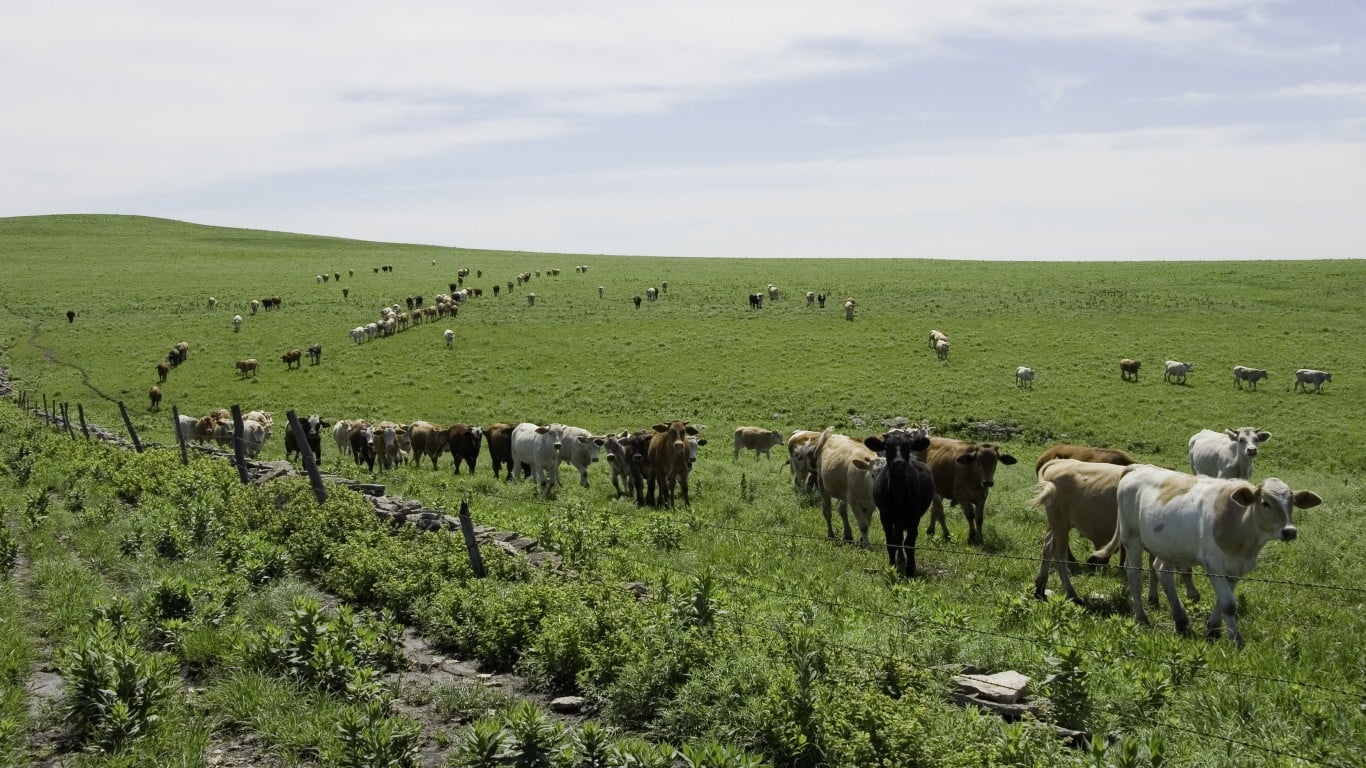
Family Farms Can Value Their Land as Farmland Instead of Development Land and Cut About $1.4 Million From the Taxable Estate. Sell to a Developer Within 10 Years and the IRS Takes It Back
When a farm sits at the edge of town and developers are circling, the land's value for estate tax purposes does not have to match what those developers would pay. But the provision that allows this comes with a condition…

This post may contain links from our sponsors and affiliates, and Flywheel Publishing may receive compensation for actions taken through them.
A widower has farmed the same ground for decades, and the town has grown right up to his fence line. A developer would pay far more for that land than any farmer ever would.
If he dies in 2026, that developer price could hand his children a federal estate tax bill. An old provision in the tax code lets his executor value the land as the cornfield it is, which can take up to $1,460,000 off the taxable estate. The catch comes later. If the heirs sell to that developer within 10 years, the IRS takes the savings back.
Section 2032A Values Farmland at What It Grows
The rule is called special use valuation, and it sits in Section 2032A of the Internal Revenue Code. It dates to the Tax Reform Act of 1976. It lets an executor value qualified farm real estate at what it’s worth as a farm. Usually the IRS uses its “highest and best use,” which might mean subdivisions or a strip mall.
The discount has a cap. For people who die in 2026, the election can lower the land’s value by no more than $1,460,000, up from $1,420,000 in 2025.
The cap only matters if the estate owes tax in the first place. The 2026 basic exclusion is $15,000,000 per person, and every dollar above it is taxed at 40%.
How the Farmland Election Saves $584,000
Say the widower’s land is worth $14 million at development prices and $10 million as farmland. He also owns $3 million in equipment, grain, a house and savings, for a total estate of $17 million. He has no unused exemption carried over from his late wife.
| 2026 Estate | No Election | With Section 2032A |
|---|---|---|
| Gross estate | $17,000,000 | $15,540,000 |
| Basic exclusion | $15,000,000 | $15,000,000 |
| Federal estate tax at 40% | $800,000 | $216,000 |
Farm value and development value are $4 million apart, but the cap holds the discount to $1.46 million. Even so, the family saves $584,000 in federal estate tax.
Who Qualifies for the Farmland Discount
- Farm real estate and farm personal property together make up at least 50% of the adjusted gross estate. The farm real estate alone makes up at least 25%. Here the land is about 82%.
- The person who died, or a family member, owned and farmed the land with material participation for at least 5 years of the 8 years before death.
- The land goes to a qualified heir, meaning a family member.
- The executor makes the election on Form 706, the estate tax return, which is due nine months after death. Every heir with an interest in the land signs an agreement to be personally liable for any recapture tax.
Sell Within 10 Years and the Recapture Tax Hits
Now say the son sells to the developer in year six for $14 million. Section 2032A adds an estate tax equal to the smaller of two amounts: the tax the estate saved, or how much the sale price tops the special use value. Here that’s the full $584,000. It’s due within six months of the sale on Form 706-A.
Selling is one trigger among several. Recapture also kicks in if the heir stops farming during the 10-year window. Generally, cash-renting the land to an unrelated farmer counts too.
There’s a second hit on the income tax side. The heir’s cost basis is the $10 million special use value, so a $14 million sale creates a $4 million long-term gain. At the top 20% rate plus the 3.8% net investment income tax, that could cost up to $952,000.
Section 1016(c) offers a way out. The heir can choose to raise the basis to the land’s market value at death. The price is interest on the recapture tax, counted from the estate tax’s original due date.
Three Moves That Keep the Estate Tax Savings
- Wait out the time. After 10 years, the recapture period ends, and a sale to anyone brings no extra estate tax.
- Sell inside the family. If the land goes to another qualified heir, such as a sibling who keeps farming it, the election stays in place and the buyer takes over the responsibility.
- Trade ground for ground. Swapping into other farmland through a Section 1031 exchange, or reinvesting condemnation proceeds in replacement farmland, can keep the election active.
Estate taxes add another layer at the state level. Many states with their own estate or inheritance tax set exemptions between $1 million and $5 million, and they handle farmland valuation in different ways. Because the election has to be made on the estate tax return, this is math to run with an estate attorney and CPA before the Form 706 goes out.
Contact [email protected] for any questions or corrections.
Vilma Rios is a tax professional and tax content contributor with more than 15 years of experience in tax and accounting. She specializes in federal tax research, tax education, and translating complex tax rules into clear, practical information for individuals, families, and small-business owners.
Vilma is a Content Tax Contributor II with the National Association of Tax Professionals (NATP), where she contributes to tax education and professional content. She has also presented tax information through webinars, including Spanish-language tax education, and has appeared on Telemundo 47 discussing tax topics and helping viewers understand important tax-filing requirements.
Her experience also includes tax and accounting work, tax research, IRS-related matters, and public tax education. While in college, Vilma volunteered in an IRS-sponsored tax assistance program and was recognized for her community service by local and state officials.
Known as “Your Tax Geek,” Vilma is passionate about making taxes easier to understand and helping people navigate an increasingly complex tax system.