Delaware Retirees Who Came for the Tax Math Will Say the Beach Towns Had a Second Price Nobody Quoted
Delaware's reputation for low property taxes and untaxed Social Security pulls thousands of retirees toward Lewes and Rehoboth Beach every year, but coastal Sussex County has started sending a second bill that never appeared on the original spreadsheet.

This post may contain links from our sponsors and affiliates, and Flywheel Publishing may receive compensation for actions taken through them.
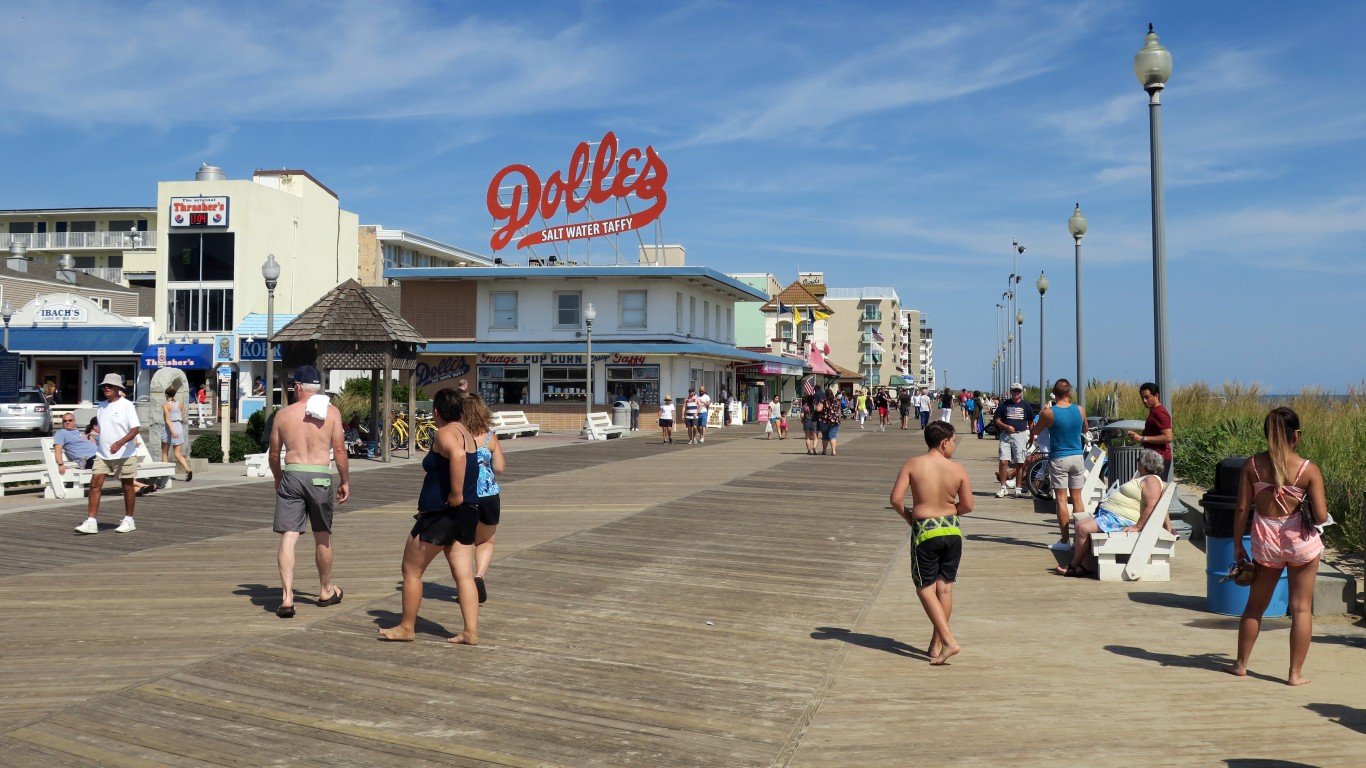
Many retirees from New Jersey, Maryland, and Pennsylvania use the same spreadsheet and end up in coastal Sussex County. One 2025 state tax competitiveness study ranks Delaware 1st for property taxes and 2nd for sales taxes, with Social Security untaxed, and the state’s overall cost index at 99.808, almost exactly in line with the rest of the country. Lewes and Rehoboth Beach look like an easy call. The beach towns also carry added costs, though, and they show up through the assessor, the flood map, and the maintenance budget. Here’s what a comfortable retirement there costs once you factor in those added costs.
What Delaware’s Retirement Tax Break Covers and Where It Runs Out
Delaware’s Division of Revenue says Social Security and Railroad Retirement benefits are not taxable. Residents 60 or older can exclude up to $12,500 per person of pension and eligible retirement income, including IRA and 401(k) withdrawals, dividends, interest, and capital gains. Income above the exclusion is taxed at 2.2% to 5.55% for income under $60,000, and 6.60% for income of $60,000 or more.
Take a couple pulling $70,000 from IRAs that excludes $25,000, and the state bill on the rest comes to about $2,500 at most. That’s a real saving compared with leaving New Jersey, but it’s modest. Property taxes have a larger impact on the budget.
Beach Towns Send Their Second Bill Through the Assessor
For decades, Sussex County taxed homes at very old values, keeping coastal property tax bills low. A court-ordered reassessment ended that. WDEL reported one beach property with a $1.97 million assessed value that saw a 400% tax increase from $830 to $4,151, and another bill that rose 532% from $1,079 to $6,822. Properties must be reassessed at least once every five years, so coastal home prices now feed into the tax bill on a regular schedule.
One reality is that prices are steep to begin with. The median listing price is $605,000 in Lewes and $1,789,000 in Dewey Beach. Flood coverage now uses the NFIP’s Pricing Approach (formerly known as Risk Rating 2.0), which prices each home’s risk, so a house near the bays costs more to insure than one farther inland. Driving adds up too, with regular gas at $4.33 nationally.
Running the Numbers for a Lewes Couple at 65
The example couple buys a median-priced Lewes home with cash. The baseline below is the national average household spending, which works here because Delaware’s costs mirror the country’s. We add coastal costs and income taxes to that baseline.
| Line item | Annual |
|---|---|
| Average household spending (food, utilities, transport, routine costs) | $78,535 |
| Medicare Part B for two at $202.90 a month each | $4,870 |
| Maintenance reserve, 1.5% of home value | $9,075 |
| Homeowners and flood insurance (hypothetical assumption) | $4,000 |
| Post-reassessment property tax (hypothetical assumption) | $3,000 |
| Federal income tax | $8,200 |
| Delaware income tax | $2,500 |
| Total | $110,100 |
The federal estimate uses the $32,200 joint standard deduction, assumes 85% of Social Security is taxable, and puts the remaining income in the 10% and 12% brackets. If the couple collects the average couple’s Social Security benefit of $3,355 a month, or $40,260 a year, they need roughly $70,000 a year from the portfolio. That requires $1.75 million if they pull 4% a year, or $2 million at 3.5% if one spouse could reasonably live past 95.
Claim timing changes the math a lot. If the higher earner waits until 70, that benefit grows 8% each year past full retirement age, reducing the portfolio gap and raising the survivor benefit. A Treasury ladder can cover the years before Social Security starts, with the 5-year yielding 4.89% and the 10-year 5.09%. Prices rose 3.7% over the past year, and the 2027 COLA is 3.6%, so the portfolio has to carry its own inflation adjustment on top of what Social Security covers.
Pricing the Five-Year Reset Into the Portfolio
The property tax line in this budget gets adjusted every five years. Each additional $1,000 in recurring carrying cost requires $25,000 more in capital at 4% a year. Suppose reassessments and flood repricing add $5,000 a year to the budget over a decade. That adds $125,000 to the portfolio target, which is one reason the old 4% rule looks weaker in coastal budgets than it did in the research that produced it (we made the full case against the 4% rule, and the income-first approach that replaces it, in a free report here: The 4% Rule Is Broken). Covering a surprise special assessment on a credit card at 21.19% APR just moves the cost into the future at a worse rate.
The model in this budget assumes a couple planning a Lewes retirement owns the house outright, has $1.75 million to $2 million invested on top of average Social Security, withdraws 3.5% to 4% from a mix of index funds and a five to seven-year Treasury ladder that needs to earn about 5%, and delays the larger Social Security claim to 70.
The model also includes a separate reserve for rising carrying costs. Buying away from the water and outside the flood zone lowers the flood insurance portion of the second price. The tax savings that drew them to Delaware stay, but in the beach towns, coastal property taxes and insurance now rise with home values.
Contact [email protected] for any questions or corrections.
David Beren has been a Flywheel Publishing contributor since 2022. Writing for 24/7 Wall St. since 2023, David loves to write about topics of all shapes and sizes. As a technology expert, David focuses heavily on consumer electronics brands, automobiles, and general technology. He has previously written for LifeWire, formerly About.com. As a part-time freelance writer, David’s “day job” has been working on and leading social media for multiple Fortune 100 brands. David loves the flexibility of this field and its ability to reach customers exactly where they like to spend their time. Additionally, David previously published his own blog, TmoNews.com, which reached 3 million readers in its first year. In addition to freelance and social media work, David loves to spend time with his family and children and relive the glory days of video game consoles by playing any retro game console he can get his hands on.