She’ll Sort Mail at 4 A.M. for the Post Office at 62. After One Year, the Postal Service Will Pick Up Most of Her Health Premium, and Five Career Years Will Make That Coverage Last for Life
Taking an overnight mail-processing job at 62 sounds like a paycheck, but the real prize hides inside the fine print of a benefits rule that most workers miss by a month or two and never recover from.

This post may contain links from our sponsors and affiliates, and Flywheel Publishing may receive compensation for actions taken through them.
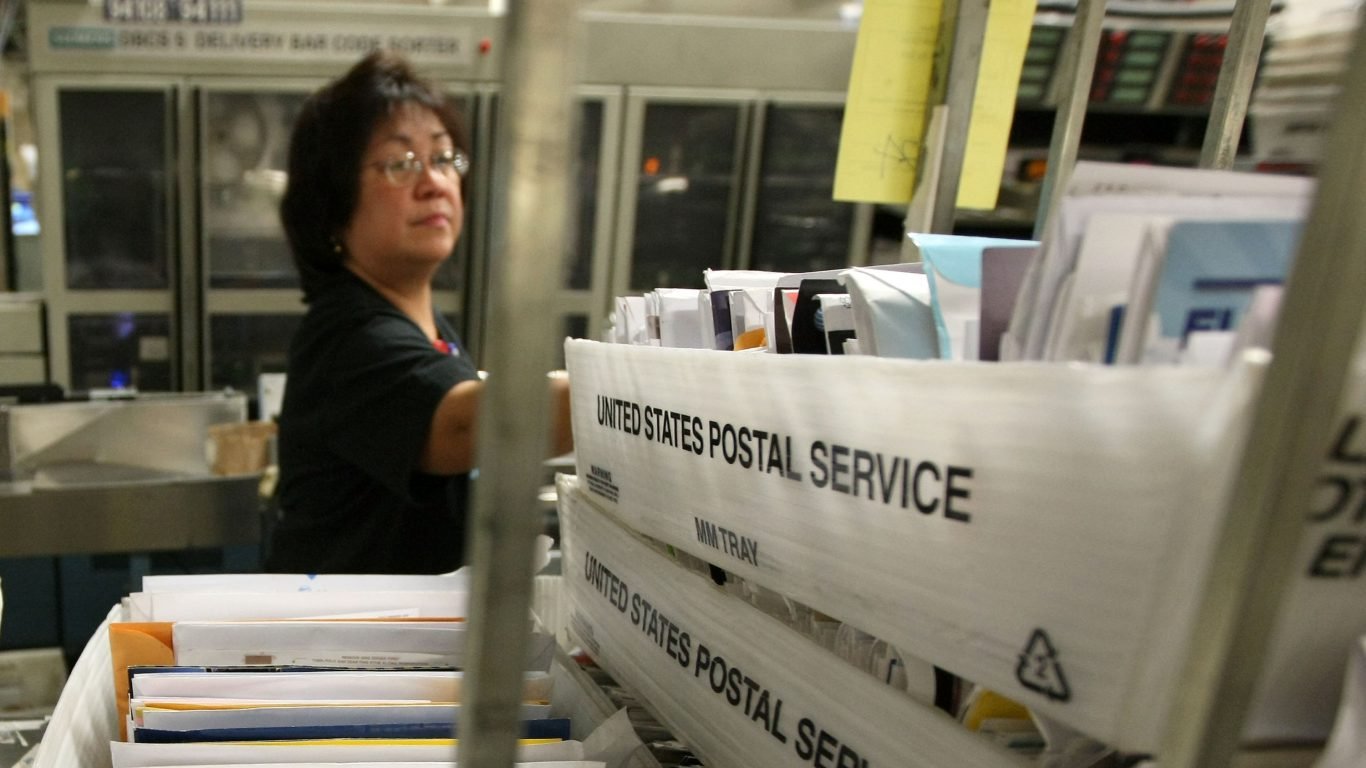
A 62-year-old taking an overnight mail-processing job is choosing a paycheck, but the job works mostly as a health insurance plan. As of January 1, 2025, postal workers left the Federal Employees Health Benefits program for the Postal Service Health Benefits (PSHB) program. A non-career hire can join PSHB after an initial term, and the Postal Service pays most of the premium; after five years of career service and continuous enrollment, that subsidized plan becomes retiree coverage for life.
Many people end up in this spot. Workers who leave corporate jobs in their early 60s face a gap of several years before Medicare, and very few large employers still offer retiree health coverage after a short career. One poster in the r/USPS forum on Reddit described the plan this way: “I was thinking about trying to get in after I retire from a corporate job.”
Why a Short Postal Career Carries Lifetime Value
Most private employers stopped offering retiree health coverage years ago. Federal and postal workers kept it, and employers continue to pay their share of the premium after retirement. Under the federal formula, the government generally pays about 70% of the total and continues paying once the worker retires.
Non-career Postal Support Employees reach that subsidy more slowly. A PSE can enroll in federal coverage. According to the American Postal Workers Union, after the first 360-day term, that coverage is now PSHB, and the Postal Service pays up to 75% of the premium.
Five Years, With No Credit for Coming Close
Time is the main pressure here, as she must be entitled to an immediate annuity. To keep coverage in retirement, she must also have been enrolled without a break for the five years immediately before retirement, or since her first chance to enroll. The rule gives no partial credit, so missing by even a month generally means the coverage ends at retirement. Under the Federal Employees Retirement System (FERS), a worker qualifies for an immediate annuity at age 62 with 5 years of service.
For someone hired at 62, both five-year clocks run out around 67. That is also Social Security’s full retirement age for anyone born 1960 or later. If she starts in non-career status, the five career years count from her conversion date, so her retirement date moves later by however long she works as a PSE.
Medicare Part B Is Part of the Lifetime Cost
PSHB has a rule the old program lacked. Medicare-eligible postal retirees who retire after January 1, 2025, must enroll in Part B to keep PSHB. The requirement generally applies to anyone under age 64 as of January 1, 2025, including this worker. If she stops paying Part B premiums, she will also lose PSHB.
In 2026, the standard Part B premium is $202.90 a month, up from $185, and the deductible is $283. Single filers with income above $109,000 pay a surcharge, which brings the premium to at least $284.10.
Working past 65 moves that bill back. Coverage through a current job generally lets you delay Part B without a late penalty, so the required premium starts at retirement instead of at 65. Part A has no premium for people with 40 quarters of coverage. Those with at least 30 quarters pay $311 a month.
One Path Clearly Leads the Other
Stay Through Year Five and Claim Social Security at 67
On this path, she enrolls in PSHB at the first opportunity, keeps coverage without a gap, skips Part B at 65 while still working, and retires once both five-year tests are met. Waiting until full retirement age means the earnings test never applies, and the 3.6% inflation adjustment for 2027 adds to her benefit before she claims. In retirement, she would have a small FERS annuity, a full Social Security check, and subsidized health coverage for life, with PSHB paying second after Medicare.
Claim Social Security at 62 While Still Working
This path usually comes out worse for people in this position. Benefits claimed before full retirement age face an earnings limit of $24,480 in 2026, rising to $25,560 in 2027. A full-time postal paycheck can easily exceed that, so much of the benefit would be withheld, while the permanent reduction for claiming early still applies. Unless savings are nearly gone, her wages can cover expenses while her Social Security benefit keeps growing.
Decisions to Lock Down Before the First Shift
First, confirm her enrollment record. The five-year clock depends on continuous coverage starting from her first chance to enroll, and turning down the plan during the non-career term or letting it lapse during a reassignment can cost her the entire benefit. Getting the conversion date and PSHB enrollment history in writing protects the retirement date.
A frequent mistake is leaving a few months short of five years. A 4 a.m. shift is hard on workers in their 60s, and quitting early can cost lifetime coverage worth far more than the last few paychecks. If health problems threaten that schedule, paying a federal benefits specialist makes sense, because the Office of Personnel Management grants waivers of the five-year rule only in narrow circumstances, and timing a disability or other retirement correctly can save the coverage.
Contact [email protected] for any questions or corrections.
David Beren has been a Flywheel Publishing contributor since 2022. Writing for 24/7 Wall St. since 2023, David loves to write about topics of all shapes and sizes. As a technology expert, David focuses heavily on consumer electronics brands, automobiles, and general technology. He has previously written for LifeWire, formerly About.com. As a part-time freelance writer, David’s “day job” has been working on and leading social media for multiple Fortune 100 brands. David loves the flexibility of this field and its ability to reach customers exactly where they like to spend their time. Additionally, David previously published his own blog, TmoNews.com, which reached 3 million readers in its first year. In addition to freelance and social media work, David loves to spend time with his family and children and relive the glory days of video game consoles by playing any retro game console he can get his hands on.