The Only Account the IRS Lets You Skip Taxes on Three Times
The IRS taxes most retirement accounts at least once, either going in or coming out, but one obscure account sidesteps all three moments when money normally gets taxed. Most people eligible for it never use it correctly.

This post may contain links from our sponsors and affiliates, and Flywheel Publishing may receive compensation for actions taken through them.

Most tax breaks only let you skip one of the three times money gets taxed. A traditional 401(k) skips tax on the way in and bills you on the way out. A Roth IRA works the other way around. One account skips all three: the deposit, the growth, and the withdrawal.
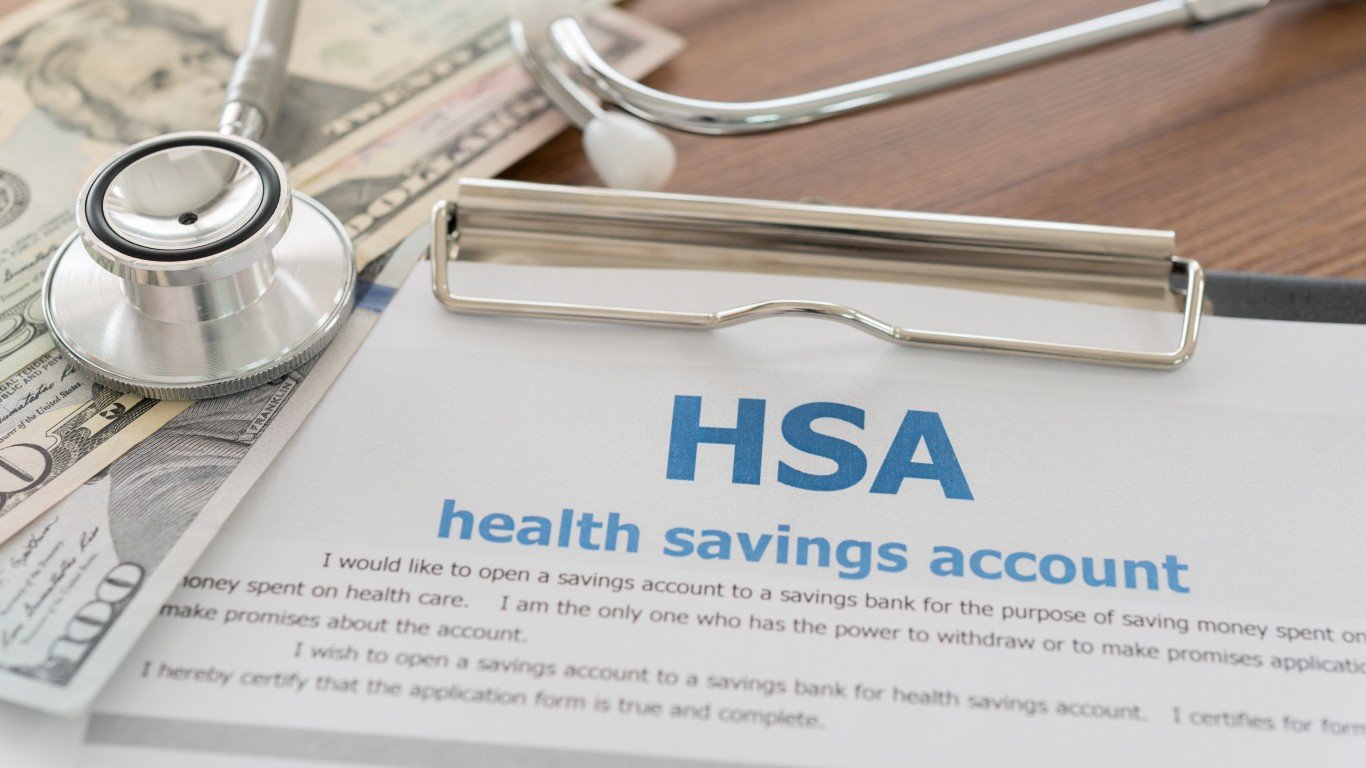
That account is the health savings account, or HSA, which Section 223 of the Internal Revenue Code created. HSAs have taken contributions since 2004. Take a couple in the 22% bracket who fill one every year from age 58 to 65. They can build about $82,000 that never gets taxed, as long as it pays for medical care.
How Section 223 Lets Your Money Skip Tax Three Times
Going in: You can deduct your contributions, or leave them out of income entirely when your employer puts them in under section 106(d). Contributions made through payroll also avoid Social Security and Medicare taxes. Your own 401(k) deferrals don’t get that break, because the law still counts them as “wages”.
While it grows: Interest, dividends and gains inside the account aren’t taxed, and the account doesn’t send you a 1099 each year.
Coming out: The statute says money “used exclusively to pay qualified medical expenses” is “not includible in gross income”. A Roth gives you the same tax-free exit under § 408A(d)(1), but you fund a Roth with money that has already been taxed.
You need a qualifying high-deductible health plan to contribute. Starting in 2026, the One Big Beautiful Bill counts bronze and catastrophic plans as eligible, and Notice 2026-05 says you don’t have to buy them through an Exchange.
Run the Math: A 58-Year-Old’s $82,000 Tax-Free Fund
Assume a married couple files jointly in 2026 with family HDHP coverage, and the older spouse is 58. Their taxable income is above $100,800, which puts their top dollars in the 22% bracket. The 2026 family limit is $8,750. Anyone 55 or older can add a $1,000 catch-up, which isn’t indexed to inflation and has to go into that spouse’s own HSA.
| Item | Amount |
|---|---|
| Annual contribution | $9,750 |
| Federal tax saved per year at 22% | $2,145 |
| Total contributed, ages 58 to 64 | $68,250 |
| Total federal tax saved | $15,015 |
| Balance at 65 (6% annual return) | $81,840 |
| Tax-free growth | $13,590 |
Taking that same $81,840 out of a pretax retirement account in the 22% bracket would cost about $18,005 in federal tax. State rules vary: California and New Jersey tax HSA contributions at the state level. Every state has different rules when it comes to HSA, seek help from a CPA to check those rules.
Medicare Shuts Off Contributions, Then Pays You Back
Your contribution limit drops to zero “for the first month such individual is entitled to” Medicare. There’s a trap if you sign up after 65: Part A coverage generally reaches back up to six months, so stop contributions before that window opens or you’ll owe excise tax on the excess.
Spending the money is where the payoff comes. Medicare Part B premiums count as qualified medical expenses [See Pub. 969, Medicare premiums for details]. In 2026, the standard premium is $202.90 a month, which comes to $4,869.60 a year for a couple. At that rate, the $81,840 covers about 16.8 years of both spouses’ premiums.
Those withdrawals also stay out of the income Medicare looks at for IRMAA surcharges. IRA withdrawals count. Joint filers with income above $218,000 pay $284.10 a month each for Part B instead of $202.90. IRMAA is one of several premium traps that catch retirees off guard, and we listed the rest in a free Medicare guide.
Once you reach Medicare age, the 20% penalty on non-medical withdrawals goes away under § 223(f)(4)(C). That money is still taxed as ordinary income, so at worst the HSA acts like any pretax retirement account.
Heirs Who Aren’t Your Spouse Get the Entire Tax Bill
A surviving spouse who inherits an HSA simply treats it as their own. For anyone else, the account “shall cease to be a health savings account as of the date of death,” and the full balance counts as the heir’s income that year. The one offset is your final medical bills, if the heir pays them within 1 year.
That shapes three moves:
- Invest the balance instead of leaving it in cash, and pay current medical bills out of pocket while you’re still working.
- Keep your receipts. You can reimburse yourself years later for expenses you had after opening the HSA [See Pub. 969 reimbursement timing details].
- Spend the HSA before the Roth late in life, so your children inherit the Roth tax-free instead of a fully taxable HSA.
When to stop contributing and which account to drain first are worth working through with a CPA or fee-only fiduciary before you enroll in Medicare.
Contact [email protected] for any questions or corrections.
Vilma Rios is a tax professional and tax content contributor with more than 15 years of experience in tax and accounting. She specializes in federal tax research, tax education, and translating complex tax rules into clear, practical information for individuals, families, and small-business owners.
Vilma is a Content Tax Contributor II with the National Association of Tax Professionals (NATP), where she contributes to tax education and professional content. She has also presented tax information through webinars, including Spanish-language tax education, and has appeared on Telemundo 47 discussing tax topics and helping viewers understand important tax-filing requirements.
Her experience also includes tax and accounting work, tax research, IRS-related matters, and public tax education. While in college, Vilma volunteered in an IRS-sponsored tax assistance program and was recognized for her community service by local and state officials.
Known as “Your Tax Geek,” Vilma is passionate about making taxes easier to understand and helping people navigate an increasingly complex tax system.