70% of Workers in Their 40s and 50s Fear a Worse Retirement Than Their Parents. Their Biggest 401(k) Catch-Up Years Could Still Be Ahead
Most workers in their 40s and 50s assume they missed their best retirement saving years, but the tax code treats that same period as the starting line for the largest contribution limits of an entire career.

This post may contain links from our sponsors and affiliates, and Flywheel Publishing may receive compensation for actions taken through them.

A 52-year-old looking at a 401(k) balance that seems small next to her retirement goals usually decides the window has closed. The tax code gives her the opposite signal: the biggest contribution limits of her working life start right around now.
Seven in 10 Mid-Career Workers Expect Less Than Their Parents Had
WTW’s 2026 Global Benefits Attitudes Survey, released Oct. 15, found that 70% of U.S. employees in their 40s and 50s expect a worse retirement than their parents had.
Workers 60 and older were less gloomy, with WTW finding 54% of them sharing that view. WTW drew its U.S. results from about 6,000 full-time employees surveyed from February to May 2026.
The survey measures expectations, but the financial pressure is real. Many mid-career households are still paying mortgages and other debts while trying to save for retirement. Federal Reserve data show households headed by people 40 to 54 held just 19% of total U.S. household net worth in the second quarter of 2026.
Social Security adds to the worry. The latest Trustees Report projects that the retirement and survivors trust fund will run out of reserves in 2032. After that, continuing income would cover about 78% of scheduled benefits.
Catch-Up Math for an Illustrative 52-Year-Old
Consider a saver, age 52, who assumes she started too late. In 2026, the IRS lets employees defer up to $24,500.
Because she is past 50, she can add a catch-up contribution of $8,000, for a total of $32,500.
Eligibility is based on age at year-end, so anyone turning 50 by December 31 qualifies for the full year.
If she adds the full catch-up every year for eight years, she puts in $64,000 of extra money before any investment returns. Those eight years cover ages 52 through 59, which brings her to the next tier.
Ages 60 to 63 Open the Widest Window
From age 60 through 63, the catch-up limit rises to $11,250 if her plan offers it. That raises her total ceiling to $35,750.
Four years at that level adds $45,000 in catch-up money, so her catch-up total across both tiers comes to $109,000.
At 64, she drops back to the standard catch-up.
If she maxed out all 12 years at 2026 limits, her own deposits would total $403,000, not counting employer money or market gains. The limits adjust for inflation, so treat these 2026 figures as a baseline and expect the actual numbers to change.
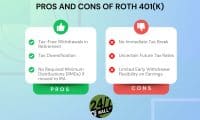
A few conditions apply. She needs enough eligible pay and a workplace plan that allows catch-up contributions. Starting in 2026, workers who earned more than $150,000 from their employer in the previous year generally must make those catch-up contributions to a Roth 401(k). That means no upfront tax break, but qualified Roth withdrawals can be tax-free, and the account isn’t subject to lifetime required minimum distributions.
Where the Extra $8,000 a Year Comes From
The right mix depends on your household’s cash flow. These four moves cover most of the ground:
- Capture the full employer match before anything else. Match dollars count only toward the plan’s overall limit, so they build the balance without using up any of your $32,500 room. If you contribute below the match threshold, you leave pay on the table every pay period.
- Send raises into contributions. When your pay goes up, directing part of the increase into your 401(k) lets you save more without feeling the full pinch in your paycheck. Many plans have an automatic-increase feature that does this every year, making it easier to reach the catch-up level without one big jump.
- Cut fees. Look up the expense ratio on every fund in your plan. If a low-cost index option covers the same asset class as a pricier actively managed fund, switching keeps more of each catch-up dollar invested for the next 10 to 15 years.
- Confirm catch-up eligibility with your plan administrator. Ask whether the plan allows the higher limit at ages 60 through 63, whether a Roth catch-up option is set up, and whether payroll switches to catch-up deferrals automatically once you reach the regular cap.
There are only a few paychecks left in 2026, and each year’s limit resets in January. If you raise your deferral rate this week, the extra goes into this year’s room. For the 52-year-old who thought she was too late, the next 12 years could offer some of the biggest contribution opportunities of her working life.
Contact [email protected] for any questions or corrections.
Gerelyn Terzo is the author of dividend investing handbook "Dividend Investing Strategies: How to Have Your Cake & Eat It Too." A veteran financial journalist, she covers agri-finance for outlets like Global AgInvesting and the broader stock market and personal finance for 24/7 Wall Street. She began at CNBC and later helped launch Fox Business in New York. Gerelyn currently resides in Woodland Park, Colorado and dabbles in nature photography as a hobby.