SpaceX Is Hiring for 2,500 Jobs. At 60, a New Hire Could Save $37,250 in a 401(k) Under Projected 2027 Limits
Landing a SpaceX job at 60 opens a retirement savings window that most workers never see, but a midyear start date and one overlooked plan rule can quietly erase a big chunk of what the tax code allows.

This post may contain links from our sponsors and affiliates, and Flywheel Publishing may receive compensation for actions taken through them.

SpaceX, now a public company with some 22,000 full-time workers, has roughly 2,500 open positions, Bloomberg reported on Sept. 30, 2026. Take a 60-year-old engineer with $600,000 in a former employer’s 401(k). After a layoff, they want one of those jobs partly to rebuild retirement savings. Their age gives them access to a contribution window that closes at 64.
Ages 60 to 63 Unlock the Largest Catch-Up in the Code
SECURE 2.0, a retirement law passed in 2022, created a higher catch-up limit for workers who turn 60 through 63 during the calendar year. In 2026, that super catch-up is $11,250 on top of the $24,500 standard cap, for a total of $35,750. At 64, the worker drops back to the regular $8,000 catch-up.
Milliman’s latest forecast puts the 2027 regular deferral limit at $25,500 and the special catch-up at $11,750.
That’s $37,250 altogether, or $1,500 more than this year. Marsh’s projections also point to those amounts.
The IRS hasn’t announced the official limits yet. Last year’s figures came out on Nov. 13, so confirmation should arrive soon.
Three conditions apply. The worker needs enough eligible pay, must meet the new plan’s eligibility rules and needs a plan that offers the higher catch-up. There’s another wrinkle for someone changing jobs: employee contributions made to a previous employer’s 401(k) earlier in 2027 generally count toward the same annual limit. A new job doesn’t reset the contribution clock.
Why a Midyear Start Can Double the Payroll Squeeze
On $150,000 of eligible pay, a full year at the projected maximum takes about 25% of gross pay. Over 26 biweekly paychecks, that comes to roughly $1,433 each. It’s demanding, but workable for a household with other savings.
A late start changes the picture. Say the job begins midyear and pays $75,000 over six months.
Reaching $37,250 would then mean deferring about 50% of those earnings, or around $2,865 from each of 13 paychecks. Payroll taxes, withholding and health premiums all come out of the same check, and some plans cap the deferral percentage you can elect.
The $37,250 is a limit on what you can contribute. It says nothing about the employer’s side. Don’t assume SpaceX offers immediate eligibility, any particular match or any specific vesting schedule.
Roth Catch-Up Rule a New Hire May Sidestep
Starting in 2026, higher earners generally must make their 401(k) catch-up contributions as Roth contributions if their wages from the same employer exceeded the IRS threshold the previous year. That threshold is $150,000 for 2026 and is projected to rise to $155,000 in 2027, based on Social Security wages reported in Box 3 of the W-2.
Here’s the advantage for a new hire. Someone joining SpaceX in 2027 ordinarily has no 2026 wages from the company, so even high pay at a former employer generally won’t trigger the Roth requirement in year one. Whether it applies in 2028 depends on their 2027 SpaceX wages and that year’s threshold.
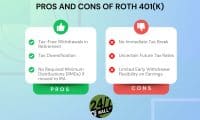
The difference matters. Pretax contributions lower taxable income today, while Roth contributions don’t, although qualified withdrawals are tax-free. At a 24% federal tax rate, making the projected $11,750 catch-up as Roth instead of pretax could mean giving up about $2,820 in immediate tax savings.
Roth could still make sense for this worker, who already has $600,000 in a pretax 401(k). Withdrawals from that account will generally count as taxable income, potentially making more of their Social Security benefits taxable or raising future Medicare premiums. Qualified Roth withdrawals avoid those problems, although the worker gives up the upfront tax break. The better choice depends on their tax situation now and in retirement. The years between a final paycheck and the first required withdrawal can also offer an opportunity for Roth conversions (the silent stretch between a last paycheck and the first RMD is often the best time to build that bucket, which is the whole subject of our free Roth Window guide).
Four Questions to Ask Before Accepting an Offer
- When does 401(k) eligibility start? A 60- or 90-day wait on a midyear hire shrinks the number of paychecks left, which pushes the required deferral rate even higher.
- Does the plan offer the age 60 to 63 catch-up, and does payroll cap deferral percentages? A plan without the super catch-up limits you to the regular amount, and a percentage cap can block a near-50% election.
- How do the match and vesting work? Find out if the match is calculated per paycheck or trued up at year end. Front-loading deferrals without a true-up can cost you matching dollars, and a vesting schedule determines how much of the match you keep if you leave.
- How will Roth catch-up rules apply? Ask whether you can choose pretax or Roth catch-up contributions in your first year, and how payroll will handle the mandatory Roth rule in 2028 if your 2027 wages exceed the applicable threshold.
The projected $37,250 is the legal maximum. How much a new hire actually saves depends on their start date, their pay and the fine print of the plan.
Contact [email protected] for any questions or corrections.
Gerelyn Terzo is the author of dividend investing handbook "Dividend Investing Strategies: How to Have Your Cake & Eat It Too." A veteran financial journalist, she covers agri-finance for outlets like Global AgInvesting and the broader stock market and personal finance for 24/7 Wall Street. She began at CNBC and later helped launch Fox Business in New York. Gerelyn currently resides in Woodland Park, Colorado and dabbles in nature photography as a hobby.