He Never Smoked but Spent 30 Years Around Asbestos. At 70, Medicare’s Free Lung Cancer Screening Has a Catch
Medicare covers a free annual lung cancer scan for the right patients, but decades of breathing asbestos dust on the job does not put you in that group, and the path to coverage depends on details most patients never think…

This post may contain links from our sponsors and affiliates, and Flywheel Publishing may receive compensation for actions taken through them.

A 70-year-old man spent 30 years working around asbestos insulation without ever smoking a cigarette. When his doctor brings up lung cancer screening, he learns that Medicare covers an annual low-dose CT scan at no cost. But despite decades of occupational exposure, he doesn’t qualify. Whether Medicare will pay for another type of chest CT depends on whether his doctor has a medically necessary reason to order it, not simply how the test is billed.
Thirty Years Around Asbestos Still Doesn’t Meet Medicare’s Screening Rules
Medicare Part B covers one low-dose CT lung cancer screening each year, but eligibility depends heavily on smoking history. You must be between 50 and 77, have no signs or symptoms of lung cancer, and either smoke now or have quit within the past 15 years. You also need at least 20 pack-years of smoking history, the equivalent of smoking one pack a day for 20 years. Before the first scan, Medicare requires a counseling visit to discuss the benefits and risks, along with an order from a qualified health care provider.
For those who qualify, the screening costs nothing when the provider accepts Medicare assignment. But the rules leave out people with other significant risk factors. Asbestos exposure, radon, secondhand smoke and family history don’t count toward the smoking requirement. That means a 70-year-old who spent three decades around asbestos insulation but never smoked remains ineligible for the free screening. Even former heavy smokers lose eligibility once they’ve been smoke-free for more than 15 years.
The distinction leaves two groups facing a potential coverage gap: lifelong nonsmokers with substantial occupational or environmental exposure, and former smokers whose risk factors persist long after they quit.
A Diagnostic CT Plays by Different Cost Rules
Part B also covers medically necessary CT scans ordered to investigate or manage a health problem. A persistent cough, unexplained shortness of breath or an abnormal chest X-ray may give his doctor reason to investigate further. The distinction determines what comes next: a preventive screening looks for disease before symptoms appear, while diagnostic imaging investigates a suspected condition. Medicare coverage depends on the medical evidence supporting the order.
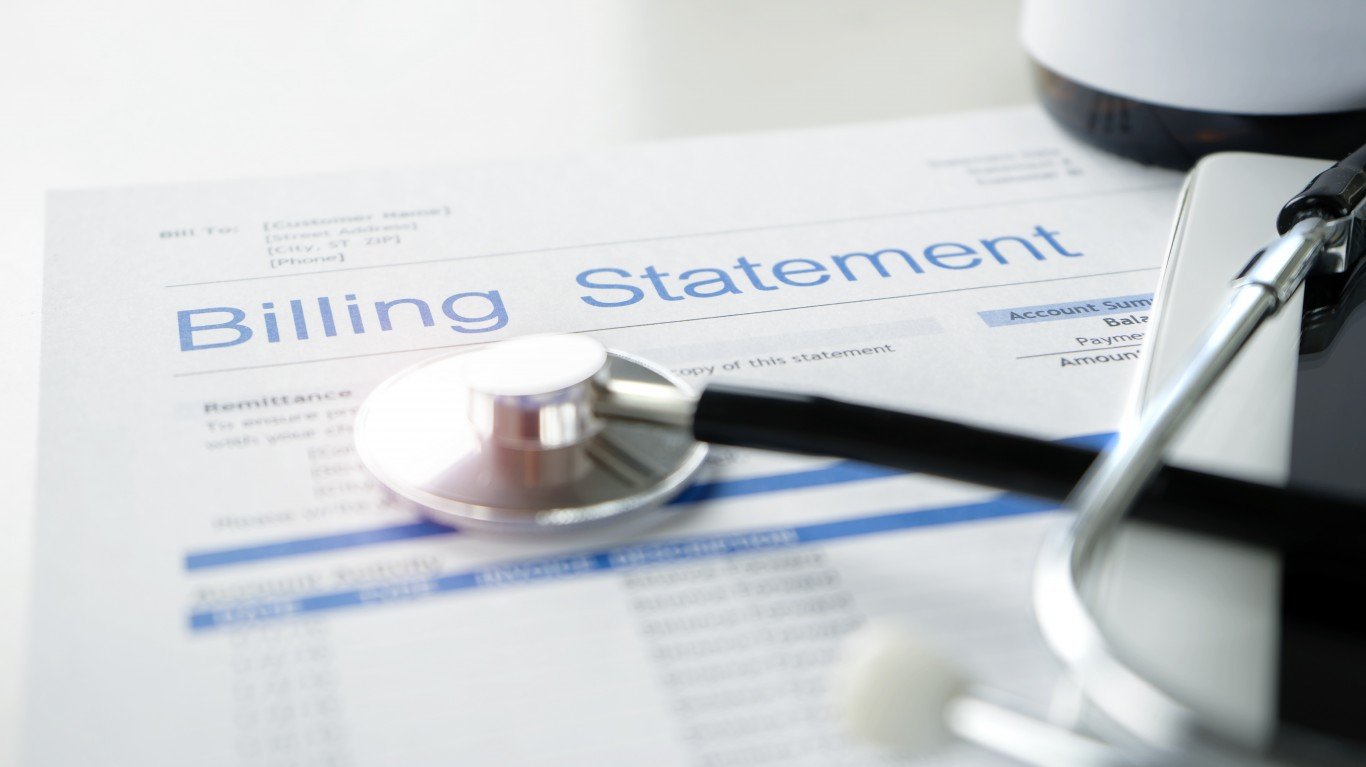
Diagnostic imaging carries standard cost-sharing. In 2026, the Part B deductible is $283, up from $257. Once you meet it, you pay 20% of the Medicare-approved amount at a doctor’s office or an independent testing facility. Hospital outpatient departments may charge an additional copayment that can make the same scan more expensive. In most cases, the hospital’s copayment for an individual service cannot exceed the $1,736 Part A deductible in 2026. Medicare pays for an advanced imaging scan outside a hospital only when the provider is accredited, so confirm accreditation before you book.
This catch also applies to people who qualify for the free scan. When a screening turns up a nodule, the follow-up CT counts as diagnostic, and the deductible and coinsurance kick in. A Medigap Plan G covers that 20% after the deductible. Medicare Advantage plans set their own imaging copays and often require prior authorization for CT scans. The surprise cost on a reclassified scan is one of several Medicare traps we mapped in a free guide to the program’s hidden bills, from IRMAA surcharges to coverage gaps that catch new enrollees off guard.
Why the Doctor’s Review Matters More Than the Price
Asbestos exposure raises lung cancer risk, and the risk climbs sharply in people who also smoked. A doctor needs the details: which jobs, how many years, whether you wore protection, and what symptoms you have now. That review can turn up a valid medical reason for imaging, pulmonary function tests, or a chest X-ray. Or it may show the scan has no covered basis yet.
A doctor cannot simply classify a screening as diagnostic to obtain Medicare coverage. The medical record must support the reason for the test. If Medicare may deny payment because the scan isn’t medically necessary, the provider generally must give him an Advance Beneficiary Notice of Noncoverage before performing it. The notice explains the possible denial and estimated cost, allowing him to decide whether to proceed. For services Medicare excludes altogether, advance notice isn’t always needed.
Leaving out symptoms is the worse mistake. A cough you have brushed off for months is exactly the kind of finding that justifies diagnostic imaging, and the delay costs more than a 20% coinsurance bill.
Three Questions to Ask Before You Lie Down on the Table
- Ask what is being ordered. Find out whether your doctor recommends a preventive low-dose CT screening or a diagnostic chest CT, and ask what medical findings support the order. If you meet Medicare’s screening requirements, confirm that the scan is being billed under the preventive benefit.
- Learn how and where it will be billed. For a covered diagnostic CT at an independent imaging center, you generally pay 20% of the Medicare-approved amount after meeting the $283 Part B deductible. Hospital outpatient costs may be higher. Request an estimate beforehand, and ask whether Medicare is expected to cover the test.
- Bring your work history and a symptom list to the visit. Write down your employers, years of asbestos exposure and any changes in your breathing. Your doctor can use that information to determine whether further testing is medically necessary. Exposure alone doesn’t guarantee Medicare will cover a CT scan, but documented symptoms or abnormal findings may support diagnostic imaging.
Contact [email protected] for any questions or corrections.
Gerelyn Terzo is the author of dividend investing handbook "Dividend Investing Strategies: How to Have Your Cake & Eat It Too." A veteran financial journalist, she covers agri-finance for outlets like Global AgInvesting and the broader stock market and personal finance for 24/7 Wall Street. She began at CNBC and later helped launch Fox Business in New York. Gerelyn currently resides in Woodland Park, Colorado and dabbles in nature photography as a hobby.