At 65, He Wants an AI Heart Test After Mayo Researchers Flag Hearts Reading More Than 16 Years Older. Medicare Covers One Screening EKG. The AI Reading Is Extra, and the Bill Could Be His

This post may contain links from our sponsors and affiliates, and Flywheel Publishing may receive compensation for actions taken through them.
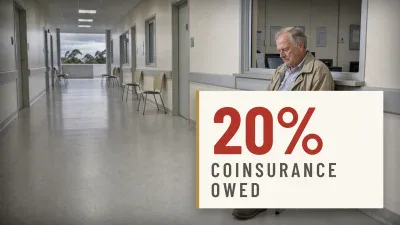
A 65-year-old books his Welcome to Medicare visit after reading about an unsettling discovery at Mayo Clinic. Researchers found that an AI analysis of an electrocardiogram could identify patients whose hearts appeared more than 16 years older than their actual age, a warning associated with increased cardiac risk in people with a particular inherited heart condition.
He wants to know what his own EKG might reveal. Medicare covers a standard screening EKG once during the first 12 months of Part B, provided he receives a referral during his welcome visit. But that coverage doesn’t automatically extend to an AI interpretation, leaving him with a question about what Medicare will actually pay.
What Mayo’s 16-Year Heart-Age Warning Actually Means
A standard 12-lead EKG records the heart’s electrical activity. Doctors examine the tracing for abnormalities in rhythm and conduction, while Mayo researchers used artificial intelligence to estimate a patient’s biological heart age from the same kind of recording.
In findings highlighted on October 23, 2026, Mayo researchers identified an AI-estimated heart-age gap greater than 16 years as a warning associated with increased cardiac events in patients with LMNA-related cardiomyopathy, an inherited disease that can cause heart failure and dangerous arrhythmias.
The study drew on a registry of 1,049 patients with genetic forms of cardiomyopathy. Its findings do not mean an otherwise healthy 65-year-old whose EKG suggests an 81-year-old heart necessarily faces the same risks.
Mayo cardiologist John Giudicessi said the technology could eventually help doctors recognize dangerous disease before conventional tests reveal obvious abnormalities. Researchers still need to validate the findings in another group of patients.
Medicare Pays for One Screening EKG, and You Still Owe a Share
Part B covers a routine EKG once when you get a referral as part of your “Welcome to Medicare” visit. After that, Medicare covers EKGs only as diagnostic tests when they are medically necessary.
The visit costs nothing if your provider accepts assignment, and the deductible does not apply to it. The EKG works differently. You pay 20% after the Part B deductible, which rose to $283 in 2026 from $257, based on what Medicare approves. If your visit comes early in the year, before you have paid any of that deductible, you may owe the entire approved charge for the EKG. If you get the test at a hospital-owned clinic, you also owe the hospital a copayment. Medigap Plan G pays the 20% coinsurance but leaves the Part B deductible to you.
The add-on risk is in Medicare’s own fine print. If your provider performs extra tests during the visit that the preventive benefit does not cover, you may have to pay the full amount. The referral pays for the EKG tracing. It does not, on its own, make Medicare pay for a separate AI analysis of that tracing. This is the kind of quiet add-on that catches retirees off guard, alongside the IRMAA surcharges and coverage gaps we mapped in a free guide to Medicare’s hidden bills.
Check Three Facts Before Paying for the AI Read
Is there a billing code? The AMA’s temporary Category III codes for emerging technology include 0764T and 0765T. They describe AI-assisted EKG risk assessment for cardiac dysfunction (eg, low-ejection fraction, pulmonary hypertension, hypertrophic cardiomyopathy). Providers bill 0764T as an add-on to standard EKG codes 93000 and 93010. These codes cover AI assessments for cardiac dysfunction. What they do not do is establish how a clinic would bill for the Mayo-style heart-age estimate.
Is there Medicare coverage? Since January 1, 2025, Medicare’s hospital outpatient payment system has paid those codes as separate services, according to a 2026 vendor coding guide that cites CMS. The guide lists no physician-office rate. Even a payable code still has to meet medical-necessity rules, so a code alone tells you little about whether a heart-age report requested out of curiosity gets paid.
Is there a verified price? We found no published Medicare price specifically for an AI heart-age estimate, nor confirmation that the cardiac-dysfunction codes apply to it. Without knowing how a clinic offers and bills for the analysis, neither its price nor its Medicare coverage can be assumed.
One protection is Medicare’s Advance Beneficiary Notice, Form CMS-R-131. When a provider expects Medicare to deny an otherwise covered service as medically unnecessary, it generally must give you this notice before treatment to hold you responsible. But an ABN isn’t required for services Medicare excludes altogether, so don’t assume the absence of one means you won’t owe anything.
Things to Learn Before You Sign Anything
- Ask for an itemized estimate that separates the standard EKG from any AI analysis. Get the billing code, if applicable, and the price of each service before agreeing to the additional test.
- Ask directly whether the AI analysis is billed separately, and to whom. If the office hands you an ABN, read which box you are checking before you sign. You can turn down the AI portion and still get the covered screening EKG.
- Book the visit early. Stay within your first 12 months of Part B. After that, Medicare covers an EKG only as a diagnostic test, which requires symptoms or a medical reason your doctor writes down.
Contact [email protected] for any questions or corrections.
Gerelyn Terzo is the author of dividend investing handbook "Dividend Investing Strategies: How to Have Your Cake & Eat It Too." A veteran financial journalist, she covers agri-finance for outlets like Global AgInvesting and the broader stock market and personal finance for 24/7 Wall Street. She began at CNBC and later helped launch Fox Business in New York. Gerelyn currently resides in Woodland Park, Colorado and dabbles in nature photography as a hobby.