At 72 He’ll Buy His Grandson a $30,000 Car and Keep It in His Own Name to Save on Insurance. If the Grandson Causes a Crash, the Lawsuit Can Reach Him
Keeping a car titled in your own name to cut your grandson's insurance bill sounds like a clever workaround, but one bad crash can turn a generous gift into a personal judgment against a retiree's savings.

This post may contain links from our sponsors and affiliates, and Flywheel Publishing may receive compensation for actions taken through them.
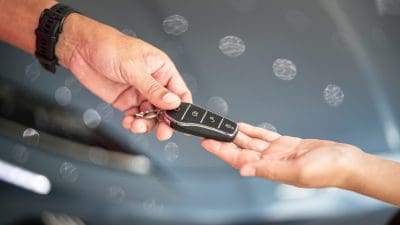
The keys change hands in the driveway, and his grandson’s grin says it all. At 72, he’s paying $30,000 for the car, and he plans to keep the title and insurance in his own name because a retiree with a clean record pays far less to cover a car than a young driver does.
It’s a generous move, and lots of grandparents make it. We recently looked at a grandfather co-signing his grandson’s car loan. This piece is about something quieter: whose name goes on the title. That one line on a piece of paper determines who gets sued after a bad crash.
How the Name on the Title Pulls Him Into a Lawsuit
Auto insurance generally follows the car, and when someone else drives a covered car with the owner’s permission, the owner’s policy usually responds first. So Grandpa’s policy, and its limits, come first.
Then the law comes in, and two ideas matter here. The first is negligent entrustment. In plain words, that means handing your keys to someone you knew, or should have known, couldn’t drive safely. Courts have applied it to a parent who lends the family car to a minor child, knowing the child is incompetent, reckless, or inexperienced.
The second is owner liability laws. In some states, including New York, the law imposes liability on an automobile owner when the owner permits the driving. These rules vary a lot from state to state. A serious injury claim can exceed a policy’s limits, and the injured person can pursue the owner personally for what the insurance doesn’t cover.
Cheaper Insurance Only Works If Nobody Tells the Insurer
The savings in this plan exist only if the grandson stays off the policy. Insurance companies generally expect anyone who regularly drives a car to be listed. Failing to report a teen driver could result in denied claims or gaps in coverage, and adding a young driver usually increases the premium. Young drivers crash more often, and insurance companies price that in.
So the plan really has two outcomes. Grandpa lists his grandson, and most of the savings disappear. Or he leaves him off, and the insurance companies may refuse to pay after the one crash that matters. That second outcome leaves a retiree personally facing a judgment.
A caller on The Clark Howard Podcast wrestled with a version of this for his son. Howard’s answer: “Depending on the state and how rates tend to be set in a state, it may be advantageous to have your son as the owner of that vehicle” on a separate policy, while elsewhere it’s cheaper to name him as an additional driver.
Remember, pricing is local. In some states it can be cheaper for the grandson to own and insure the car himself on a separate policy, and in others it’s cheaper to list him as a driver on Grandpa’s policy, so quotes both ways are worth an hour.
Retirement Accounts Are Safer Than the House and Brokerage Account
If a judgment goes beyond insurance, not every dollar is equally exposed. Employer plans covered by ERISA, the federal law behind most 401(k)s, have the strongest creditor protection because ERISA shields them from most lawsuits. IRA protection leans more on state law, and states like California treat IRAs differently than employer plans.
A home and a regular taxable brokerage account are generally more exposed, again depending on the state. That taxable account is the flexible money many retirees planned to live on. A judgment can also reach that money most easily.
Better Ways to Hand Over the Keys
Put the Car in the Grandson’s Name as a Gift
The right path for most families: Title the car in the grandson’s name and let him cover it as the owner. The tax side is simple, as federal law excludes gifts of a present interest up to an annual limit (26 U.S.C. § 2503(b)(1)), and for calendar year 2026, the annual exclusion amount is $19,000 per individual recipient.
A $30,000 car goes over that, so Grandpa files a gift tax return. Filing rarely means paying. The excess counts against a lifetime basic exclusion of $15,000,000 for calendar year 2026. Because the gift goes to a grandchild, it also draws on a generation-skipping exemption equal to the basic exclusion amount.
Help With His Premium Directly
If the grandson’s insurance bill is the real obstacle, Grandpa can chip in. That money counts toward the same annual gift total, but it keeps the risk where it belongs.
If He Keeps the Title, Insure Like an Owner Who Can Be Sued
List the grandson. Carry high liability limits. Then add an umbrella policy, which is extra liability coverage that kicks in after the auto policy runs out. Howard has noted that “the insurer that sells you the umbrella will require a level of underlying liability coverage on your auto policy”, so the auto limits may need to go up first. This path works, but it costs more and still leaves his name on any case.
One Phone Call Before the Keys Change Hands
Before the grandson drives off, Grandpa should call his insurance agent with three questions. What does my premium become with my grandson listed as a regular driver? Would it cost less for him to own and cover the car himself in our state? What liability limits do I need to qualify for an umbrella policy?
The mistake to avoid is leaving the grandson off the policy to save money. That’s the one version of this plan where the insurance companies may walk away and decades of savings sit exposed. The car is a wonderful gift. The title should go with it.
Contact [email protected] for any questions or corrections.
David Beren has been a Flywheel Publishing contributor since 2022. Writing for 24/7 Wall St. since 2023, David loves to write about topics of all shapes and sizes. As a technology expert, David focuses heavily on consumer electronics brands, automobiles, and general technology. He has previously written for LifeWire, formerly About.com. As a part-time freelance writer, David’s “day job” has been working on and leading social media for multiple Fortune 100 brands. David loves the flexibility of this field and its ability to reach customers exactly where they like to spend their time. Additionally, David previously published his own blog, TmoNews.com, which reached 3 million readers in its first year. In addition to freelance and social media work, David loves to spend time with his family and children and relive the glory days of video game consoles by playing any retro game console he can get his hands on.