Plenty of Retirees Downsize to a Tiny Home and Find Out the Hard Part Isn’t the Size. It’s Where They’re Allowed to Put It
Buying a tiny home with retirement equity sounds simple until you discover that owning the house and legally living in it are two completely different problems, and zoning rules in most of the country still treat them that way.

This post may contain links from our sponsors and affiliates, and Flywheel Publishing may receive compensation for actions taken through them.
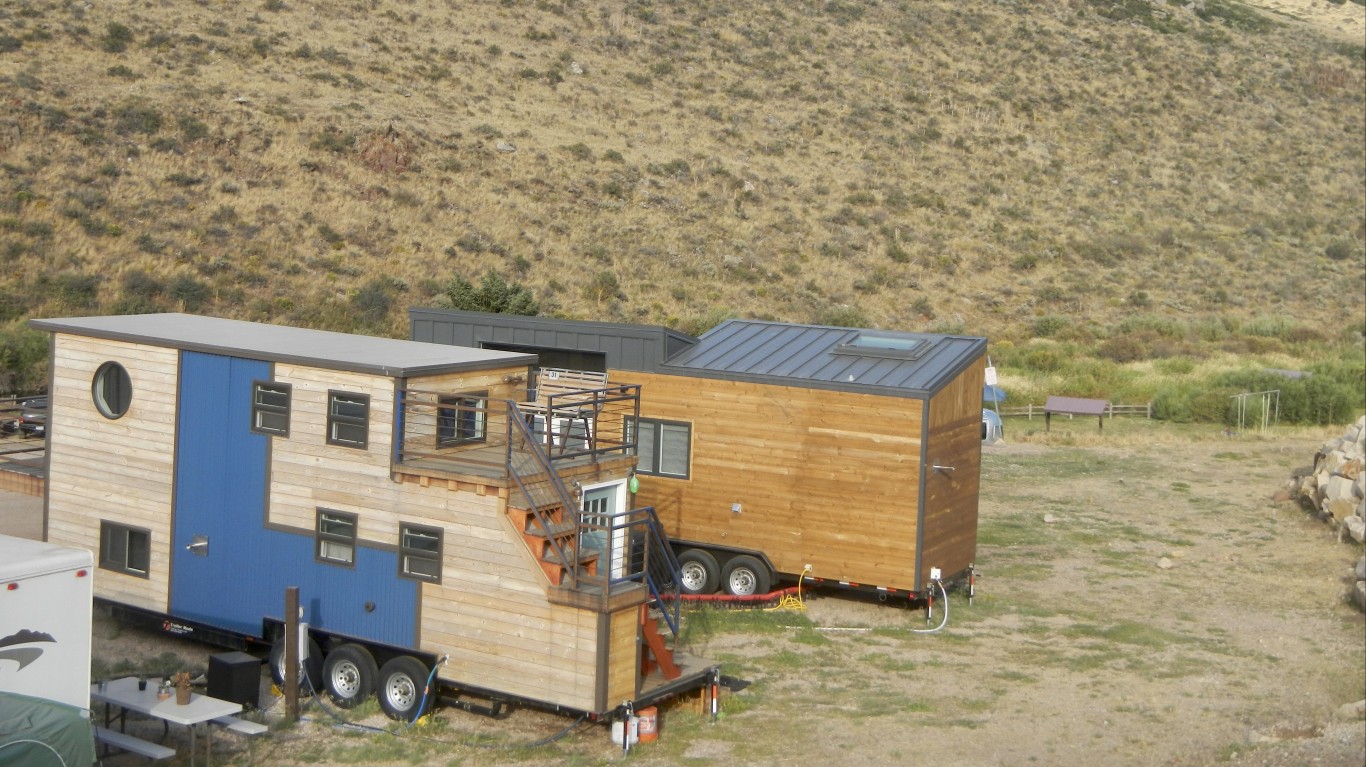
A common retirement plan is to sell the family home, buy a tiny home for part of the price, and invest the remaining equity for retirement. Home prices help, too. The national Case-Shiller index was up 2.1% from a year earlier in its latest reading. Many buyers, though, find the trouble starts after the purchase. They have to figure out where the little house can legally sit and whether anyone will let them live in it full time.
Zoning Rules Decide Whether a Tiny Home Counts as a Home
Building codes cover how a home is built. Zoning covers where it can go. According to The Tiny Life, a long-running tiny house resource, many states haven’t written rules for tiny homes. A common pattern is that a tiny home on a foundation gets treated as a regular house, while one on wheels gets classified as a recreational vehicle. That RV label matters because many places limit where an RV can park and how long someone can live in it. The same source notes it can be legal to use a tiny home as a backyard unit and still be illegal to live in it as a primary residence. Rules vary widely from one city or county to the next.
On the code side, Appendix Q of the International Residential Code relaxes some requirements for houses of 400 square feet or less, including allowing ladders and lower ceilings, but states can apply it differently. Some states adopted all of these relaxed requirements, some leave it to local governments, and some don’t use it.
The truth is that backyard units are getting easier to build. A Pew Charitable Trusts analysis published in Governing found 22 states have passed laws expanding accessory dwelling units, or ADUs, which are small separate homes on the same lot as a main house. It also found that 276 of 346 large cities, or 80%, allow them. But 43% of those local laws include at least one significant limit, such as an owner-occupancy rule or a parking minimum.
What a Tiny Home Retirement Costs Each Year
Financing is the next challenge. Premier Mortgage Associates says conventional banks often require a minimum loan amount above the cost of a tiny home plus a permanent foundation. It puts construction at $30,000 to $60,000. That drives buyers toward personal or RV loans. Lender rules on RV loans differ. Some require RV Industry Association certification, and some won’t write one for a home you live in full time, so confirm before counting on that payment.
Point lists typical RV loan rates of 8% to 16%, with a sample payment of $600 a month on a $50,000 loan over 15 years. How the home is classified also shapes insurance and resale value. One insurance guide puts full-time coverage for a tiny home on wheels at $800 to $2,000 a year.
Here’s a sample budget for a single retiree who pays cash for the house out of home equity and rents a lot:
- Lot rent: about $500 a month, or $6,000 a year
- Insurance: $2,000
- Medicare Part B: $202.90 a month, about $2,435 a year
- Everything else (food, utilities, transportation, health, maintenance, reserves, taxes): an estimated $30,000 for illustration
That adds up to about $40,400. The average retired worker’s Social Security check is $2,071 a month, or $24,852 a year. That leaves a gap of about $15,600. Funding it with 4% withdrawals takes about $390,000. If you finance the house instead, the $7,200 in yearly loan payments drives the target to about $570,000.
Why a Backyard ADU or Small Condo Can Be the Easier Path
A small home on a family member’s lot can help you avoid the parking problem, but it still has to meet local ADU rules, including any owner-occupancy or parking requirements.
Federal tax rules also apply to this arrangement. Under federal law, a home used by a family member counts as personal use for the owner (26 U.S.C. § 280A(d)(2)(A)). The exception applies when it’s rented at a fair rental rate, and the tenant uses it as their principal residence (§ 280A(d)(3)(A)). So if the rent is below market, the homeowner’s deductions on the unit can be limited. A small house or condo in a regular neighborhood is another option. It can usually get a standard mortgage and standard insurance, and it’s easier to sell later.
Health matters over a long retirement, too. Appendix Q allows ladders to reach sleeping lofts, and one local code version requires ladder rungs to be at least 12 inches wide. Ladders can become harder to use as mobility changes, and a single-level layout places the bedroom on the main floor.
Testing the Plan Before Selling the House
Renting a tiny home for a week or two shows quickly how the space feels day to day. In this scenario, the figures are: pay cash for the house out of equity, keep yearly spending near $40,000, and hold about $390,000 invested to cover the gap at a 4% withdrawal rate. That withdrawal figure comes from research done decades ago, and we walked through why it shifts now, and the income-first alternative, in a free guide. Taking on an RV loan sharply increases that target. The math also depends on the home having a legal place to sit, which county zoning rules determine.
Contact [email protected] for any questions or corrections.
David Beren has been a Flywheel Publishing contributor since 2022. Writing for 24/7 Wall St. since 2023, David loves to write about topics of all shapes and sizes. As a technology expert, David focuses heavily on consumer electronics brands, automobiles, and general technology. He has previously written for LifeWire, formerly About.com. As a part-time freelance writer, David’s “day job” has been working on and leading social media for multiple Fortune 100 brands. David loves the flexibility of this field and its ability to reach customers exactly where they like to spend their time. Additionally, David previously published his own blog, TmoNews.com, which reached 3 million readers in its first year. In addition to freelance and social media work, David loves to spend time with his family and children and relive the glory days of video game consoles by playing any retro game console he can get his hands on.