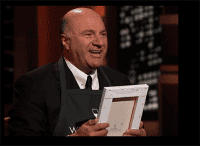
Former Google Engineer Says He Stopped Saving For Retirement Because He’s Afraid Of AI Risk. Try Living On The Average Retiree’s $2,095 Social Security Check
Nate Soares hasn't added a dollar to his 401(k) in a decade, convinced humanity may not last that long. Even if he's wrong, the math on skipping retirement savings gets uncomfortable fast, and the match you walk away from is…

This post may contain links from our sponsors and affiliates, and Flywheel Publishing may receive compensation for actions taken through them.

Nate Soares said it simply on a podcast: “I do not save for retirement right now.” Then he went further: “I have a 401(k) from when I worked at Google, but I haven’t contributed for a decade.” So Soares has put nothing new into that account for a decade, though he still holds it.
He made the comments on The Most Interesting Thing in AI, according to Fortune. The show is hosted by The Atlantic’s chief executive. Host Nicholas Thompson asked Soares whether there was more than a 50% chance humans won’t be around in a decade. Soares answered Thompson: “More than 50% that we don’t have a decade at this point is how it looks to me.”
He was clear about what he fears: “I am not really an AI job apocalypse guy. I’m an AI kills all humans guy.” He added: “I do everything I can to stop this eventuality. I don’t think it’s inevitable.” Fortune connected that view directly to his savings, reporting that he no longer saves “because he lives with the belief that AI will probably kill everyone before we even get to retirement age.”
A Serious Voice With a Personal Forecast
The Machine Intelligence Research Institute (MIRI) website lists Soares as its president and notes that he previously worked as an engineer at Google (NASDAQ:GOOGL | GOOGL Price Prediction) and Microsoft (NASDAQ:MSFT). Per Fortune, he left Google in 2014 to join MIRI, a Berkeley nonprofit. He also co-wrote the 2025 book If Anyone Builds It, Everyone Dies with MIRI cofounder Eliezer Yudkowsky.
His reasoning holds together. If you truly believe there’s no retirement to fund, saving for one makes little sense. The weak point is the premise. Soares’s odds are his own estimate. Futurism put the pushback bluntly: “there’s no consensus that such a future is even possible, let alone probable.”
For anyone who expects to be alive at 67, copying this move is an expensive mistake. Most people would end up falling back on Social Security, and that check is smaller than many expect.
Retirees Will Average $2,170 a Month in 2027
The Social Security Administration’s 2027 fact sheet puts the estimated average monthly benefit for all retired workers at $2,095 before the cost-of-living adjustment. After the 3.6% raise, the January 2027 average rises to $2,170. Keep in mind that these are national averages across all retired workers. They aren’t Soares’s benefit, and nobody is guaranteed that amount.
Per the SSA, the raise reaches 76 million Americans who collect Social Security and SSI. It starts with January benefits for nearly 72 million Social Security beneficiaries. That’s a lot of households living close to the number above.
Compare that to spending. The Bureau of Labor Statistics found that average annual household spending reached $81,905 in 2025.
The 2026 Trustees Report adds a second problem. It projects that Social Security’s combined trust funds run dry in 2034. After that, only 83% of scheduled benefits would be payable unless Congress acts. Social Security was built as a floor, one piece of a larger retirement plan.
Skipping Your Match Could Cost About $49,560 Over a Decade
Whether your employer contributes to your plan does more than anything else to decide how costly a break gets. Fidelity’s Q4 2025 data shows an average employer contribution rate of 4.7%. Many plans tie that money to your own contributions, so stopping can give up it.
Here’s an example. Take someone making $80,000 at that average rate. Their employer adds roughly $3,760 a year.
Invested for 10 years at an assumed 6% annual return, the match grows to about $49,560. That figure counts only the employer’s money. It leaves out your own contributions.
Without a match, the cost is smaller but still real. You give up the tax break. Per IRS Publication 560, pre-tax 401(k) deferrals and their earnings are generally tax free until distributed. Qualified Roth distributions can come out completely tax free.
Review Your Contributions Before You Cut Them
- Check your projected benefit. Log into your my Social Security account at SSA.gov. Compare your estimated check with what you actually spend each month. The gap between those two numbers is what your savings have to cover.
- Learn your plan’s match formula. Ask HR how much you have to contribute to get the full employer match. If you contribute less, you leave part of your pay on the table every year.
- Cut back before you stop. If money is tight, a lower contribution rate keeps the tax benefits and some or all of the match. If you’re thinking about a bigger change, talk it over with a financial professional first.
Soares is acting on his forecast. Anyone planning for a long life can start by checking their next paycheck deduction gets the full match.
Contact [email protected] for any questions or corrections.
AJ spent 10 years writing about financial markets at The Motley Fool. His coverage centers on technology stocks and the broader macroeconomic trends, from interest rates to geopolitics, that shape where markets are headed next. AJ is drawn to the stories where big-picture economics and individual companies collide.