Annapolis Puts Retirees on the Water and Near D.C. What It Takes to Retire There at 66 on $1.1 Million

This post may contain links from our sponsors and affiliates, and Flywheel Publishing may receive compensation for actions taken through them.
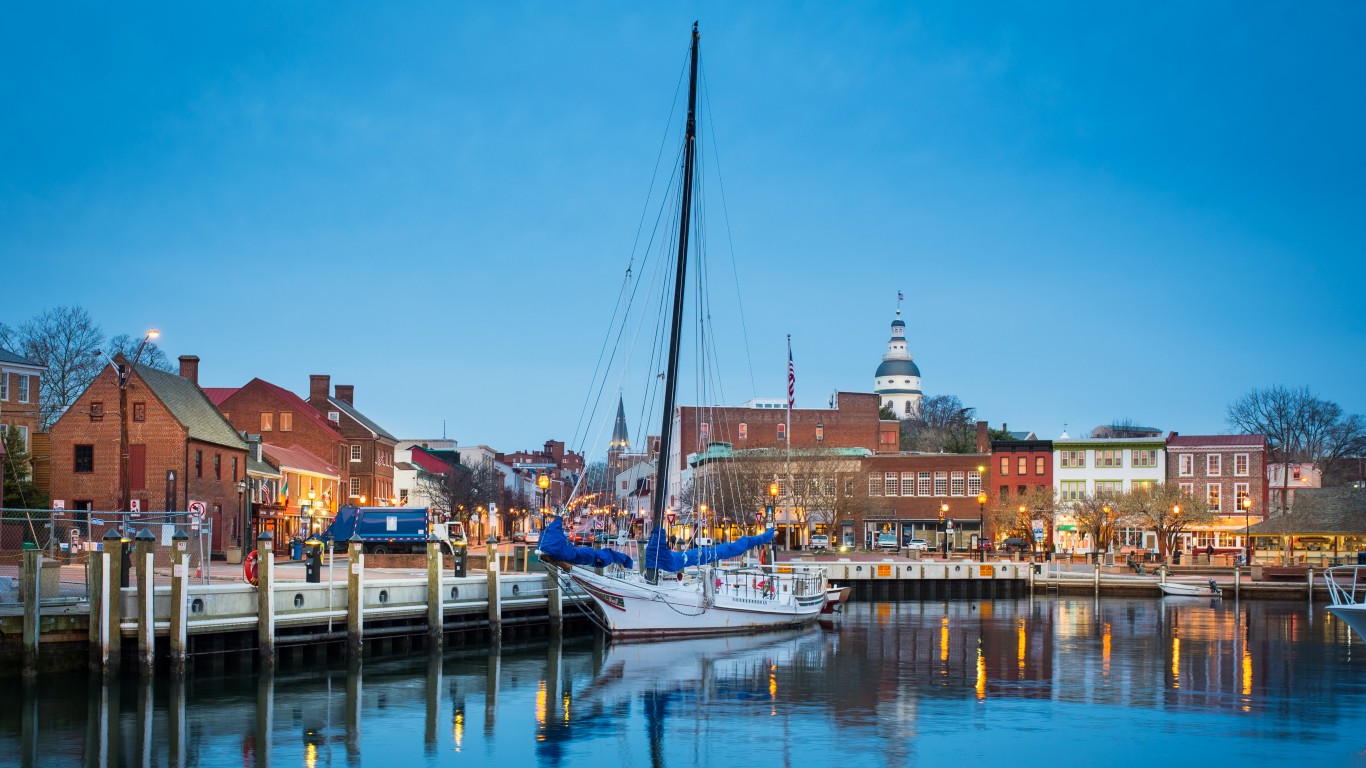
Can a couple in their mid-60s afford to retire in Annapolis, Maryland, a waterfront city that draws retirees from the Washington area? The Naval Academy sits downtown, the historic district is walkable, and D.C. and Baltimore are close enough for their big hospitals and airports. With great amenities nearby, it begs the question whether a couple at 66 with $1.1 million can actually afford it. They can, but only if a few specific things go right.
What $1.1 Million and Social Security Really Produce
At 66, the money may need to last 30 years, which means a 4% first-year withdrawal is about as high as you’d want to go, giving you $44,000 a year. For Social Security, the SSA puts a typical older couple at $3,355 a month after the 2027 cost-of-living increase. It comes to $40,260 a year. Put the two together, and you get $84,260, or roughly $7,020 a month before taxes.
On the spending side, the average U.S. household spends $81,905 a year, according to the BLS. The BEA puts Maryland’s price level at 104.959, where the national average is 100. Factoring that in, an average Maryland household runs about $86,000. That’s roughly $1,700 more than this couple brings in, but the figure isn’t specific enough to Annapolis retirees or homeowners without mortgages. Their actual housing, healthcare, and other expenses will determine whether $1.1 million is enough.
Where an Annapolis Budget Goes
The big hurdle is housing. Annapolis median values have recently run anywhere from $622,000 to $697,450. Across the wider Baltimore area, FHFA data show prices up 2.73% over the past year and 31.77% over five years.
Property taxes depend on which side of the city line you’re on. Inside Annapolis, the combined rate is $1.427 per $100 of assessed value. In unincorporated Anne Arundel County, it’s $1.080. On a $650,000 house inside the city, that comes to about $9,276 a year, or roughly $773 a month.
City residents also pay a trash fee of $115.93 per quarter. Medicare Part B costs $202.90 per person per month, which is $4,870 a year for the two of you. Each of you also has a $283 deductible. This couple sits well below the $218,000 joint income line where the extra Medicare surcharge, called IRMAA, starts. Everything else has to fit in what’s left: food, utilities, a Medigap policy, homeowners and flood coverage, and the boat.
Flooding is real near the water and definitely something to consider. The city government rates City Dock as high risk for nuisance flooding, meaning streets go under at high tide. Inflation is pressing too. The government’s research price index for people 62 and older rose 3.6% over the past year, the same as the 3.6% raise coming to benefits.
The Trustees project that the retirement trust fund runs dry in 2032. After that, 78% of scheduled benefits could still be paid unless Congress acts, and a bipartisan Senate group is now considering fixes (Fortune).
Maryland Taxes Reward Keeping Money in the Right Account
One major factor in favor of this destination is that Maryland doesn’t tax Social Security at all. Pensions and IRA withdrawals get taxed at state rates of 2% to 6.5%, plus your county’s income tax on top. If you’re 65 or older, you may qualify for Maryland’s $40,600 pension exclusion in 2026, but your Social Security benefits reduce the amount you can exclude. That exclusion only covers employer plans like 401(k)s and 403(b)s. IRAs don’t count. Couples where both spouses are 65 or older may also get a senior credit of up to $1,750, depending on income.
The usual move at retirement is to roll the 401(k) into an IRA, but in Maryland, that one step gives up the exclusion. Leave the money in the employer plan. How much of a $44,000 withdrawal qualifies for the exclusion depends on each spouse’s Social Security benefits and who owns the retirement account.
Heirs Face a Tax That Depends on Who They Are
Maryland’s estate tax only applies above $5 million per person, so this couple is well clear of it. The inheritance tax is the one to plan around. It takes 10% of what an heir gets. Spouses, children, grandchildren, and siblings are exempt. Nieces, nephews, and friends generally pay the tax, but registered domestic partners are exempt, and certain other domestic partners qualify for a limited exemption.
What It Takes to Make Annapolis Work
Own your home outright from the start, and know whether it’s inside or outside city limits before you buy. Take no more than a 4% withdrawal, and pair it with at least a typical Social Security benefit. For more buffer, a 3.5% draw of $38,500 brings total income to $78,760, and the boat budget will have to shrink to match.
That 4% figure itself is worth stress-testing (we laid out the case against it, and the income-first alternative, in a free guide here). Portfolio returns will need to keep pace with inflation for the withdrawal plan to hold. Leaving the 401(k) in the employer plan keeps the pension exclusion available.
Then decide one question in writing: who inherits, because if it’s anyone outside the exempt family list, 10% of what they get goes to the state. Beneficiary planning determines whether that tax applies.
Contact [email protected] for any questions or corrections.
David Beren has been a Flywheel Publishing contributor since 2022. Writing for 24/7 Wall St. since 2023, David loves to write about topics of all shapes and sizes. As a technology expert, David focuses heavily on consumer electronics brands, automobiles, and general technology. He has previously written for LifeWire, formerly About.com. As a part-time freelance writer, David’s “day job” has been working on and leading social media for multiple Fortune 100 brands. David loves the flexibility of this field and its ability to reach customers exactly where they like to spend their time. Additionally, David previously published his own blog, TmoNews.com, which reached 3 million readers in its first year. In addition to freelance and social media work, David loves to spend time with his family and children and relive the glory days of video game consoles by playing any retro game console he can get his hands on.