‘Medicare Is Not a Big Enough Number to Wag the Tail on This Dog’: Ramsey to 63-Year-Old Widow With $700K IRA

This post may contain links from our sponsors and affiliates, and Flywheel Publishing may receive compensation for actions taken through them.
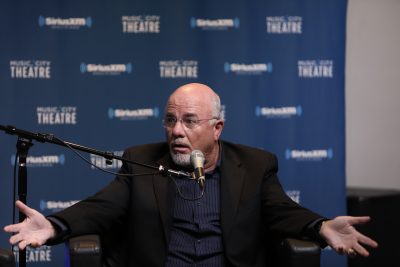
A widow with $700,000 in tax-deferred retirement savings called The Ramsey Show to ask whether a Roth conversion would raise her Medicare premiums. Dave Ramsey told her Medicare is “not a big enough number to wag the tail on this dog,” and called the surcharge “a small number and it’s just an emotional thing.” The 2026 Medicare tables back him up. The reason they back him up is the useful part: her salary has already pushed her into a high surcharge tier before she converts anything.
A Grieving Caller With a $700,000 Question
The caller, Ruth, is 63 and lives in New York City. She said her husband died about five weeks before the call, after 41 years of marriage, and that she was his caregiver for 14 of those years. She has “a little over 700,000” in a pretax IRA, $150,000 in a Roth, a brokerage account, an HSA and a salary of about $250,000.
Ramsey estimated that converting the whole IRA at once would cost “$210,000, $220,000, probably” in tax. He gave her two options: convert everything in one year, or convert a third a year for three years. Before either, he said to wait “six months or a year” and added: “Don’t make decisions, big decisions, right in the middle of the tears.”
Checking the Medicare Math With the 2026 CMS Tables
The standard Part B premium for 2026 is $202.90 a month. Higher earners pay extra on top of that, a surcharge called IRMAA (income-related monthly adjustment amount). CMS sets the surcharge by modified adjusted gross income. The figures below use the column for people who file individual returns.
| Hypothetical 2026 Income | Part B IRMAA | Part D IRMAA | Annual Surcharge |
|---|---|---|---|
| $250,000 salary only | $446.30 | $83.30 | $6,355.20 |
| Salary plus full conversion: $950,000 | $487 | $91 | $6,936 |
How the math works: ($446.30 + $83.30) × 12 = $6,355.20. Then ($487 + $91) × 12 = $6,936. The gap is $6,936 − $6,355.20 = $580.80 for a single year of surcharges. Her salary alone already falls in the tier for incomes over $205,000 and under $500,000. A full conversion only moves her up to the top tier. These are our calculations based on CMS brackets that reset every year.
Converting in thirds narrows the gap further. In that case: $250,000 + ($700,000 ÷ 3) = about $483,333. That stays under the $500,000 line, so it adds no IRMAA beyond what her salary already triggers.
Why the Two-Year Lookback Matters Here
On the show, co-host George Kamel pointed out that Medicare looks back two years at income. That means the income she earns in her last working years sets her premiums once she turns 65. Her filing status after her husband’s death will decide which CMS column applies, so she should confirm it with a tax professional.
Income Tax Is the Real Cost
Under 26 U.S.C. § 408A(d)(3)(A)(i), a converted amount counts as gross income. Treasury explains how conversions work in 26 CFR 1.408A-4. Ramsey said she is “already maxed” on brackets. The 2026 single-filer brackets are more complex than that.
The 35% rate applies above $256,225, and the 37% rate applies above $640,600. A one-year conversion of the full $950,000 would reach the 37% layer. Converting in thirds keeps more of the money in lower layers.
Ramsey also said to cover the tax bill from her brokerage account and move the entire IRA into the Roth. He said he would not use Roth money to cover the bill. Paying from outside money keeps the full $700,000 growing tax-free.
Ramsey’s RMD Age Claim Holds Up
Ramsey said required minimum distributions (RMDs) now start at 75 for someone her age. The law agrees. Under 26 U.S.C. § 401(a)(9)(C)(v)(II), anyone who turns 74 after December 31, 2032 has an applicable age of 75. Someone born in 1963 turns 74 in 2037. Converting before then means a smaller traditional balance will be subject to forced withdrawals.
Decision Framework: Who a Conversion Fits and Who It Doesn’t
- May fit: Savers who can cover the tax bill with non-retirement funds, have a long time horizon, and are already paying IRMAA because of their salary.
- May not fit: Anyone who would have to take the tax from the IRA, anyone expecting a much lower bracket after retiring, and anyone who might need the money soon.
- Timing: Converting while still making a $250,000 salary adds the conversion on top of that income. Converting in the years between retirement and RMDs could land in lower brackets.
- Grief: Kamel has told another caller that decisions made “from a place of fear and grief and weakness” are ones people often regret.
The extra Medicare cost of a one-year conversion here is $580.80. The tax bill is Ramsey’s estimate of $210,000 to $220,000. Bracket position decides most of the result (the same reason we built a free guide on reducing the RMD tax bomb years before withdrawals begin, here). Bracket figures and IRMAA tiers both reset every year, so check the current tables before converting in any year.
Data Sources
- Ramsey Show personal finance calls: the caller’s details, Ramsey’s tax estimate, his Medicare comments and his advice to wait.
- Kamel’s comment about the two-year Medicare lookback, from the same call.
- Ramsey’s statement about the RMD age, checked against the Internal Revenue Code.
- CMS 2026 IRMAA tables and IRS 2026 brackets, used for all the calculations above.
Contact [email protected] for any questions or corrections.
Jake has been been working in financial media for almost 15 years. He focuses on all things personal finance for 24/7 Wall St. with high hopes to educate and entertain. Most recently, Jake spent 12 years working various roles at The Motley Fool. He started copy editing fool.com content, worked on premium and marketing campaigns, and helped launch The Ascent, a personal finance brand.
His work has been featured on platforms like MSN, Yahoo Finance, USA Today, and more. He's written about credit cards, social security, ETFs, savings accounts, and just about anything else you can imagine when thinking about money. Jake love to cook, play golf, and tell people he's never had a cavity. (It's true!)