Samsung’s $34 Billion HBM Bet Raises Memory Glut Risks

This post may contain links from our sponsors and affiliates, and Flywheel Publishing may receive compensation for actions taken through them.
- Samsung’s ₩46 trillion HBM packaging investment will not begin operations until 2028, leaving current memory shortages largely unaffected.
- New manufacturing capacity from Samsung, SK hynix, and Micron could significantly alter memory supply conditions during 2028–2029.
- Memory manufacturers face the risk that today’s aggressive capital spending will produce excess capacity if HBM demand growth moderates.
Samsung’s HBM Expansion Raises Questions About the Next Memory Cycle
Samsung Electronics (SSNLF) has broken ground on a major high-bandwidth memory (HBM) packaging expansion at its Onyang manufacturing complex in Asan, South Korea, with a planned investment of ₩46 trillion, or approximately $34 billion. The program includes five advanced packaging production lines and is scheduled to begin operations in 2028. Of the total investment, ₩6 trillion is allocated to facility construction and ₩40 trillion to equipment, reflecting the growing manufacturing complexity of HBM used in artificial intelligence accelerators.
The timing of the announcement is more important for investors than the size of the investment. Samsung is committing substantial capital to expand HBM production during a period of tight memory supply, yet the new facility will not begin operations for approximately 18 months. Other major memory manufacturers are following similar investment schedules, creating the possibility that additional production capacity will become available across the industry during 2028 and 2029.
This raises a fundamental investment question. Will AI infrastructure demand continue growing rapidly enough to absorb the capacity now being constructed, or will the memory industry repeat its historical pattern of expanding production during shortages only to encounter excess supply when new facilities reach commercial operation?
The answer has important implications for Micron Technology (MU | MU Price Prediction), Samsung Electronics, SK hynix, and semiconductor equipment suppliers. Although HBM has changed the economics of memory manufacturing, the industry’s long construction schedules and capital-intensive production processes have not eliminated the possibility of another supply cycle.
Why Samsung’s New Facility Will Not Solve Today’s HBM Shortage
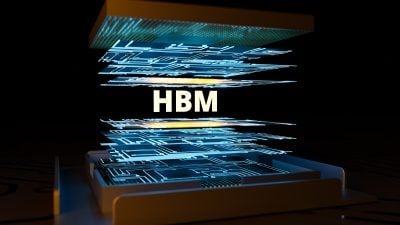
The Onyang investment requires an important technical distinction. HBM memory dies are manufactured in front-end DRAM wafer fabrication plants, while advanced packaging facilities assemble those dies into vertically stacked memory products. Samsung’s new Onyang facility is primarily a back-end packaging operation rather than a new DRAM wafer fabrication plant.
This distinction is significant because increasing packaging capacity does not independently increase the supply of DRAM wafers. Finished HBM production requires sufficient quantities of qualified memory dies, advanced packaging equipment, and acceptable manufacturing yields. If any of these components becomes constrained, increasing capacity elsewhere in the manufacturing process will not produce a corresponding increase in finished HBM shipments.
Samsung’s new facility will contain approximately 31,000 square meters of cleanroom space across three floors. The project will expand the Onyang campus’s total floor area from 270,000 to 420,000 square meters, an increase of approximately 55.6%. The new production line is scheduled to begin operations in June 2028, a year earlier than originally planned.
The investment breakdown also demonstrates the capital intensity of advanced HBM manufacturing. Approximately 87% of the ₩46 trillion program is allocated to equipment, with the remaining 13% directed toward construction. The equipment expenditure will occur in phases across the broader five-line program rather than representing an immediate commitment for the newly announced building alone.
According to Table 1, equipment accounts for ₩40 trillion, or 87.0%, of Samsung’s planned ₩46 trillion Onyang investment program, compared with ₩6 trillion allocated to facility construction. This substantial equipment commitment illustrates the increasing capital intensity of advanced HBM packaging, where stacking, bonding, inspection, and testing technologies are essential to expanding production capacity.
| Table 1. Samsung’s Onyang HBM Investment Program | ||
| Investment Component | Amount (₩ Trillion) | Share of Total |
| Facility construction | 6.0 | 13.0% |
| Advanced packaging equipment | 40.0 | 87.0% |
| Total planned investment | 46.0 | 100.0% |
| Source: November 12, 2026 investment announcement; percentage calculations by The Information Network. | ||
The equipment allocation is particularly important for semiconductor equipment manufacturers. Advanced HBM packaging requires specialized processes involving wafer thinning, die stacking, bonding, inspection, and testing. Increasing the number of stacked memory dies also raises the difficulty of maintaining acceptable manufacturing yields.
For Samsung, the investment is intended to strengthen its ability to compete with SK hynix and Micron in the next generations of HBM. However, the project also illustrates why current shortages cannot be eliminated quickly. Semiconductor facilities require construction, equipment installation, process qualification, and yield optimization before they can contribute substantial commercial production.
The June 2028 target represents the beginning of operations, not necessarily full-volume production. Meaningful additional supply could arrive later, depending on equipment installation and customer qualification schedules.
SK hynix and Micron Are Also Expanding Capacity
Samsung is not alone in committing substantial capital to memory manufacturing. SK hynix announced in August 2026 that it would invest approximately ₩54.3 trillion in two additional semiconductor fabrication projects, including ₩35.2 trillion for its Yongin Y2 facility and ₩19.1 trillion for its Cheongju M17 facility.
The company expects the M17 cleanroom to open in December 2028, followed by the Y2 cleanroom in June 2029. These projects are designed to expand the company’s long-term DRAM and NAND production capabilities in response to growing demand from AI infrastructure and other semiconductor markets.
Micron is also developing substantial additional DRAM manufacturing capacity in the United States, including projects in Idaho and New York. Although these investments support advanced memory production, they should not be interpreted as dedicated HBM capacity. Their contribution to HBM supply will depend on product allocation, technology requirements, and the availability of advanced packaging operations.
According to Table 2, Samsung, SK hynix, and Micron are undertaking major memory manufacturing expansions, with several important operational milestones concentrated in 2028 and 2029. The convergence of these projects raises the possibility that additional DRAM fabrication and HBM packaging capacity will enter production during the same period, potentially increasing supply faster than demand if AI infrastructure investment moderates.
| Table 2. Major Memory Capacity Expansion Projects | |||
| Company | Project | Investment | Scheduled Milestone |
| Samsung | Onyang HBM packaging | ₩46.0T | June 2028 operations |
| SK hynix | Cheongju M17 | ₩19.1T | Dec. 2028 cleanroom |
| SK hynix | Yongin Y2 | ₩35.2T | June 2029 cleanroom |
| Micron | Idaho DRAM expansion | Multiyear program | Phased production ramp |
| Micron | New York DRAM expansion | Multiyear program | Longer-term capacity |
| Sources: Company announcements and investment plans. Facility opening dates do not represent full production capacity. | |||
The convergence of these investments is significant because memory supply has historically been influenced by the collective capital spending decisions of a relatively small number of manufacturers. When several producers expand simultaneously, the resulting capacity additions can eventually exceed demand, particularly if customers reduce inventories or end-market growth slows.
HBM introduces additional complexity into this relationship because manufacturing capacity must be allocated between conventional DRAM and HBM products. Nevertheless, the fundamental economics remain unchanged: new manufacturing capacity must ultimately generate sufficient revenue and operating profit to justify the investment.
HBM Growth Is Strong, but Its Rate of Expansion Is Moderating
The Information Network estimates that global HBM revenue increased from $21.1 billion in 2024 to $38.7 billion in 2025, representing growth of approximately 83.4%. Revenue is projected to reach $50.5 billion in 2026 and $63 billion in 2027.
These figures illustrate the extraordinary expansion of the HBM market as Nvidia (NVDA) and other AI accelerator manufacturers increase memory bandwidth requirements. However, the percentage growth rate is expected to moderate as the market becomes substantially larger.
According to Table 3, global HBM revenue is projected to increase from $21.1 billion in 2024 to $63.0 billion in 2027, nearly tripling in three years. However, annual revenue growth is expected to moderate from 83.4% in 2025 to 24.8% in 2027, raising questions about whether future demand growth will be sufficient to absorb the substantial manufacturing capacity scheduled to become available in 2028–2029.
| Table 3. Global HBM Revenue and Growth | ||||
| Metric | 2024 | 2025 | 2026E | 2027E |
| Revenue ($B) | 21.1 | 38.7 | 50.5 | 63.0 |
| YoY Growth (%) | 305.8% | 83.4% | 30.5% | 24.8% |
| Source: The Information Network. 2026–2027 are estimates. | ||||
The moderation in percentage growth does not imply that HBM demand is declining. In absolute terms, the market is projected to expand by approximately $12.5 billion in 2027, compared with $11.8 billion in 2026. Nevertheless, manufacturers must consider whether future growth will remain sufficient to absorb capacity additions scheduled for 2028 and 2029.
This is particularly important because HBM revenue growth reflects both shipment volumes and average selling prices. Strong pricing can support revenue growth even when unit production increases more slowly. Conversely, additional supply could pressure prices and reduce revenue growth even if the number of HBM stacks shipped continues increasing.
There is also a difference between HBM demand and conventional DRAM demand. HBM manufacturing consumes substantial wafer resources, and its greater complexity can reduce effective memory-bit output from a given amount of fabrication capacity. As manufacturers allocate more advanced DRAM production toward HBM, conventional DRAM supply can remain constrained despite higher capital spending.
This relationship has supported the current memory pricing environment. However, it could change if HBM production becomes more efficient, packaging bottlenecks ease, or AI infrastructure investment grows more slowly than anticipated.
The Financial Risk Begins When New Capacity Arrives
The most important period for investors may be 2028–2029, when multiple memory expansion projects are scheduled to reach operational milestones.
Samsung’s Onyang facility is expected to begin operations in 2028, while SK hynix’s M17 and Y2 facilities are scheduled to open their cleanrooms in late 2028 and mid-2029, respectively. Micron’s manufacturing expansion will also add capacity over a multiyear period, although the timing and product mix of individual projects will determine their effects on supply.
These investments could increase the industry’s ability to manufacture advanced DRAM and finished HBM products. However, additional capacity does not automatically produce oversupply. Manufacturers can delay equipment installation, adjust utilization, change product allocation, or postpone expansion phases if market conditions deteriorate.
The greater risk is that several manufacturers will have committed substantial capital before demand conditions become clear. Once facilities are constructed and equipment is installed, companies face pressure to utilize their assets and recover their investments.
Memory manufacturers are especially sensitive to utilization because semiconductor fabrication involves high fixed costs. Lower utilization increases manufacturing costs per unit, while falling selling prices can quickly reduce operating margins.
For Micron investors, the relationship between capital expenditures, revenue growth, and free cash flow will therefore become increasingly important. HBM offers opportunities for higher-value products, but those benefits must be evaluated against the capital required to manufacture them.
Samsung and SK hynix face similar challenges. Their competitive positions depend on technology leadership, customer qualifications, manufacturing yields, and the ability to balance HBM production with conventional memory demand.
The semiconductor equipment industry faces a different timing relationship. Equipment suppliers generally recognize revenue as manufacturers build and equip facilities, before the resulting memory production enters the market. Consequently, semiconductor equipment companies can benefit from the current investment cycle even if memory pricing becomes less favorable after new capacity begins operating.
KLA (KLAC) is positioned to participate through process control, inspection, and metrology equipment used in increasingly complex memory manufacturing. Applied Materials (AMAT) and Lam Research (LRCX) supply equipment for front-end DRAM production, while specialized packaging equipment manufacturers benefit from higher HBM stacking and bonding requirements.
However, equipment demand is also cyclical. If manufacturers eventually encounter excess memory capacity, they may reduce equipment orders or delay new production lines, affecting suppliers after the initial investment phase.
Investor Takeaway
Samsung’s ₩46 trillion Onyang investment highlights the scale of capital spending required to expand HBM production. The new facility will strengthen the company’s advanced packaging capabilities, but its June 2028 operational target means that it will do little to alleviate immediate memory shortages. More importantly, the project adds to a growing list of manufacturing investments scheduled to contribute capacity during 2028 and 2029.
The investment implications extend beyond Samsung. SK hynix is committing substantial capital to new DRAM and NAND facilities, while Micron continues expanding its manufacturing infrastructure. These investments reflect confidence in long-term AI memory demand, but their financial returns will depend on the balance between production capacity, customer demand, manufacturing yields, and memory prices when the facilities reach commercial operation.
AI has fundamentally changed memory demand by increasing the importance of HBM and advanced DRAM, but it has not eliminated the industry’s historical sensitivity to capacity expansion. The current shortage can persist through 2027 even as manufacturers invest aggressively, because new facilities require years to construct and qualify. The more consequential question is whether the additional capacity arriving later in the decade will exceed demand.
For investors, Samsung’s announcement should therefore be viewed as both an opportunity and a warning. Semiconductor equipment suppliers may benefit from the spending required to construct and equip new facilities, while memory manufacturers could face greater pricing and utilization risks once those investments translate into additional production. The industry’s next important turning point may not occur during today’s shortage, but when the capacity being built to resolve it finally becomes available.
Contact [email protected] for any questions or corrections.
Dr. Robert Castellano has over 40 years of experience analyzing the high-tech industries. He is president of The Information Network (www.theinformationnet.com). He earned a PhD degree in Chemistry from Oxford University (UK). His PhD thesis advisor, John Goodenough, won the Nobel Prize in Chemistry in 2019 for the invention of the Lithium Ion Battery. He writes with George Gilder, novelist, futurist, and economist, and his team for Eagle Financial Publishing.