Sell the House Within Two Years of Your Husband’s Death and the First $500,000 of Gain Is Still Tax-Free. In Year Three the Exclusion Drops to $250,000

This post may contain links from our sponsors and affiliates, and Flywheel Publishing may receive compensation for actions taken through them.
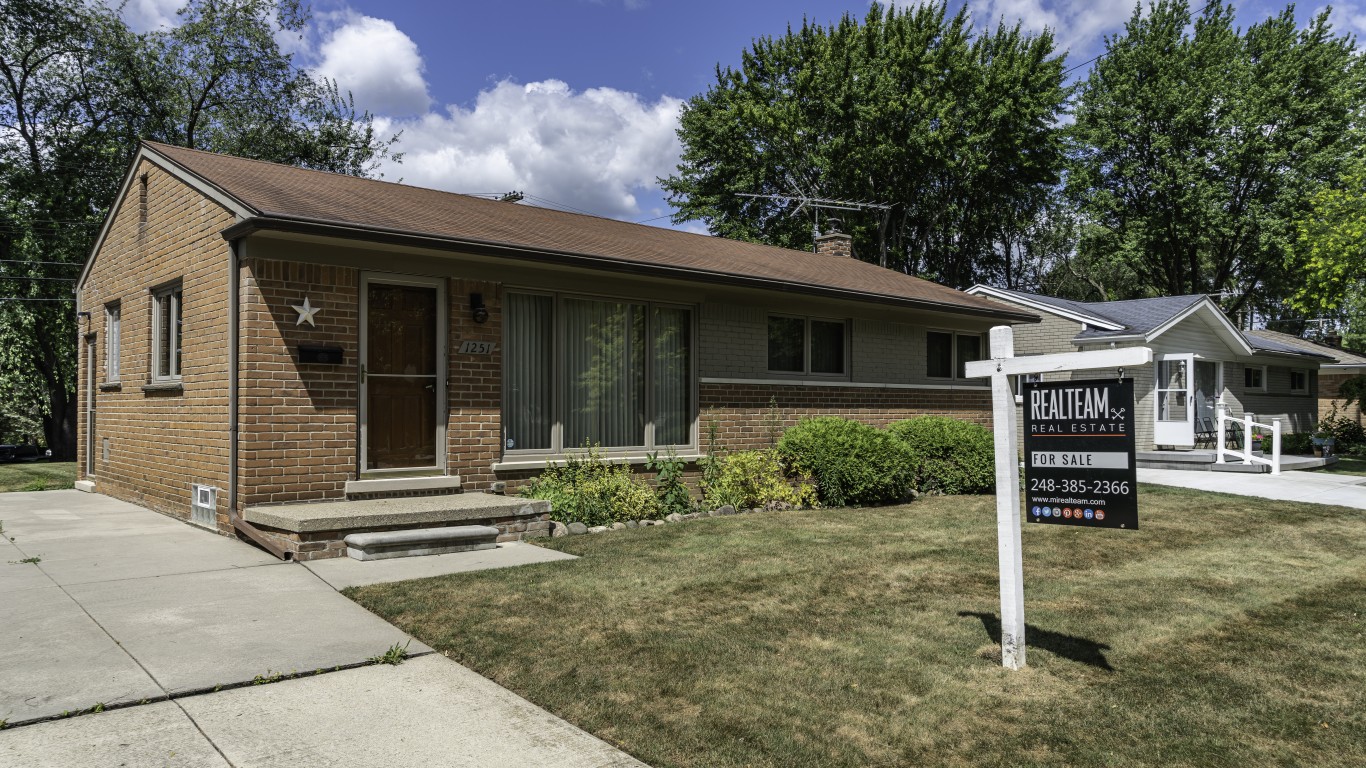
Consider a hypothetical 71-year-old widow in Ohio who buried her husband in October 2023. Assume they bought the house in 1994 for $300,000, titled jointly with right of survivorship, and it was worth $1,300,000 the week he died.
She stayed. The garden was his, the grandchildren came at Thanksgiving, and nobody told her the calendar counted. She closed on the sale in spring 2026, two and a half years after the funeral.
Her preparer ran the return. The house that would have sold tax-free 18 months earlier now produced a federal bill of $42,440.
Two-Year Surviving Spouse Rule Sets the Deadline
Section 121 of the Internal Revenue Code lets a homeowner exclude gain on a principal residence owned and lived in for 2 years or more[1] of the prior five. A single filer’s cap is $250,000. A married couple filing jointly gets $500,000.
Section 121(b)(4) extends the married cap to a widow or widower who files as single. The “$500,000”[1] figure applies if the sale “occurs not later than 2 years after the date of death of such spouse” and the couple met the joint-return tests immediately before the death.
IRS Publication 523 lists the conditions: you sell within 2 years of the death of your spouse, you haven’t remarried at the time of the sale, and neither of you took the exclusion on another home sold within the prior two years. Your late spouse’s ownership and residence time counts as yours. One day past the second anniversary, the cap falls back to $250,000.
Step-Up in Basis Shrinks the Gain First
Before the exclusion applies, the husband’s death reset part of the cost basis. Under Section 1014, inherited property takes the fair market value of the property at the date of the decedent’s death[2]. For a couple holding the house as joint tenants, Section 2040(b) places only one-half of the value[3] in the husband’s estate, so only his half steps up.
His half takes a basis of half the date-of-death value. Her half keeps half the original price. Combined, her new basis is $800,000. On an assumed sale at $1,300,000 (flat price, net of selling costs), the gain is $500,000. Without the step-up it would have been $1,000,000.
Year-Three Math Costs $42,440
Selling in 2026 as a single filer, she excludes $250,000. The remaining $250,000 is a long-term capital gain.
Assume her pension and IRA withdrawals already push her taxable income past $49,450, where the single filer’s 0% capital-gains band ends for 2026. Every taxable dollar lands in the 15% band, which runs to $545,500. That tax is $37,500.
The gain also triggers the net investment income tax: 3.8% on the lesser of the gain or the amount by which modified AGI exceeds $200,000 for a single filer. Assuming $80,000 of other modified AGI, that adds $4,940. Total federal bill: $42,440, before any state income tax.
Closing by October 2025 Would Have Erased the Entire Bill
Had she closed before the second anniversary of his death, the full $500,000 gain would have been covered by the $500,000 surviving spouse cap. Federal tax: zero. No capital-gains tax, no 3.8% surcharge.
Geography counted too. In community property states, Section 1014(b)(6) steps up the surviving spouse’s one-half share of community property[2] as well. A full step-up would have set her basis at the date-of-death value, wiping out the gain no matter when she sold.
Moves to Make Before the Second Anniversary
- Mark the date. Count two years from the date of death on the death certificate and plan to close before that day. The sale date controls, so build in time for a delayed closing.
- Order a date-of-death appraisal now. It sets the stepped-up basis on your late spouse’s share. Reviving it years later invites a fight with the IRS.
- Pull the deed. Joint tenancy, tenancy by the entirety, community property and trust ownership each change how much of the house steps up.
- Hold off on remarriage until after closing. Publication 523 requires that you haven’t remarried at the time of the sale.
- Gather improvement receipts. A new roof or kitchen raises the basis on your original half and lowers the taxable gain.
A CPA can run your own numbers in an hour, and that hour is worth booking before you list. This two-year window is one of nine IRS provisions that quietly take six figures from retirement families, and we covered the rest in a free tax trap guide here.
Two Years Is Worth $250,000 of Exclusion
The surviving spouse window is worth an extra $250,000 of tax-free gain. For this widow, missing it cost $42,440.
Contact [email protected] for any questions or corrections.
Vilma Rios is a tax professional, tax researcher, and financial writer with more than 15 years of experience in tax and accounting. Her work spans federal tax research, financial journalism, retirement planning, investment taxation, capital gains, inherited assets, and tax education. She specializes in translating complex tax and financial topics into clear, practical information that helps individuals, families, retirees, and investors make informed decisions.
She has presented tax information through webinars, including Spanish-language tax education, and has appeared on Telemundo 47 discussing tax topics and helping viewers understand important tax-filing requirements.
Her experience also includes tax and accounting work, tax research, IRS-related matters, and public tax education. While in college, Vilma volunteered in an IRS-sponsored tax assistance program and was recognized for her community service by local and state officials.
Known as "Your Tax Geek," Vilma is passionate about making taxes easier to understand and helping people navigate an increasingly complex tax system.