What a December Rate Hike Would Mean for Your Savings, Your CD and Your Credit Card

This post may contain links from our sponsors and affiliates, and Flywheel Publishing may receive compensation for actions taken through them.
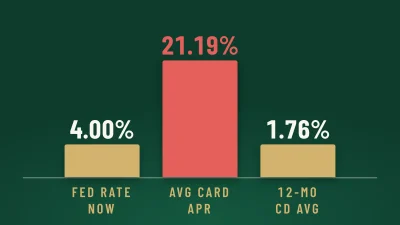
The Federal Reserve meets December 8-9 to decide whether to raise its benchmark rate again. As of November 12, 2026, the upper bound of the Fed’s target rate was 4.00%. It has not changed since the Fed’s September increase. On that same date, Polymarket traders priced a quarter-point increase at 0.885 on a zero-to-one scale. That number is market pricing. Markets can be wrong, and this page makes no forecast of its own. If the hike does happen, your savings rate may creep up, new CDs may pay more, and any credit card balance you carry will cost more.
Why Markets Expect Another Hike in December
Inflation is the main reason. Core PCE is the Fed’s preferred measure of underlying prices, and its index rose in every monthly reading from November 2025 through September 2026. It reached 130.90 in September, up 0.3% from August. Recent coverage reports that Fed policymakers considered a rate hike after a strong jobs report, and a Reuters poll of economists expects one more increase in December.
Treasury bills show the same forecast. On November 12, the average yield ran from 3.98% on 4-week bills to 4.52% on 52-week bills. The 52-week figure was up from 4.35% on November 6. When longer bills pay more than shorter ones, investors are indicating that they expect short-term rates to rise.
Your Savings Account Rate Could Rise, but Slowly
Savings rates are variable, so a bank can raise yours after the Fed moves. Banks tend to pass increases to savers slowly and unevenly. Your credit card rate usually adjusts within a billing cycle or two. Your savings rate can lag for weeks or months, and some banks never raise it at all.
Where you bank matters most. Online high-yield savings accounts compete for deposits on rate and carry no branch costs, so they usually respond to Fed moves faster. Many large branch banks keep standard savings rates near the floor whatever the Fed does. They count on customers who never compare.
Here is an example. Say you hold $20,000 and your rate rises by a quarter point. You would earn about $50 more a year. That helps, but the gap between a near-zero branch account and a competitive online account can exceed the effect of one Fed hike. Where you keep your cash impacts your earnings more than anything the Fed decides in December.
Your Existing CD Is Locked, but New CDs May Pay More
A CD you already own keeps its rate until it matures, so a December hike will not change it. New CDs are a different story. Banks price them partly off Treasury yields, and those yields have already been rising. As of October 2026, the FDIC national average yield on a 12-month CD was 1.76%, up from 1.52% in March. That is the average across all banks. Competitive online banks often pay well above it.
Locking in in now versus waiting comes down to timing. A hike that markets already expect is partly built into today’s CD offers, so waiting may gain you only a small amount. Locking now gives you certainty if the Fed holds or turns around in 2027. If you can’t decide, a ladder splits the difference. You divide your cash across CDs that mature at different times, so part of it comes free to reinvest at whatever rates exist then.
Before you break an older, lower-rate CD to go after a better one, check the early withdrawal penalty. Banks usually charge it as several months of interest. With a short remaining term, the penalty can wipe out what the higher rate would earn you.
Your Credit Card APR Will Likely Follow the Fed
Most credit card APRs are variable and linked to the prime rate. Banks set prime a fixed margin above the Fed’s target and generally change it within days of a Fed decision. Your card rate follows automatically, as your cardholder agreement allows.
Card rates are already high. The Fed’s G.19 data put the average card APR at 21.19% in August 2026, up from 20.94% in May. As an illustration, a quarter-point increase on a $5,000 carried balance adds about $12.50 in interest a year. One hike is a small cost, but it adds to an already expensive balance, and hikes can stack. Card balances at least 30 days past due stood at 2.85% as of April 2026.
You can avoid all of this. The Consumer Financial Protection Bureau notes that cardholders who pay the full balance each month typically do not pay interest on balances because of a grace period. If you pay in full every month, the Fed can raise rates as much as it wants without impacting your card costs.
What to Do Before the December 8-9 Meeting
- Check your savings rate. Log in and find the exact yield on your account. If it is near zero, moving to a competitive high-yield account will earn you more than any hike will.
- Pay down any carried card balance. Put extra cash toward the card with the highest APR first. Every dollar you pay off ends earning the bank interest before your rate goes up.
- Decide on CDs. If you want a CD, compare current offers against the national average and know the early withdrawal penalty before you commit.
If the Fed Holds Instead
Market pricing is a chance, and the Fed has surprised traders before. If policymakers leave rates alone, your credit card rate stays where it is and your savings rate keeps whatever your bank pays. If you already keep cash in an account that pays a competitive rate and pay your card in full, a hold costs you nothing, and so does a hike. Your setup works either way.
Frequently Asked Questions
How Soon After a Fed Hike Do Savings Rates Go Up?
Each bank decides for itself. Online banks that compete on rate often adjust within weeks. Large branch banks may wait months or skip the increase entirely. A bank has no obligation to raise a variable savings rate after a Fed move.
Does a Rate Hike Change My Fixed-Rate Mortgage or Car Loan?
No. A fixed-rate loan keeps its rate for its whole life. Variable-rate debt such as home equity lines of credit and adjustable-rate mortgages can reset higher, usually at the next adjustment date your loan terms set.
Will Money Market Accounts Rise Along With Savings Accounts?
Bank money market accounts are variable and usually act like savings accounts, so they rise slowly and differ by bank. Money market funds hold short-term government debt and tend to track Treasury bill yields more closely, so they often adjust faster.
Should I Open a CD Right Before the Meeting or Right After?
The difference is usually small when markets have already priced in a hike, because banks set CD rates ahead of the decision. If having a certain return matters more to you than squeezing out a little extra, locking a competitive rate now is a reasonable choice.
Is My Money Safe at an Online Bank?
Deposits at an FDIC-insured online bank have the same federal insurance as deposits at a branch bank, up to the standard limits for each depositor and ownership category. Check that the bank is FDIC-insured before you move money.
Contact [email protected] for any questions or corrections.
Austin Smith is a financial publisher with over two decades of experience as an investor, analyst, and advisor. He covers stocks, ETFs, Artificial intelligence and personal finance for 24/7 Wall St. Previously, he spent over a decade at The Motley Fool as a senior editor for Fool.com, portfolio advisor for Millionacres, and launched The Ascent to help reader take control of their personal finances.
His work has been featured on Fool.com, NPR, CNBC, USA Today, Yahoo Finance, MSN, AOL, Marketwatch, and many other publications. He is as an advisor to private companies, and co-hosts The AI Investor Podcast with Eric Bleeker.
When not looking for investment opportunities, he can be found skiing, running, or playing soccer with his children. Learn more about Austin's investment approach here.