She’s Land-Rich but Cash-Poor at 64. A Deal for the Farm’s Development Rights Could Let Her Delay Social Security to 70.
Sitting on 100 acres of inherited farmland with almost no monthly income, she faces a retirement trap that thousands of rural women stumble into without realizing the permanent cost of the way out.

This post may contain links from our sponsors and affiliates, and Flywheel Publishing may receive compensation for actions taken through them.
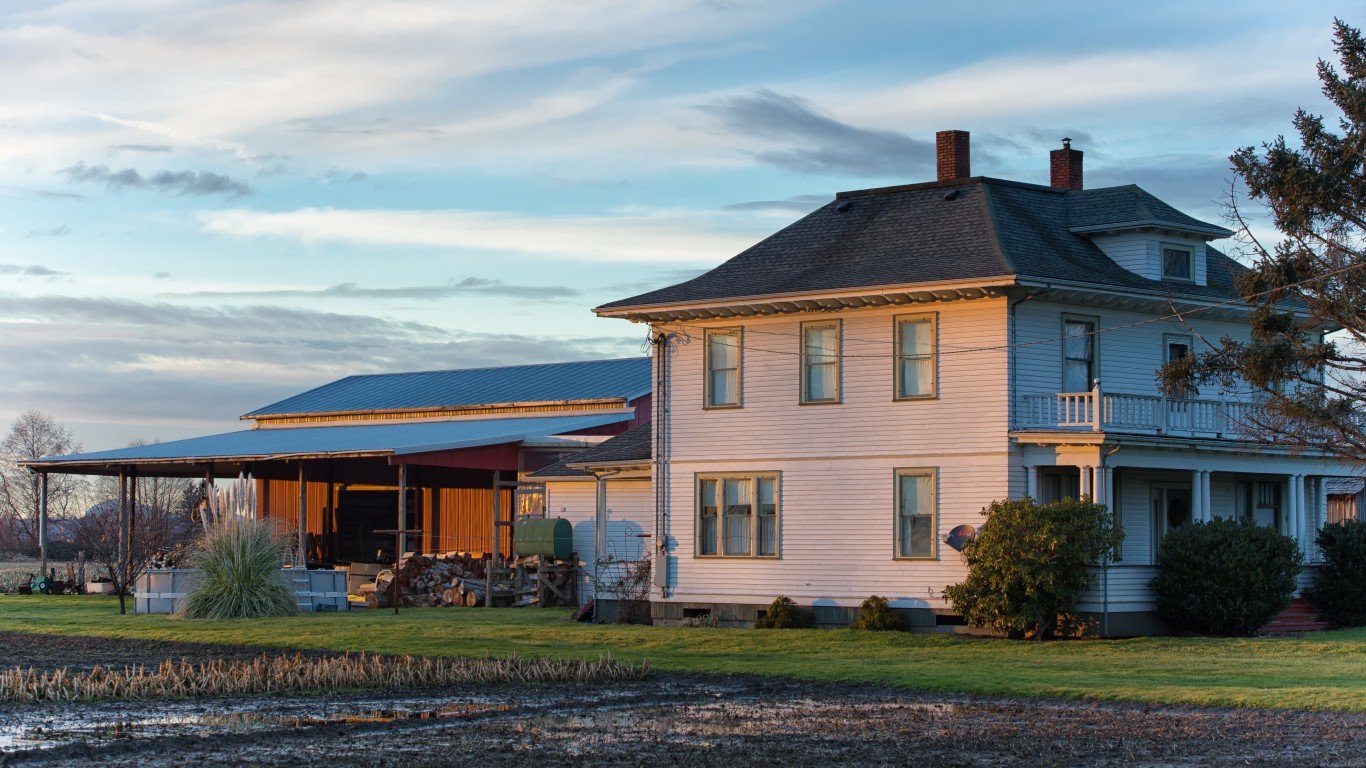
She is 64, lives on roughly 100 acres she inherited, and the checkbook does not match the land value on paper. The mortgage is small, the taxes are manageable, and the fields still look the way her parents left them. What she lacks is monthly income. The instinct, echoed in countless rural retirement forum threads from women in her spot, is to file for Social Security now. That move is expensive.
Filing at 62 through 64 solves this month’s problem but permanently shrinks every check she will ever receive in the future. Benefits fall for each year claimed before full retirement age (FRA), up to about a 30% reduction at 62. Going the other direction, each year of delay past FRA up to 70 raises the check by roughly 8%. Layer on the 2.8% cost-of-living adjustment (COLA) for 2026, and every one of those percentages compounds on a larger base for the rest of her life.
Why Her Land Can Buy a Bigger Check
Here is the counter-intuitive move. She does not need to sell the farm or subdivide it to unlock a retirement. Land-rights advocates in West Virginia and nationally point to arrangements where owners keep title and working use of the property while monetizing or donating the right to develop it. If a well-structured deal produces bridge cash between the ages of 64 and 70, the farm itself becomes what lets her wait on Social Security. On a hypothetical $2,000 benefit at FRA, delaying to 70 could add several hundred dollars a month, guaranteed, inflation-adjusted, for as long as she lives.
The land pays her for six years so Social Security can pay her, at a higher rate, for the next 20 or 30.
Three Paths, Three Very Different Tax Pictures
These paths are not interchangeable, and the tax and Medicare consequences diverge quickly. A qualified tax professional and appraiser are non-negotiable before signing anything.
- Selling development rights. A land trust or government program pays her a lump sum in exchange for a permanent restriction on future development. Cash arrives, often taxable as a capital transaction, which can spike her modified adjusted gross income (MAGI) in the year of sale. That matters because Medicare uses a two-year lookback. The standard 2026 Part B premium is $202.90, and the first income-related surcharge kicks in above $109,000 of MAGI for a single filer, or $218,000 for joint filers. A one-time land payment can push her into surcharge territory for a year or two even though her ongoing income is modest.
- Donating a qualifying conservation easement. Instead of cash, she gives up development rights and may claim a federal charitable deduction if the donation meets strict requirements. It does not produce bridge income directly, but a large deduction can offset Roth conversions that fund the delay period. The IRS has aggressively challenged inflated appraisals and syndicated deals, so valuation discipline and clean documentation matter enormously.
- Conservation partnerships and payment programs. Federal and state programs, plus private working-lands agreements, may pay annually for stewardship practices rather than in a single lump. Smaller checks, steadier cash flow, and often a gentler tax profile, which can be a cleaner match for a six-year bridge to age 70.
Fitting the Bridge Into the Rest of the Picture
If a lump sum arrives, the parking spot matters. The 10-year Treasury yield sat near 4.57% in mid-July 2026, while the FDIC national average 12-month CD was 1.65% with top online banks paying meaningfully more. Laddered Treasuries or CDs can convert one taxable event into predictable monthly income across the delay window, while she also considers partial Roth conversions in the lowest-income years before Social Security and required minimum distributions (RMDs) arrive.
What She Should Actually Focus On
The mistake hardest to undo is filing early out of cash-flow panic. That decision follows her every month for the rest of her life. The land question has options, and the right structure depends on her appraisal, her heirs’ wishes, and her tax year.
Two issues to sort out before she signs anything: whether the arrangement reliably delivers cash during the years she needs it, and what the deal does to her MAGI in the Medicare lookback window. Every farm and family is different, and small drafting details in an easement or sale agreement can change the answer completely. This is a conversation for a tax professional, an estate attorney, and a qualified land appraiser, not a decision to make alone at the kitchen table.
Contact [email protected] for any questions or corrections.
Gerelyn Terzo is the author of dividend investing handbook "Dividend Investing Strategies: How to Have Your Cake & Eat It Too." A veteran financial journalist, she covers agri-finance for outlets like Global AgInvesting and the broader stock market and personal finance for 24/7 Wall Street. She began at CNBC and later helped launch Fox Business in New York. Gerelyn currently resides in Woodland Park, Colorado and dabbles in nature photography as a hobby.