700,000 Seniors Have Started GLP-1s Through Medicare. Now AstraZeneca Just Moved a Once-Daily Pill Into Phase 3
Seven hundred thousand seniors have already started GLP-1s through Medicare, and AstraZeneca just pushed a once-daily pill into late-stage trials. Before you plan your budget around a $50 copay, there are two deadlines that could change everything.


Roughly 700,000 seniors have started GLP-1 obesity treatments since Medicare’s Bridge program launched July 1, 2026, according to Eli Lilly (NYSE:LLY | LLY Price Prediction) CEO David Ricks. Eligible beneficiaries pay $50 a month for certain obesity drugs. Ricks said about 70% of those new patients use Lilly products.
That surge in Medicare use is raising the stakes for the next wave of GLP-1 drugs, especially oral options that could appeal to people who would rather skip injections. But they will have to wait.
AstraZeneca (NYSE:AZN) is now moving elecoglipron, a once-daily GLP-1-receptor, into a broad Phase 3 program for obesity and type 2 diabetes. That step triggered a $50 million milestone payment to its partner Eccogene. The obvious question is whether Medicare will cover this one. If you would rather take a pill than use an injection pen, will it come at the same $50 price?
It won’t do so automatically. Even FDA approval would not put elecoglipron into the current Bridge, which covers a set list of products and runs under its own eligibility and payment rules.
Your Next COLA Could Disappear Into a $50 Copay
For most retirees, Social Security pays the recurring bills, and a GLP-1 is a recurring bill. At $50 a month, the drug costs $600 a year. That sounds manageable until you compare it with your annual raise.
The 2027 cost-of-living adjustment (COLA) is on track for about 3.6%, with two of the three measurement months counted so far. For a $2,000 monthly benefit, that amounts to about $72 more per month. A $50 copay would use up all but roughly $22 of that raise.
Premiums shrink the raise further. The standard Part B premium, which many beneficiaries have deducted directly from their Social Security check, rose to $202.90 in 2026, up $17.90 from 2025. Add another premium increase to a new copay, and most of a retiree’s COLA can be gone before the deposit arrives.
Strong Trial Results Still Need FDA Approval
In AstraZeneca’s VISTA Phase 2b trial, the 75 mg dose produced average weight loss of 11.8% at 36 weeks in adults with obesity or overweight.
In the SOLSTICE diabetes trial, the same dose lowered HbA1c, a roughly three-month average of blood sugar, by 1.9 percentage points at 26 weeks. Patients also lost 7.7% of their weight on average.
Those results got the drug into Phase 3, which is still part of clinical testing, and elecoglipron has no FDA approval, at least not yet, so it is not available for routine Medicare drug coverage today.
Two Deadlines Have to Line Up Before 2028
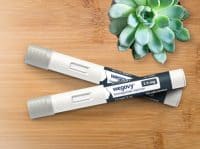
CMS currently lists Foundayo, Wegovy injections and tablets, and Zepbound KwikPen for eligible obesity treatment under the Bridge. Elecoglipron would have to be added to that list, covered through ordinary Part D or picked up by whatever program replaces the Bridge.
That last possibility matters because the Bridge currently runs through Dec. 31, 2027. A drug that is only now entering Phase 3 could reach pharmacies after the program ends. Anyone following elecoglipron is waiting on two schedules at once: how long drug development takes, and how long Medicare’s coverage policy lasts.
Where Medicare Places a Drug Changes Your Yearly Bill
The Bridge falls outside the normal Part D benefit. The $50 copay does not count toward your Part D deductible or your annual out-of-pocket limit. If a future GLP-1 is covered through regular Part D instead, your cost would depend on where your plan places it on its drug list. That spending would count toward the limit. If you already spend a lot on other prescriptions, that difference could change which option costs less over a full year.
Signals Worth Tracking Before You Plan Around a Pill
- Phase 3 results: Larger trials show whether the weight loss and safety seen earlier hold up across a broader, older group of patients.
- FDA approval and indication: Approval for obesity, diabetes or both can affect how Medicare decides to cover it.
- Bridge status: CMS would have to choose to add another oral GLP-1 to its $50 list.
- Timing: A launch after December 2027 means the price would depend on whatever policy replaces the Bridge.
For now, plan your budget around today’s facts. Treat the $50 copay as a real line item. Put it next to your COLA and Part B premium (we mapped the surcharges, coverage gaps and premium traps that surprise retirees in a free Medicare guide here). Don’t assume the price is permanent: the program has an end date, and planning around that date now is easier than scrambling in late 2027.
Your plan, your prescriptions and your income all shape what these drugs end up costing you, so before you make changes, it’s worth going over the details with your doctor and your Part D plan.
Contact [email protected] for any questions or corrections.
Gerelyn Terzo is the author of dividend investing handbook "Dividend Investing Strategies: How to Have Your Cake & Eat It Too." A veteran financial journalist, she covers agri-finance for outlets like Global AgInvesting and the broader stock market and personal finance for 24/7 Wall Street. She began at CNBC and later helped launch Fox Business in New York. Gerelyn currently resides in Woodland Park, Colorado and dabbles in nature photography as a hobby.