Palantir’s CEO Bought 37,000 Acres of Swedish Forestland and Hunting Leases Vanished. Five Years of Rent Can Count as $0 Toward Social Security’s Earnings Test

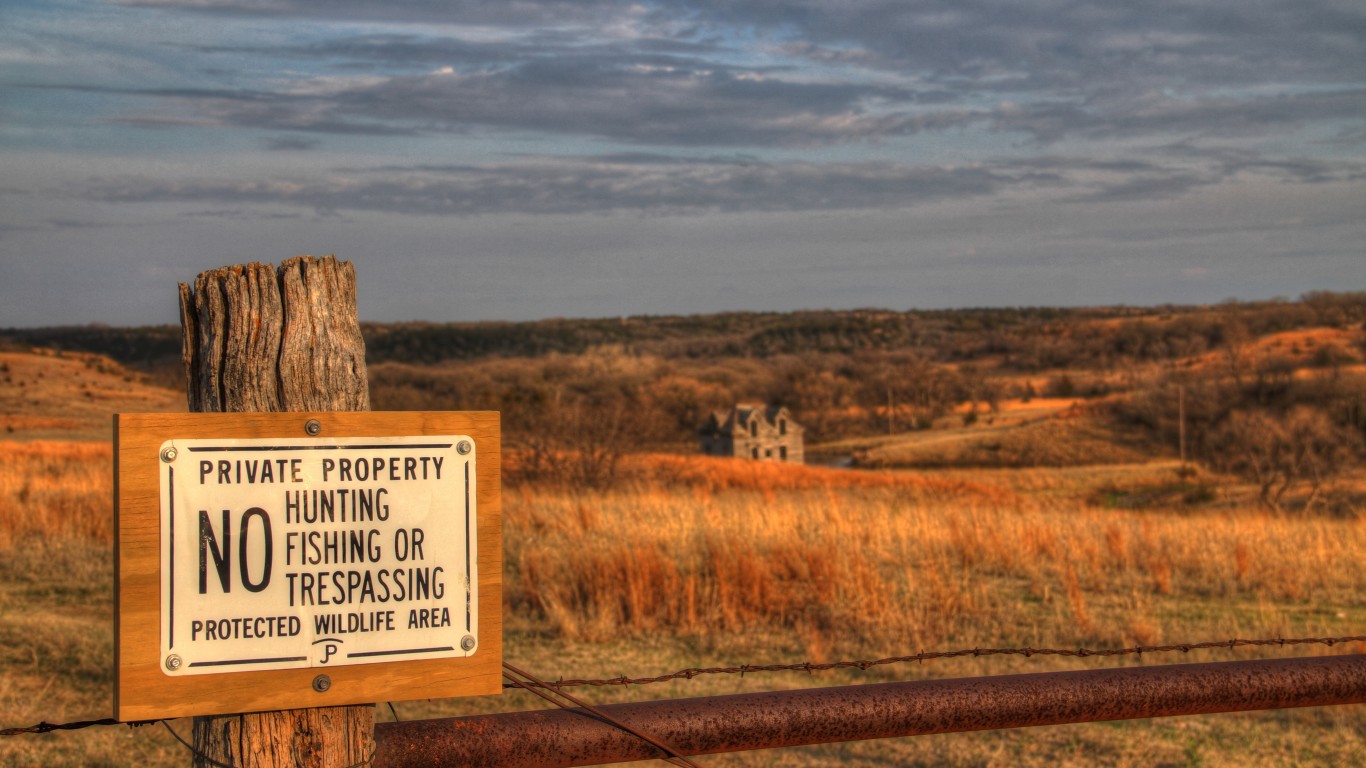
Palantir (NASDAQ:PLTR | PLTR Price Prediction) CEO Alex Karp made waves recently by quietly purchasing 15,000 hectares (37,000 acres) of forest in Härjedalen, Sweden, through his newly registered company Cladonia Skog AB, of which he is the beneficial owner. The transaction was valued at 235 to 240 million kronor, roughly $23 to $24 million, depending on the source. The seller was SCA, a Swedish forestry and paper company, which described the land as suboptimal for its own forestry operations. Local hunters discovered the ownership change the hard way. Two hunting groups have already lost lease access, and a third faces losing it the following year, according to Swedish reporting. Buying up large swaths of natural land has grown into a broader trend among the ultra-rich; farmland alone has ballooned into a $4.3 trillion asset class in the U.S. The Karp deal is a reminder that the right to hunt on rural land carries real monetary value, separate from the timber.
Imagine a 64-year-old woodland owner leases hunting rights on his property. A hunting club offers $50,000 upfront for five years of access. One landowner with 110 acres might expect only a few thousand dollars per year in such arrangements.
That rent might count as $0 in earnings for Social Security purposes, while the IRS can tax all $50,000 in the same year it is received.
Why the Earnings Test Skips Hunting Rent
The retirement earnings test applies whenever someone collects Social Security before reaching full retirement age. In 2026, the limit is $24,480 for those under full retirement age all year, and Social Security holds back $1 for every $2 earned above that threshold. The test counts wages and net self-employment earnings. Ordinary rent from real estate generally falls outside both categories.
Say a landowner earns $20,000 from a part-time job. Only that $20,000 counts toward the test, even if $70,000 in cash came in that year from a hunting lease paid upfront. His benefits are not reduced.
A Five-Year Lease Can Trigger a Tax Bill in One Year
Advance rent is taxed in the year it is received, even when it covers multiple future years. A $50,000 payment for five years of hunting access is economically worth $10,000 a year, but on his tax return all $50,000 lands at once.
That compression matters because of how Social Security benefits get taxed. The IRS adds adjusted gross income, tax-exempt interest, and half of Social Security benefits to produce combined income. For a single filer, up to 50% of benefits can be taxed once combined income passes $25,000. Above $34,000, up to 85% can be taxed.
Consider a simpler case with no job. He collects $30,000 a year in benefits and has $10,000 in other income. Half his benefits plus that other income sets combined income at $25,000, the level at which benefit taxation begins. Add the $50,000 lease payment and combined income jumps to $75,000. Up to $25,500, or 85% of his Social Security, can now be taxed. The earnings test ignores the rent entirely, yet the payment still pulls most of his benefits onto his tax return.
Medicare Premiums Can Feel It Two Years Later
Higher-income Medicare enrollees pay IRMAA, an extra monthly charge added to Part B and Part D premiums. Medicare uses tax information from two years earlier, and in 2026, IRMAA kicks in at $109,000 for single filers.
The standard Medicare Part B premium for 2026 is $202.90 per month. If IRMAA applies, the total monthly Part B cost ranges from $284.10 up to $689.90, depending on the income tier. At the first bracket, the Part B premium rises to $284.10 a month and Part D adds $14.50.
In the example above, the landowner likely stays under the $109,000 line on his own. Add a pension or a large IRA withdrawal, and a one-time lease payment can push him over. The deal runs on three separate clocks: the earnings test in the current year, income tax at filing time, and Medicare premiums two years out.
Why $50,000 Upfront Can Cost More Than $10,000 a Year
Either way, the rent likely stays outside the earnings test. Taking it all upfront packs five years of income into a single tax return, which can make more of his benefits taxable and raise the chance of an IRMAA surcharge two years later. Annual payments spread the income and the tax hit across multiple returns.
If he expects his income to rise later, once required minimum distributions from retirement accounts begin, taking the cash now could cost less overall in tax. (We mapped this and eight other quiet IRS rules that drain retirement accounts in a free guide here.)
A simple lease that grants access only generally produces rental income. If the landowner provides substantial services for the hunters’ convenience, such as guided hunts, lodging, or transportation, the income can shift toward business treatment and may then count as self-employment earnings under the earnings test.
Five Details to Settle Before You Sign a Hunting Lease
- Payment schedule: Take the money upfront or annually? Run the tax return both ways before agreeing.
- Payment type: Is it advance rent or a refundable deposit? A deposit that may have to be returned is treated differently from rent the landlord keeps.
- Services: Does the lease cover access only, or extras like guided hunts? Adding services can move the income into self-employment territory.
- Combined income: Where does $50,000 put him relative to the $34,000 combined-income line? Past it, up to 85% of benefits can be taxed.
- Medicare: Could this spike, added to other income, push him past $109,000 and raise Part B and Part D premiums two years from now?
Karp’s purchase in Härjedalen is a sharp reminder that hunting rights can command real money. How the payment is structured matters as much as the dollar amount. A brief conversation with a tax preparer before signing can show which arrangement actually costs less.
Editor’s note: This article was updated to reflect that the Härjedalen acquisition was valued at 235 to 240 million Swedish kronor (roughly $23 to $24 million depending on the source cited), to identify SCA as the seller and Cladonia Skog AB as Karp’s purchasing vehicle, to specify that two local hunting groups have already lost lease access with a third facing the same outcome the following year, and to note that Swedish authorities approved the deal in September 2026. The 2026 IRMAA first-bracket figures ($202.90 standard premium rising to $284.10, with a $14.50 Part D surcharge) were confirmed against current CMS data.
Contact [email protected] for any questions or corrections.
Gerelyn Terzo is the author of dividend investing handbook "Dividend Investing Strategies: How to Have Your Cake & Eat It Too." A veteran financial journalist, she covers agri-finance for outlets like Global AgInvesting and the broader stock market and personal finance for 24/7 Wall Street. She began at CNBC and later helped launch Fox Business in New York. Gerelyn currently resides in Woodland Park, Colorado and dabbles in nature photography as a hobby.