A 64-Year-Old Farmer Plans to Rent Ground to Neighbor on Crop Share and Start Social Security, as Cropland Values Climb 7%. If He Still Makes the Planting and Marketing Calls, Social Security Counts It as Self-Employment Earnings Against $25,560 Limit

This post may contain links from our sponsors and affiliates, and Flywheel Publishing may receive compensation for actions taken through them.

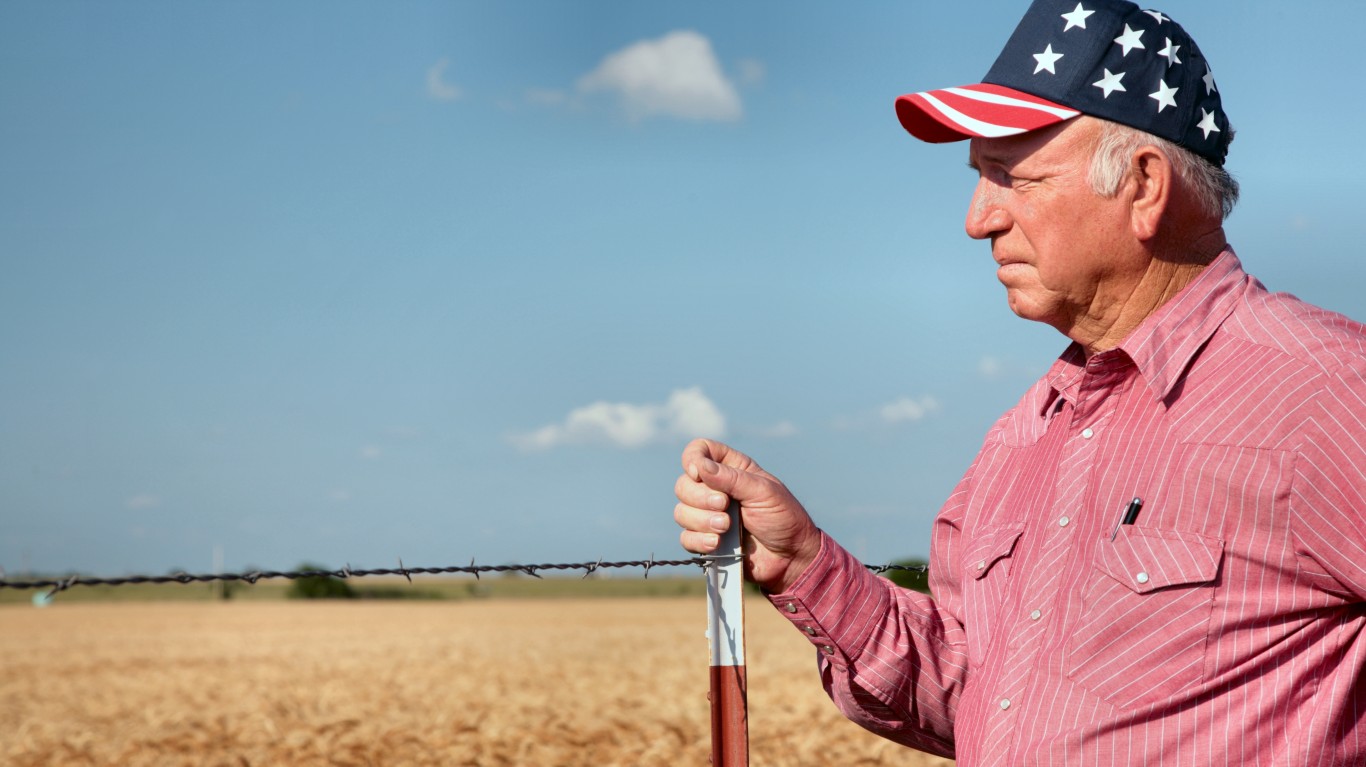
A Kansas farmer who turned 64 this year has run the numbers a hundred times. He plans to hand his ground to the neighbor on a crop share, keep his portion of the bushels and let Social Security cover the rest. According to the Kansas City Fed, non-irrigated cropland values are climbing across the Plains, up roughly 7% in Q3 2026 YoY. Keeping the land and renting it out looks like the obvious move.
One clause in the lease can upset that plan. Federal law treats crop-share rent as ordinary rental income, and Social Security ignores rental income, but that changes if the landowner materially participates in growing or managing the crop. On a farm forum, one grower put it in a single line: “It is the material participation element that kills the deal.”
A lot of farmers end up right here. They want to slow down, but they aren’t ready to stop deciding when the milo goes in or when the wheat gets sold, and that habit is exactly what changes how Social Security treats the rent.
Who Makes the Calls Decides Whether the Rent Counts
The tax code keeps rent out of self-employment income. This includes rent “paid in crop shares.”[1] The exception applies when the lease calls for the owner’s “material participation” in producing the crop or managing its production, and the owner actually takes part, as choosing hybrids, setting planting dates and deciding when to market grain all count as management. If he keeps making those decisions, his share of the crop counts as self-employment earnings.
That matters because he would be taking before full retirement age (FRA), which is 67[2] for anyone born in 1960 or later. Until he reaches it, Social Security applies an earnings test. If the lease starts with the 2027 crop year, the limit is $25,560, up from $24,480 in 2026. For earnings above the limit, Social Security deducts $1 for every $2[3].
Running a $45,000 Crop Share Through the Earnings Test
Say his share of the crop nets $45,000 in 2027 after his share of seed, fertilizer and chemical costs, and his benefit is $2,000 a month. Social Security would hold back about $9,720. That is close to five months of checks.
He would also owe self-employment tax at 15.3% on most of that net income, or about $6,358. If the lease is revised so the neighbor makes the growing and marketing decisions, the same income falls outside both the earnings test and self-employment tax. He would still owe regular income tax on it.
The withheld money does come back over time. Once he reaches the age for full benefits, Social Security recalculates his benefit[3] to give him credit for the months it held back. Still, most farmers are counting on steady income in their first years off the tractor, and losing a spring and early summer of checks hurts.
Medicare and Taxes Look at the Same Return
Medicare starts at 65, and Part B costs $202.90[4] a month in 2026. That premium usually comes straight out of the Social Security check. Single filers with income above $109,000[4] pay a surcharge, as do joint filers above $218,000, and Medicare bases that on an earlier year’s tax return. A big year of selling stored grain or machinery just before Medicare begins can push his premiums up later.
Part of his benefits also becomes taxable once half those benefits plus his other income passes $25,000 for single filers, or $32,000 for married couples filing jointly. Crop-share rent counts toward that test either way. The lease structure leaves this calculation alone and mainly affects the earnings test and self-employment tax.
Settle Your Role Before You Sign the Lease
The most useful step is deciding how involved he really wants to be, then writing the lease to match. If he wants to keep making the calls, he could wait to taking until his net farm earnings drop below the limit, or until 67. At that point the earnings test goes away and his check is larger. If he would rather step back, the lease should give the neighbor the farming and marketing decisions, and his day-to-day behavior has to match it. A lease that names the tenant as the decision-maker won’t hold up if he is still choosing seed every March.
The mistake that is hardest to fix is taking early without a plan. A benefit started before 67 stays smaller for life. Getting hit with withholding and self-employment tax in the same year makes that early claim cost even more. Phasing out of full-time farming carries its own set of tax traps, which we walked through in a free semi-retirement playbook.
Every lease, county and family balance sheet is different, and small wording changes can shift who counts as the operator. Before signing, it pays to walk through the draft lease with a preparer who knows farm returns and to call Social Security.
Contact [email protected] for any questions or corrections.
Gerelyn Terzo is the author of dividend investing handbook "Dividend Investing Strategies: How to Have Your Cake & Eat It Too." A veteran financial journalist, she covers agri-finance for outlets like Global AgInvesting and the broader stock market and personal finance for 24/7 Wall Street. She began at CNBC and later helped launch Fox Business in New York. Gerelyn currently resides in Woodland Park, Colorado and dabbles in nature photography as a hobby.