Oreo Sales Soared During Great Depression as Americans Chose Comfort Over Cost
One of the world’s most beloved treats and desserts, Oreo Cookies are a part of childhoods across the country and the world. There is something that feels so right about the “twist or dunk” debate, which has helped people enjoy…

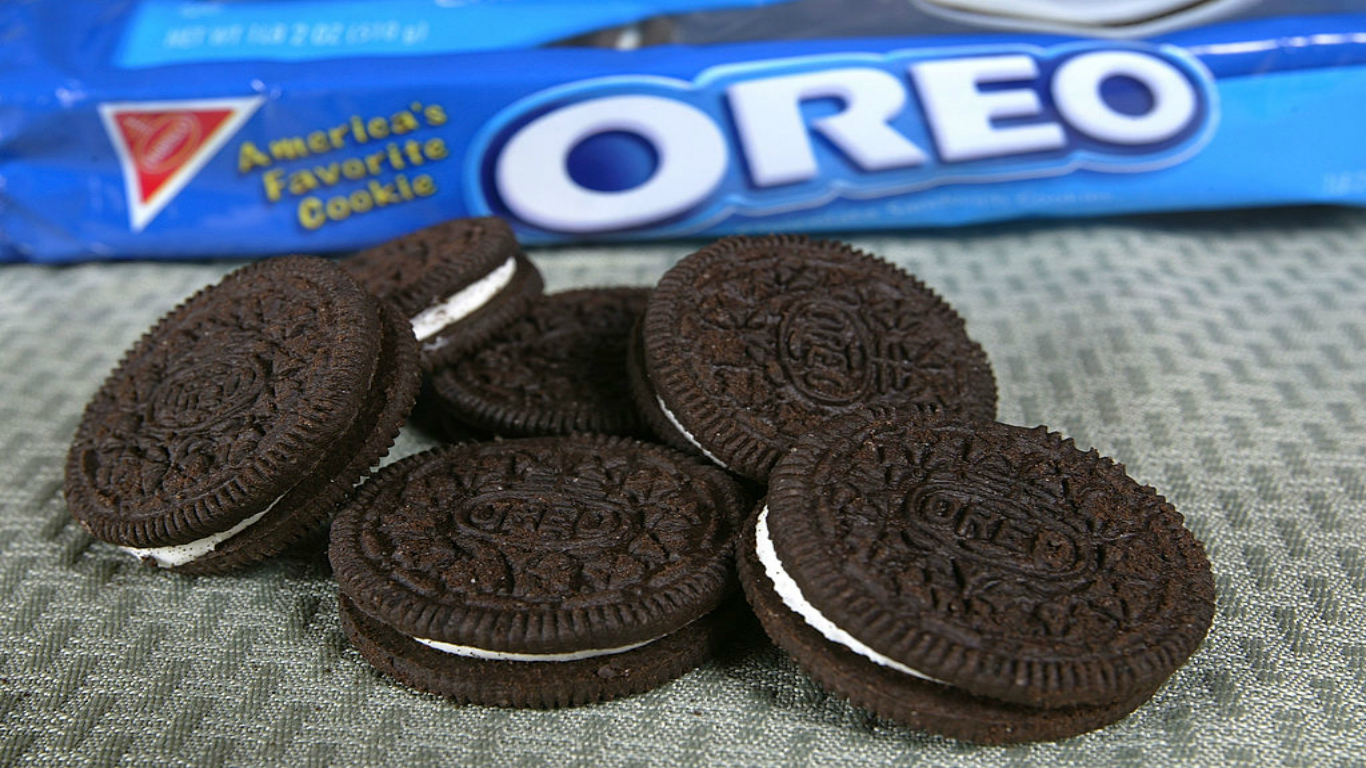
One of the world’s most beloved treats and desserts, Oreo Cookies are a part of childhoods across the country and the world. There is something that feels so right about the “twist or dunk” debate, which has helped people enjoy Oreos throughout the 20th and 21st centuries.
After Nabisco was formed in 1898, when several baking companies merged, the company started with the rollout of Barnum’s Animal Crackers. Although it was a hugely popular treat, the company also sought to develop a new cookie idea, and two chocolate disks with a cream filling were born.
12. 1912

When Oreos first launched in 1912, the very first sale went to a grocer in Hoboken, New Jersey named S.C. Thuesen. At the time, nine and one-quarter pounds of Oreos cost the store $1.85, and the tin they came in cost an additional 50 cents. As Oreos spread around the country that year, they were frequently sold to customers for around $0.25 per ounce, and still came in novelty metal canisters.
11. 1922

In 1922, 10 years after being introduced to the world, the price of Oreos was increased to $0.32 per pound. With the Roaring Twenties already in full effect, it wasn’t uncommon to see Oreos everywhere, which led to the 1924 introduction of a new design featuring a more intricate wafer pattern. Alongside a 1923 ad campaign for “Twist, lick, dunk,” which turned Oreos into a household experience.
10. 1935

By the time 1935 arrived, Oreos were selling for approximately $0.25 per pound, with the price drop likely a result of the country’s current economic hardship. With unemployment at a high and the Great Depression hurting the nation, Oreos remained a budget-friendly treat, and the idea of dunking them in milk became a Depression-era comfort ritual.
9. 1945

If you were looking to get an Oreo treat in 1945, there was a good chance it would cost you around $0.15 for 4.5 ounces. With the end of World War II in sight, suburban growth was about to take off. However, as the war was still ongoing at the onset of the year, food prices were still much lower as rationing was still a reality for most people, including the availability and price of cookies.
8. 1955

Ten years after the end of the war, Nabisco was well on its way to increasing profits, with Oreos selling for $0.39 for 11.75 ounces of cookies. The price increase was helped by the 1952 wafer design by William A. Turnier, who created the iconic geometric pattern that Oreos are still delivered with today.
7. 1965

When you went to purchase Oreo cookies in 1965, you had better be prepared to pay $0.43 per pound, as that was the price charged to customers at the time. Oreos remained a comfort food during the tumultuous times of the 1960s, as the Vietnam War protests and the Civil Rights Movement created tension in the country. Oreos were quickly becoming a staple in lunchboxes across the country.
6. 1975
For $0.89 for 15 ounces, you could grab as many Oreo cookies as you could afford in the middle of the 1970s. The 1970s were a milestone period for the beloved cookie, as it saw the introduction in 1974 of the Double Stuf Oreos, which doubled the amount of creme filling. Internationally, the Oreo was renamed the “Oreo Chocolate Sandwich Cookie” in 1974, resulting in a sales boost.
5. 1985

One pound of Oreo cookies in 1985 would cost you $1.83, which feels like a reasonable price considering the amount of cookies and delight you would receive. Little did customers know in 1985, but just two years later, in 1987, Oreo would introduce its fudge-covered version, which again expanded the appeal of the beloved cookie, still delivering on its “Twist, lick, dunk” ads.
4. 1995

The 1990s were a period of the internet boom and globalization, and Oreos were part of the current trend of making updates to better reflect what customers wanted. The early 1990s saw a switch to hydrogenated vegetable oil, making Oreos both kosher and vegan-friendly, which broadened their market appeal. This was a necessary move as a $1.09 for 4.8 ounces was a substantial increase over the pound cost from a decade earlier.
3. 2005
In 2005, you could find yourself looking to grab a pound-based Oreo pack at the grocery store, and it would cost approximately $2.99 per pound. The introduction of Chocolate Creme Oreos in 2001 and Golden Oreos, introduced in 2005 as a new flavor, saw the popularity and global expansion of Oreos finally cross the 100-country mark.
2. 2015
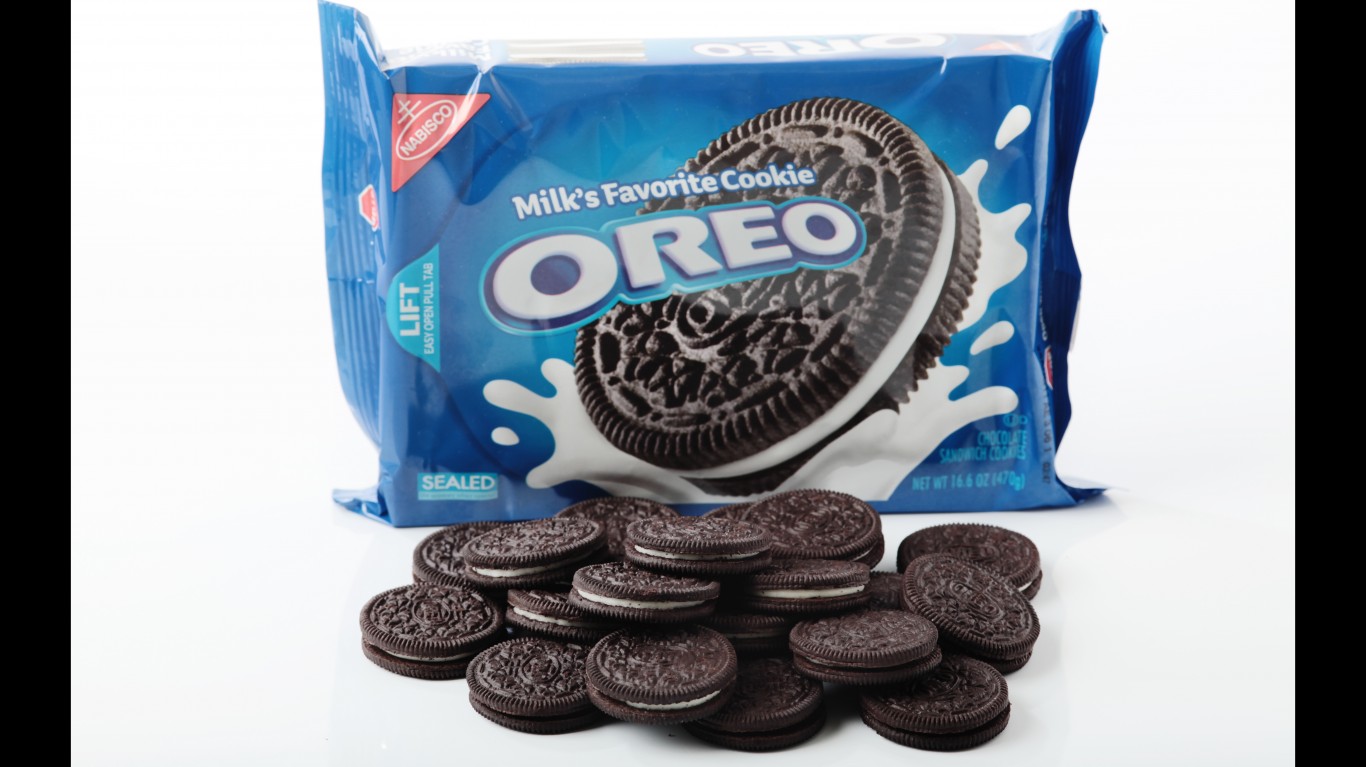
At $4.49 for 14.3 ounces, Oreos were at an all-time high in 2015, understandably, as the digital age gave rise to new marketing strategies that Nabisco had to keep pace with. The launch of a new Cookie and Cream variant added another twist to the rising selection of different flavors consumers could choose from at the grocery store.
1. 2025
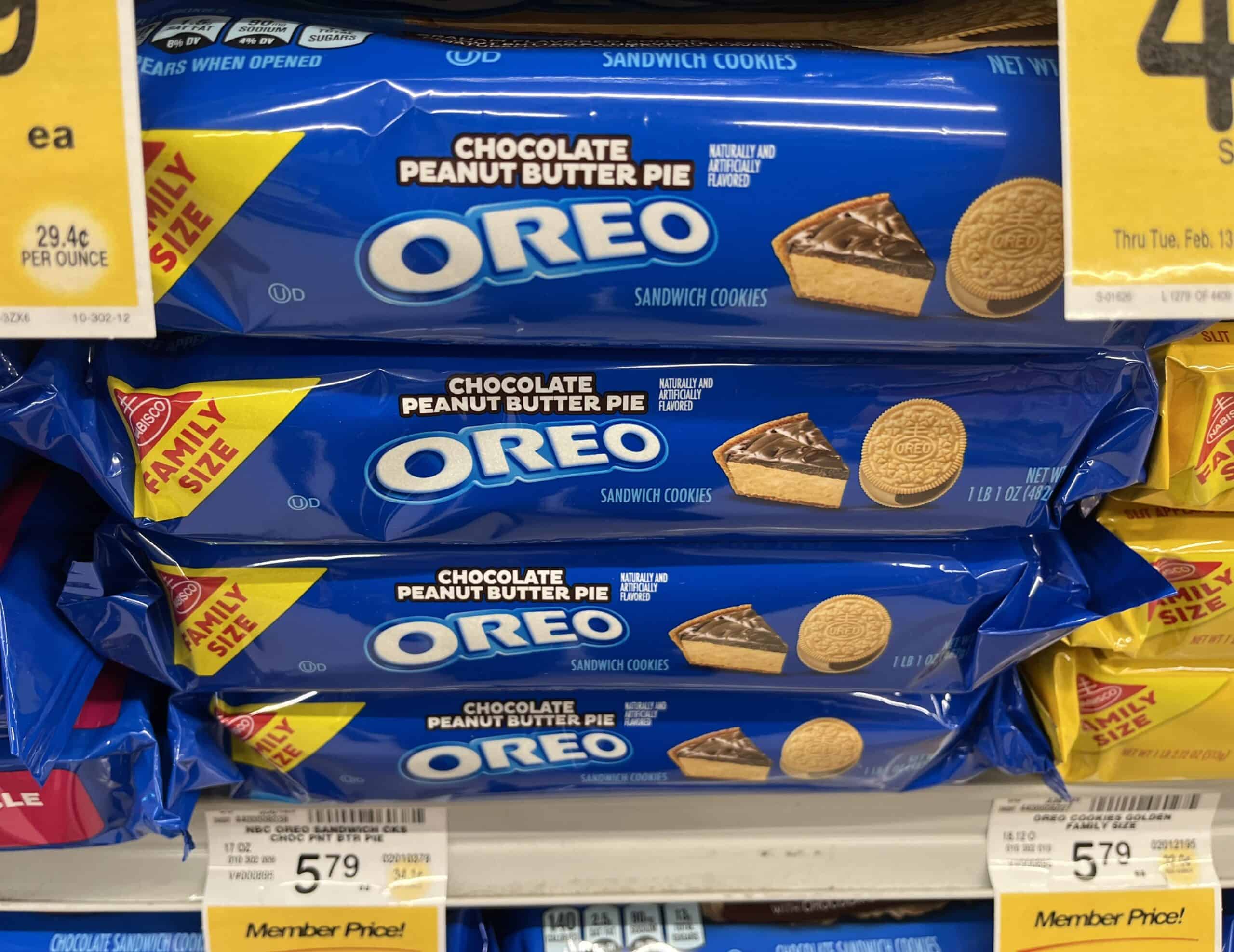
According to Walmart, in 2025, you should expect to pay around $3.76 for a 13.29-ounce pack of original Oreo cookies. At Target, a party-size pack of the original flavor, which is 18.12 ounces, costs around $5.29. However, 2025 also sees the brand as expansive as ever with Blueberry Pie, Selena Gomez, Lemon, Mint, Gluten Free, Java Chip, and other flavors available to customers, giving them more Oreo choices than ever before.
Contact [email protected] for any questions or corrections.
David Beren has been a Flywheel Publishing contributor since 2022. Writing for 24/7 Wall St. since 2023, David loves to write about topics of all shapes and sizes. As a technology expert, David focuses heavily on consumer electronics brands, automobiles, and general technology. He has previously written for LifeWire, formerly About.com. As a part-time freelance writer, David’s “day job” has been working on and leading social media for multiple Fortune 100 brands. David loves the flexibility of this field and its ability to reach customers exactly where they like to spend their time. Additionally, David previously published his own blog, TmoNews.com, which reached 3 million readers in its first year. In addition to freelance and social media work, David loves to spend time with his family and children and relive the glory days of video game consoles by playing any retro game console he can get his hands on.