Google May Junk 10,000 ‘Poor Performers’
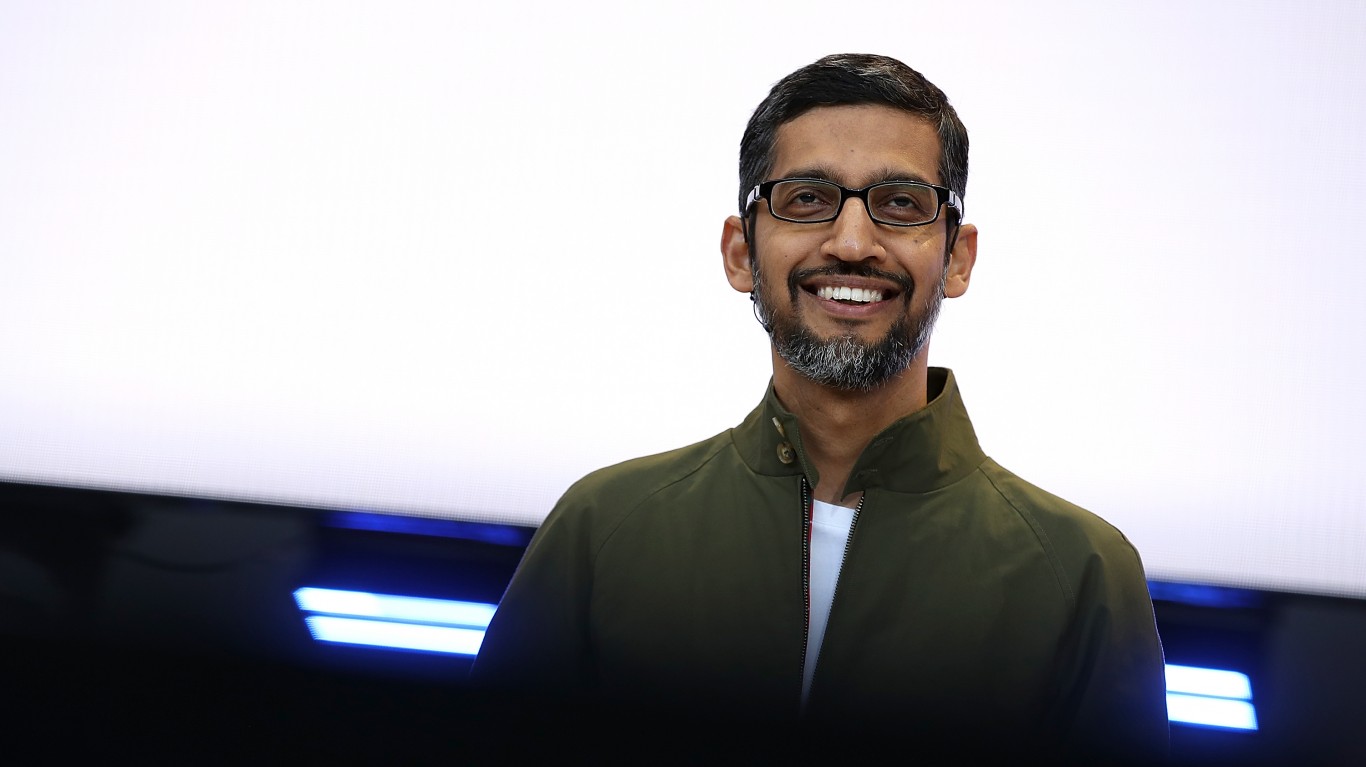
Google may be preparing to fire 10,000 people, but CEO Sundar Pichai is not going anywhere.

The Information reports that Google may want management to pick which 10,000 people are its poorest performers. This is likely an advanced warning that these people will be fired. It adds to the tech layoff bloodbath.
The Information claims low performers are chosen based “in terms of their impact for the business.” The move also may save Google payment of bonuses, which is another way to cut costs.
A poor performer label is hard to apply. Have these people been poor performers recently? Are they likely to have an outsized influence on Google’s success in a few years? Google aims to put 6% of its workers into the special bucket. All the more reason to dump them when the time comes.
The Google plan is another sign of employee overbuilding among America’s largest tech companies. Amazon and Meta already have announced specific numbers of cuts. Twitter, a case of its own, has let over 4,000 people go. That number is likely to rise, although CEO Elon Musk is asking back people he thinks are important.
Overbuilding has resulted in misplaced optimism among American businesses for decades, if not longer. People are added to expand companies with new projects expected to increase sales. This is in contrast to keeping headcount steady to do a good job on successful products already in the field. CEO overreach but cannot be helped. The premium of growth over profits and stability is just too great.
The other factor CEOs who add employees miss is that the economy always slows. The only difference is when it will slow and how long. The current recession could last well into next year and worsen.
Another common part of the layoff process is that chief executives often admit they were wrong to build headcounts too high. Yet, they rarely lose their jobs and their pay packages remain huge.
Google may junk 10,000 people, but CEO Sundar Pichai is not going anywhere.
Contact [email protected] for any questions or corrections.
Douglas A. McIntyre is the co-founder, chief executive officer and editor in chief of 24/7 Wall St. and 24/7 Tempo. He has held these jobs since 2006.
McIntyre has written thousands of articles for 24/7 Wall St. He is an expert on corporate finance, the automotive industry, media companies and international finance. He has edited articles on national demographics, sports, personal income and travel.
His work has been quoted or mentioned in The New York Times, The Wall Street Journal, Los Angeles Times, The Washington Post, NBC News, Time, The New Yorker, HuffPost USA Today, Business Insider, Yahoo, AOL, MarketWatch, The Atlantic, Bloomberg, New York Post, Chicago Tribune, Forbes, The Guardian and many other major publications. McIntyre has been a guest on CNBC, the BBC and television and radio stations across the country.
A magna cum laude graduate of Harvard College, McIntyre also was president of The Harvard Advocate. Founded in 1866, the Advocate is the oldest college publication in the United States.
TheStreet.com, Comps.com and Edgar Online are some of the public companies for which McIntyre served on the board of directors. He was a Vicinity Corporation board member when the company was sold to Microsoft in 2002. He served on the audit committees of some of these companies.
McIntyre has been the CEO of FutureSource, a provider of trading terminals and news to commodities and futures traders. He was president of Switchboard, the online phone directory company. He served as chairman and CEO of On2 Technologies, the video compression company that provided video compression software for Adobe’s Flash. Google bought On2 in 2009.