Trump Once Said He’d Never Heard of NVIDIA CEO Jensen Huang. Now Air Force One Stopped in Alaska to Pick Him Up.
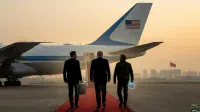
Air Force One touched down at Ted Stevens Airport outside Anchorage last night on a refueling stop on its way to an important summit in Beijing. During the stop, a man in a black leather jacket stepped onto the plane.…

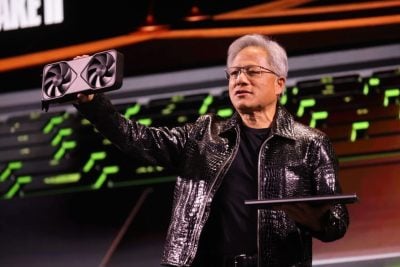
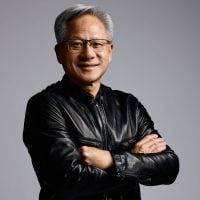
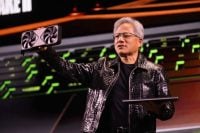
Air Force One touched down at Ted Stevens Airport outside Anchorage last night on a refueling stop on its way to an important summit in Beijing. During the stop, a man in a black leather jacket stepped onto the plane. The final seat on Air Force One was claimed by NVIDIA (NASDAQ:NVDA | NVDA Price Prediction) founder and CEO Jensen Huang.
Shares of NVIDIA are now up 3% today following Huang’s last-minute invite to Trump’s Beijing Summit, adding about $160 billion in value to the company. Let’s dive into the background of why NVIDIA CEO Jensen Huang had to meet Air Force One mid-flight, and the size of the Chinese market for advanced AI chips.
Trump and Huang’s Relationship: From “Never Heard of Him” to A Plane Ride to China
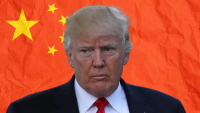
President Trump had previously recounted a story at the AI Action Summit where he asked, “What the hell is NVIDIA?” and said he’d never heard of Huang.
Times have now changed, and Huang is no longer a stranger to Trump. The pair were both present at the White House when Trump held a press conference to announce the Stargate project on January 21, 2025. Huang also spoke at Trump’s “Investing in America” event on April 30, 2025. In total, there have been at least 12 confirmed occasions on which the two have met each other since Trump’s second term began.
Yet, Trump picking up Huang in Alaska may be massive news for NVIDIA investors.
While Huang has been present at many events with Trump, the Administration has used NVIDIA’s GPUs as leverage in negotiations with China. It has been speculated that Huang’s repeated public insistence that NVIDIA should be allowed to sell GPUs in China may have caused a rift with the White House. Huang’s last meeting with Trump was a closed-door meeting on December 3rd and 4th to discuss H200 chip exports to China.
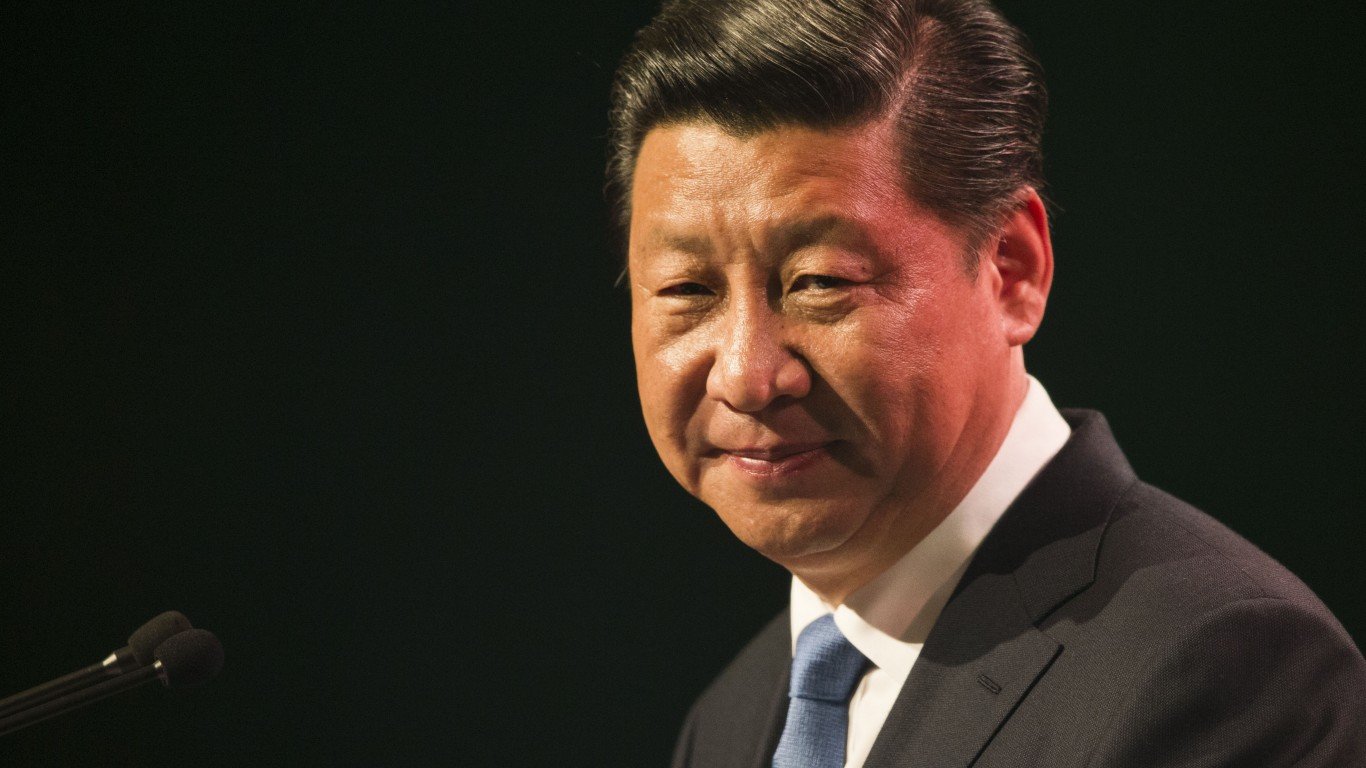
Trump eventually relented and allowed sales of the chips (with a reported 25% cut to the U.S. government), but the back and forth led the CCP to place pressure on its companies to reduce their reliance on NVIDIA chips. So, it was notable that when the first guest list for Trump’s Summit with Chinese President Xi was announced, 16 CEOs were on the list. However, Jensen Huang wasn’t one of them.
Huang’s omission led to widespread reporting and speculation that a further rift had developed. Huang has been very loud in defending the company’s sales to China, and has insisted that the sale of NVIDIA’s GPUs to China poses little threat to the country. Key figures in Trump’s White House have been divided on how to handle the situation.
It appeared that Huang’s non-invite confirmed that the ‘China hawks’ in Trump’s White House were in control.
A Last Minute Change of Heart
Yet, on Tuesday afternoon, President Trump personally called Huang to invite him to the trip. Semafor reports that Trump made the decision himself, overriding concerns from his staff. Huang immediately flew from California to Alaska, where he met Air Force One on a refueling stop.
This is potentially big news for NVIDIA investors. If Huang hadn’t attended the Summit, it would be another signal that the Chinese market was closed to the company. Yet, with Trump personally inviting Huang, the door is once again open. While Trump appears to be ‘willing to make a deal’ around GPU exports, China has pressured companies to restrict their buying of NVIDIA’s GPUs.
If Trump is willing to override the ‘China hawks’ within his administration, the odds are much higher that he could offer assurances to Xi around GPU availability. That would give Chinese officials the confidence in NVIDIA’s GPU supply to no longer pressure companies in the country to not use their chips.
An Opportunity Worth Trillions
How much could the Chinese market be worth to NVIDIA? Jensen Huang estimated the Chinese market was a $50 billion opportunity in the next “couple or three years” in May 2025. However, the AI market has developed significantly since then. In October, Huang described China as worth “a couple of hundred billion dollars by the end of the decade.”
IF NVIDIA were able to sell GPUs to China without restriction, there’s a strong possibility the market could be worth $100 billion or more in annual revenue in the coming years. However, a situation where NVIDIA’s most cutting-edge systems flow into the country isn’t currently on the table. It’s far more likely that any long-term outcome involves NVIDIA selling export-compliant versions that are roughly a year or two behind their newest systems. Even with that situation, Huang’s estimate of an addressable market of $50 billion likely exists today.
Whether or not you agree with the politics of NVIDIA selling its chips to China (I personally have many reservations about it), there’s no denying that Huang’s inclusion in this Summit is big news for NVIDIA investors.
Contact [email protected] for any questions or corrections.
Eric Bleeker, CFA has been investing for more than 20 years. He began his career working at Microsoft before joining Motley Fool, one of the largest publishers of financial research. In his 15 years at Motley Fool Eric served as the General Manager for Fool.com and led coverage in the Technology & Telecom sector. In addition, he was a featured columnist and has hosted dozens of investing seminars attended by more than a million total investors. Eric has more than 1,000 financial bylines to his name and has been featured in The Wall Street Journal, CNBC, Fox Business, and many other leading publications. He is currently focused on artificial intelligence investing and is a CFA Charterholoder.