Here’s How You Can Retire to the Beaches of Costa Rica at 59
Retiring to Costa Rica’s Pacific coast is a common aspiration for Americans approaching retirement, particularly those with portfolios in the high six or low seven figures. The appeal is obvious: warm weather, ocean views, lower housing costs than many U.S.…

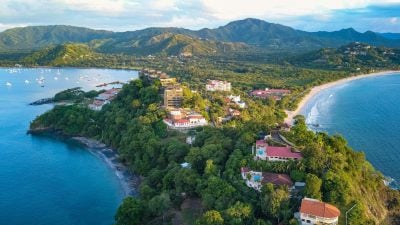
Retiring to Costa Rica’s Pacific coast is a common aspiration for Americans approaching retirement, particularly those with portfolios in the high six or low seven figures. The appeal is obvious: warm weather, ocean views, lower housing costs than many U.S. coastal markets, and an established expat community. The math often works, but only when the costs are modeled realistically rather than through the lens of marketing brochures and relocation guides.
Here is what it takes to leave the workforce at 59, settle in a Guanacaste beach town, and build a retirement plan that still works a decade later.
What a Beach Life in Guanacaste Actually Costs
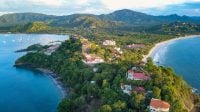
Guanacaste is the Pacific-coast province that includes beach towns such as Tamarindo, Nosara, and Playa Flamingo, and has become one of Costa Rica’s most popular retirement destinations. A long-term unfurnished two-bedroom rental walking distance from the sand runs roughly $1,800 to $2,800 a month. The Costa Rican colón has strengthened materially against the U.S. dollar in recent years, reducing purchasing power for retirees whose income is entirely dollar-denominated. Even when a U.S. portfolio holds steady, local expenses can become more expensive when measured in dollars.
A realistic monthly budget for a couple in a beach town, living well but not extravagantly:
$2,200 housing, $250 utilities and high-speed internet, $700 groceries, $500 dining and entertainment, $450 transportation (a used 4×4 is close to mandatory, and vehicle import duties make cars cost roughly 50% more than in the U.S.), $400 health coverage, and $500 for home maintenance in a salt-air climate, replacement appliances, two flights a year back to see family, and miscellaneous expenses. That comes to about $5,000 a month, or $60,000 a year. Singles can run the same lifestyle for roughly $3,800 a month, call it $46,000 a year.
Visas, Taxes, and the Healthcare Stack
Most American retirees qualify through either the Pensionado program, which requires proof of at least $1,000 per month in permanent pension income, or the Rentista program, which requires proof of approximately $2,500 per month in qualifying income or a corresponding financial deposit. Legal residents generally participate in Costa Rica’s Caja healthcare system, with contributions based on income and residency status. Many expats supplement Caja coverage with private insurance or pay privately for routine care to gain faster access to specialists and English-speaking providers. For a healthy couple in their early 60s, healthcare costs often land in the $300 to $500 per month range when public and private coverage are combined.
Costa Rica uses territorial taxation, so your U.S. Social Security, IRA withdrawals, brokerage dividends, and pension income are not taxed by Costa Rica. The IRS still wants its share, and you still file FBAR and FATCA disclosures on any Costa Rican bank account over $10,000. Medicare does not travel: most planners tell clients to enroll in Part B at 65 and pay the premium anyway, because re-enrolling later carries a permanent late penalty if you ever come home for serious care.
The Math From 59 to Forever
Retiring at 59 means an eight-year bridge to full Social Security at 67, or a three-year bridge to a reduced claim at 62. The average retired-worker benefit was about $2,071 a month in 2026 following the 2.8% COLA. Assume a couple ends up with combined Social Security of roughly $3,800 a month at full retirement age, or about $46,000 a year.
That covers the bulk of the $60,000 budget, leaving a $14,000 annual gap from age 67 onward. At a 4% withdrawal rate, that gap needs about $350,000 of supporting portfolio. The eight-year bridge from 59 to 67 needs roughly another $500,000 in conservative assets (a treasury ladder, short-duration bond funds, and a cash buffer, with 10-year Treasury yields currently at 4.45% making this comfortable). Round it up for sequence-of-returns risk and the colón problem and you want $1.1 to $1.3 million invested at 59, with the bridge dollars held outside equities. A solo retiree on the $46,000 budget can do it on roughly $800,000 to $900,000.
Safety, Storms, and the One Risk Most Buyers Miss
Costa Rica abolished its army in 1948 and is one of the most politically stable countries in the hemisphere. Petty theft in tourist areas remains a concern, while violent crime rates are generally lower than in many parts of Latin America. As with any retirement destination, risk varies by location and lifestyle.
Costa Rica’s Pacific coast sits outside the primary Atlantic hurricane track, making direct hurricane strikes uncommon. The greater weather risk comes from heavy rainfall, localized flooding, and occasional storm-related infrastructure disruptions during the rainy season rather than the wind and storm-surge losses common along the U.S. Gulf and Atlantic coasts. The real disaster story on the Pacific coast is seismic: the Nicoya Peninsula sits directly over a subduction zone and has experienced several significant earthquakes, including a magnitude-7.6 event in 2012. Practical takeaway: in selecting a home, ask questions about construction quality, seismic engineering, and slope stability.
The thing almost no spreadsheet captures is currency drift. If you fund a 30-year retirement entirely in dollars and the colón continues its long appreciation, a $5,000 budget today can quietly become a $6,500 budget in a decade without a single price tag changing in colones. The retirees who make this work hold a portion of their fixed-income allocation tilted toward inflation-protected treasuries, keep a colón cash reserve for one to two years of local expenses, and price their lifestyle with honest headroom rather than at the edge. Do that, and 59 on a Costa Rican beach becomes a budget that holds.
Contact [email protected] for any questions or corrections.
Drew Wood has edited or ghostwritten nine books and published more than 1,500 articles on investing, business, politics, travel, world cultures, wildlife, and earth science. He holds a doctorate and four master's degrees and has nearly 30 years of college teaching experience. His travels have taken him to 25 countries, including three years living in Ukraine.