Here’s How You Can Retire to a Beach Town in Panama at 60 Where Your Dollar Goes Further
We get this question almost weekly: I have a portfolio, I want out at 60, and I keep hearing that a beach town in Panama is the smartest dollar move in the hemisphere. Is that actually true, and what does…

This post may contain links from our sponsors and affiliates, and Flywheel Publishing may receive compensation for actions taken through them.

We get this question almost weekly: I have a portfolio, I want out at 60, and I keep hearing that a beach town in Panama is the smartest dollar move in the hemisphere. Is that actually true, and what does it really take? The scenario works, but not for the reasons most articles cite, and the real trap is structural. It’s the kind of issue people only discover after they have already moved.
What a Panama Beach Town Actually Costs at 60
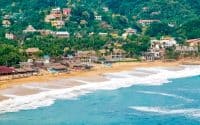
Anchor on a real place. Coronado, about an hour from Panama City, is the established expat beach town with paved roads, a hospital, and a Riba Smith. Pedasí and Playa Venao on the Azuero are quieter and cheaper. Bocas del Toro is cheapest but logistically harder. For a couple wanting walkable beach, decent medical access, and air conditioning that runs all day, Coronado is the realistic comparable.
A working annual budget for two, in current dollars:
- Furnished two-bedroom rental near the beach: about $18,000
- Electricity (AC is the killer), water, internet, two cell plans: about $3,600
- Groceries and regular restaurant meals: about $9,600
- Private international health insurance for two 60-year-olds: about $8,000
- Used car, fuel, insurance, maintenance: about $4,500
- Two trips back to the US per year: about $4,000
- Home maintenance reserve, gifts, replacements, US federal taxes on withdrawals: about $7,000
That lands around $54,000 a year for a comfortable, not flashy, life. Panama is officially dollarized at a 1:1 conversion with the balboa, so there is no currency risk on day-to-day spending. But the dollar does not stretch the way YouTube suggests. Imported goods, cars, and electronics cost more than in the US, and air conditioning on the Pacific coast runs nearly year-round.
The Math From 60 to Forever
At 60, there is no Social Security yet and no Medicare. Every dollar comes from the portfolio for at least two years, more if you delay claiming. At a 3.5% withdrawal rate, appropriate for a 30-plus year horizon starting before traditional retirement age:
$54,000 divided by 0.035 equals about $1.54 million at the moment you stop working. That is the number for a couple who wants this lifestyle, with no pension, no rental income, and no part-time work.
Social Security changes the picture later. Claim at 62 and benefits are reduced by up to 30%. Wait until 70 and checks grow by about 8% per year of delay. For a dual-earner couple with average career earnings, waiting until full retirement age at 67 can produce roughly $4,500 to $5,200 a month combined, which covers most of the Panama budget and lets the portfolio breathe. The 2026 cost-of-living adjustment was 2.8%, which roughly tracks the CPI’s upward drift, though COLA tends to lag actual retiree inflation.
The bridge years (60 to 67) are the heavy lift. Most people fund them from a taxable brokerage bucket and a Roth conversion ladder, keeping reported US income low enough to manage federal tax brackets. With the 10-year Treasury at 4.47%, a short ladder can lock in the first five to seven years of spending without equity risk.
The Medicare Trap Nobody Prices In
Here is what almost every Panama retirement piece misses. Medicare does not cover care received outside the United States. If you move to Panama at 60 and stay through your 65th birthday, you face a real decision: enroll in Part B and pay the premium for coverage you cannot use unless you fly back, or skip it and accept a permanent 10% late enrollment penalty for every 12 months you delayed, applied for life if you ever return to the US.
Most expats end up paying Part B anyway as an insurance policy against eventual repatriation, while also carrying Panamanian private insurance or paying cash at Hospital Nacional and Punta Pacifica. That stacked coverage grows fastest. International plans reprice hard at 65, 70, and 75, and by your late 70s you are looking at $12,000 to $18,000 a year per person. Build that escalation into the model from the start, or the budget that worked at 60 will not work at 75.
Panama’s Pensionado program, which requires roughly $1,000 a month in lifetime pension income (Social Security qualifies), gives meaningful discounts on medical services, prescriptions, and airfare. It is the single best structural benefit Panama offers retirees, and it is the reason claiming Social Security earlier sometimes makes sense here even though the lifetime math usually favors waiting.
The Number, Plainly
To retire at 60 to a Panama beach town as a couple and stay comfortable for 30 years, plan on about $1.5 million in invested assets, a 3.5% initial withdrawal rate, a Social Security claim strategy targeted at 67 for the higher earner, and a healthcare line that escalates faster than headline inflation. Solo, the budget compresses to roughly $36,000 a year and the portfolio target drops to about $1 million. Below those numbers, the scenario still works, but only if you accept Bocas pricing, skip the car, and treat US visits as a luxury. The dollar does go further in Panama. It just has to cover a longer list than the brochures suggest.
Contact [email protected] for any questions or corrections.
I am a long time investor and student of business, and believe finding good companies that can become great investments is the best game on earth. After 20 years of writing and researching the public markets it is clear that individuals have never had more tools and information to take control of their financial lives. From ETFs and $0 commissions to cryptos and prediction markets there has never been a greater democratization of access to investing.
I write to help people understand the investments available to them so they can make the best choice for their portfolio, whether they're starting out or looking for income in retirement.